Why Engineers Prefer GCCM (Geosynthetic Cementitious Composite Mats) for Rapid Construction

Why Engineers Prefer GCCM (Geosynthetic Cementitious Composite Mats) for Rapid Construction

In the fast-paced world of Indian infrastructure development in 2026, time is money quite literally. With ambitious deadlines for national highways, railway corridors, smart cities, canal networks, and disaster-resilient projects, engineers are constantly seeking materials that deliver strength without slowing down progress. Enter GCCM — Geosynthetic Cementitious Composite Mats, the innovative “concrete on a roll” technology that is rapidly becoming the preferred choice for projects where speed matters as much as durability.

Unlike traditional poured concrete, shotcrete, or precast blocks, GCCM arrives in lightweight rolls, installs in hours instead of days or weeks, and achieves structural strength within 24–36 hours. No heavy machinery, no complex formwork, and no weather delays. This is why leading civil engineers, contractors, and government departments across India are increasingly specifying GCCM for rapid construction.

At EnnKae, our flagship nKrete GCCM has been engineered specifically for Indian conditions from Himalayan slopes to monsoon-prone riverbanks. In this comprehensive guide, we explore exactly why engineers trust GCCM technology for accelerated timelines, real-world performance benefits, and how it is transforming modern construction practices.

What Makes GCCM Different from Conventional Construction Materials

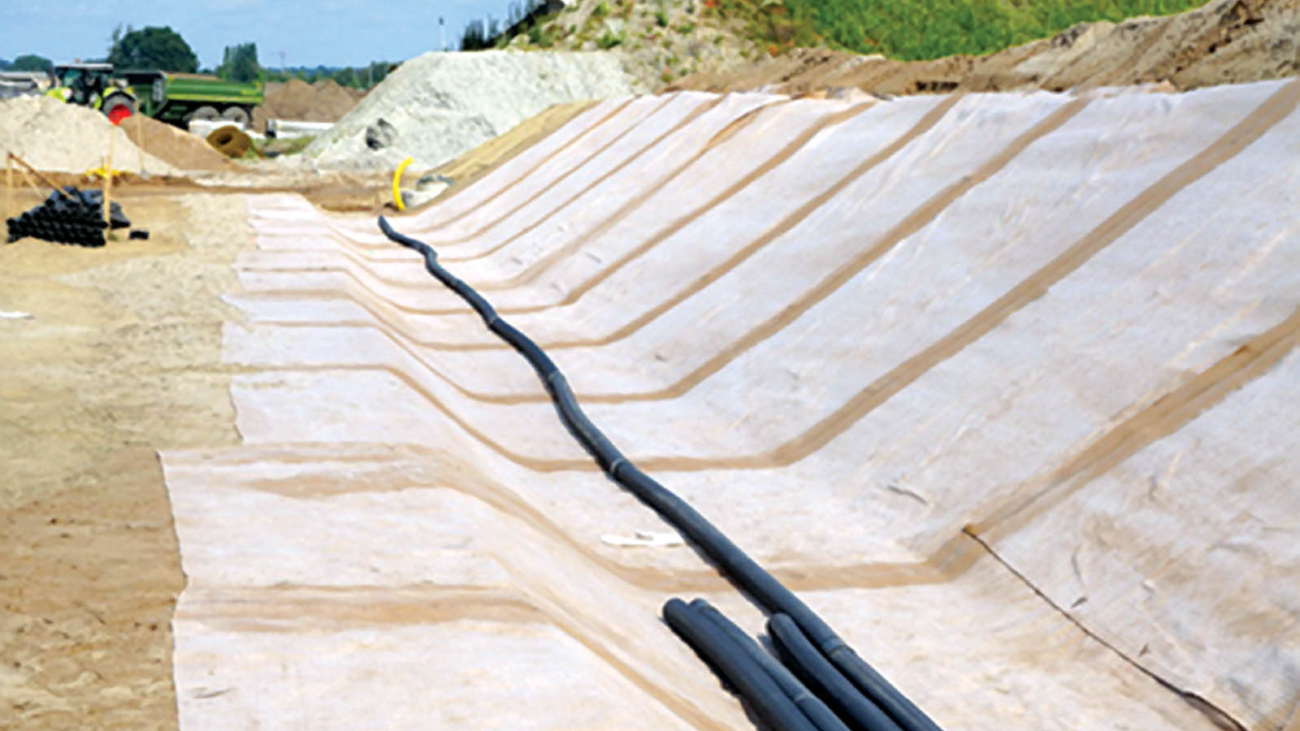
Geosynthetic Cementitious Composite Mats (GCCM) are factory-assembled rolls containing a precisely blended dry cementitious mix sandwiched between high-strength geotextile layers, often with an integrated HDPE geomembrane for waterproofing. The unique 4-dimensional fibre matrix in nKrete GCCM provides reinforcement that traditional concrete simply cannot match.

When unrolled on site and hydrated with ordinary water, the material transforms from a flexible fabric into a hard, impact-resistant concrete shell. This “set-on-demand” behaviour eliminates the long curing periods that plague conventional methods and allows immediate progression to the next construction phase.

Engineers love this because it removes the biggest bottlenecks in rapid construction: waiting time, labour dependency, and logistical complexity. International standards like ASTM D8364 now recognise GCCM as a distinct, high-performance category, giving engineers confidence in design calculations and regulatory approvals.

7 Powerful Reasons Engineers Choose GCCM for Rapid Construction

  1. Lightning-Fast Installation and Curing. Traditional concrete requires 7–28 days for full strength. nKrete GCCM reaches 80% of its final strength in just 24 hours and full hardness in 36 hours. A 5,000 m² slope protection job that once took three weeks can now be completed in 3–4 days. This dramatic reduction in on-site time directly translates to earlier project handover and lower overhead costs.
  1. No Heavy Machinery Required. Remote sites, hilly terrains, or congested urban areas often lack space for cranes, mixers, or pumps. GCCM rolls are lightweight (15–18 kg/m²) and can be unrolled by hand or with basic equipment. Engineers working on railway embankments in the Northeast or highway cuttings in Uttarakhand frequently cite this as the single biggest advantage for meeting tight schedules.
  1. Flexibility That Conforms to Any Surface GCCM’s pre-hydration flexibility allows it to hug irregular contours, curves, and steep slopes without cracking or requiring extensive surface preparation. This eliminates days of grading and formwork that traditional methods demand, making it ideal for emergency repairs after landslides or floods.
  1. Minimal Labour and Skill Dependency: A small team of 6–8 semi-skilled workers can install thousands of square metres per day after a short training session. There is no need for specialised concrete finishers or large crews. In labour-short regions, this advantage often becomes the deciding factor for choosing GCCM over shotcrete or riprap.
  1. All-Weather Installation Capability: Unlike poured concrete that fails in rain or extreme heat, GCCM can be installed and hydrated even during light showers. The geotextile layers wick water evenly, and over-hydration does not weaken the mix. This reliability is invaluable for monsoon-season projects across India.
  1. Dramatic Reduction in Material Volume: GCCM uses up to 95% less material than conventional concrete for equivalent protection. Fewer trucks, lower transport costs, and reduced carbon emissions make it a favourite for engineers balancing speed with sustainability targets in 2026.
  1. Immediate Load-Bearing and Erosion Protection Once cured, the fibre-reinforced concrete shell can withstand high-velocity water flow, impact, and abrasion. Engineers can backfill, place cover soil, or allow traffic on adjacent areas almost immediately, something impossible with wet concrete.

Step-by-Step Installation Process That Enables Speed

The simplicity of GCCM installation is one of the main reasons it accelerates construction timelines:

  1. Site Preparation — Minimal grading; the flexible mat adapts to the existing surface.
  2. Unrolling — Rolls are laid from the top of slopes downward for perfect alignment.
  3. Fixing — Secured with ground anchors, pins, or trenching in minutes.
  4. Hydration — Even spray of clean water triggers setting; no special admixtures needed.
  5. Curing & Next Phase — Within 24 hours, the surface is ready for overlay, vegetation, or backfilling.

Total time from delivery to functional protection: often under 48 hours. Compare this to traditional concrete processes that can stretch into weeks, and it is easy to see why GCCM is winning projects on tight schedules.

Real-World Applications Where Speed Changed Everything

In 2025–2026, several landmark Indian projects highlighted GCCM’s rapid construction advantage:

  • Himalayan Highway Widening (NH-44): nKrete GCCM protected 18,000 m² of steep cuttings in just 11 days during the monsoon window, preventing delays that would have cost the contractor crores.
  • Railway Embankment Stabilisation (Northern Railway): 12 km of slope armouring completed in 18 days instead of the scheduled 2.5 months.
  • Canal Emergency Repair (Rajasthan): Post-flood lining of 8,000 m² finished in 72 hours, restoring irrigation flow weeks ahead of schedule.
  • Defence Infrastructure Projects: Rapid deployment in border areas where access windows are extremely short.

In each case, engineers reported that GCCM not only met deadlines but exceeded performance expectations under harsh conditions.

GCCM vs Traditional Methods: Time and Cost Perspective

When compared head-to-head:

  • Shotcrete: Requires specialised equipment, skilled nozzlemen, and 7-day curing. High rebound waste and dust issues.
  • Riprap or Gabions: Labour-intensive placement and no waterproofing. Takes weeks to complete.
  • Precast Concrete Panels: Heavy transport, crane dependency, and joint sealing delays.

GCCM eliminates all these pain points, delivering 40–60% faster project completion with lower overall costs when timeline savings and reduced rework are factored in.

How nKrete GCCM by EnnKae is Built for Indian Rapid Construction

EnnKae’s nKrete GCCM stands out because it is designed for India’s diverse challenges, seismic zones, extreme rainfall, and remote logistics. The proprietary 4D fibre matrix ensures crack control and impact resistance, while the HDPE backing provides superior waterproofing.

Engineers also appreciate the seamless integration with other geosynthetics. For projects needing both erosion control and containment, nKrete GCCM pairs perfectly with EnnKae’s nKlay GCL, creating hybrid solutions that are installed rapidly without coordination hassles between multiple suppliers.

Sustainability and Regulatory Advantages in 2026

With India’s push toward net-zero infrastructure, GCCM scores high on environmental metrics. Lower material consumption, reduced transport emissions, and minimal site disturbance align perfectly with green building guidelines. Many tenders now award extra points for technologies that accelerate construction while lowering carbon footprint, another reason engineers are specifying GCCM more frequently.

Common Concerns Addressed

Some engineers initially worry about long-term durability or cost. Real-world monitoring data from projects completed 3–5 years ago shows nKrete GCCM maintaining full integrity with virtually zero maintenance. When lifecycle costs are calculated, the rapid installation savings more than offset the material price, delivering excellent value.

Why Leading Engineers Are Making the Switch in 2026

The preference for GCCM boils down to one simple truth: it gives engineers control over their timelines. In an industry where delays can cascade into millions in penalties, a material that reliably compresses weeks into days becomes a strategic advantage.

Whether you are an EPC contractor racing against monsoon deadlines, a railway engineer working in remote corridors, or a government department delivering public projects on time, GCCM technology removes uncertainty and delivers results.

Ready to Accelerate Your Next Construction Project?

If you are looking for a proven, rapid-construction solution that combines strength, flexibility, and speed, nKrete GCCM by EnnKae is ready to deliver.

Contact our team today for:

  • Project-specific design assistance
  • Free technical consultations and sample rolls
  • Detailed installation training
  • Customised solutions for highways, railways, canals, or emergency works

As one of India’s premier geosynthetic clay liner manufacturers, EnnKae also offers complete hybrid systems combining nKrete GCCM with nKlay GCL — all from a single reliable source.
GCCM vs GCL Cost Comparison for Large Projects 2026

Cost Comparison: GCCM vs Geosynthetic Clay Liners for Large-Scale Projects

In 2026, India’s infrastructure sector is witnessing unprecedented growth. National highways, high-speed rail corridors, canal networks, landfills, and riverbank protection projects are being executed at a massive scale. For project owners, contractors, and government agencies, one critical question keeps arising: which advanced geosynthetic solution offers better value, GCCM (Geosynthetic Cementitious Composite Mat) or Geosynthetic Clay Liners (GCL)?

Both technologies have replaced traditional methods like shotcrete, riprap, or compacted clay. But when budgets run into crores, even small differences in material, installation, labour, and long-term maintenance costs can make or break a project’s profitability.

This detailed cost comparison guide breaks down every rupee from material prices to total installed costs for large-scale projects (typically 10,000 m² and above). At EnnKae, we manufacture both nKrete GCCM and nKlay GCL under one roof, so we can provide an unbiased, real-world perspective based on 2026 Indian market data and actual project outcomes.

Understanding the Two Technologies Briefly

GCCM (nKrete) is “concrete on a roll”, a dry cementitious mix sandwiched between geotextile layers with an HDPE backing. Once hydrated, it forms a thin, fibre-reinforced concrete shell in 24–36 hours. It excels in erosion control and surface protection.

GCL (nKlay) is a bentonite clay blanket between geotextiles. When hydrated, the sodium bentonite swells to create an ultra-low permeability barrier. It is the preferred choice for waterproofing and containment.

While their functions differ, both are lightweight, factory-controlled, and dramatically faster than conventional alternatives. The real story, however, lies in the numbers.

Material Cost Comparison (2026 India Market)

Current market rates for large-volume purchases (10,000 m²+ with quantity discounts) are as follows:

  • nKlay GCL: ₹200 – ₹400 per m² (Premium reinforced or composite variants reach ₹450–₹520 per m²)
  • nKrete GCCM: ₹1,100 – ₹1,600 per m² (Standard 10–13 mm thickness; thicker or custom variants up to ₹1,800)

At first glance, GCCM appears 4–6 times more expensive in material cost alone. However, this is only part of the picture. For a 50,000 m² canal lining project, raw material cost would be approximately ₹1–2 crore for GCL versus ₹5.5–8 crore for GCCM.

Installation and Labour Cost Breakdown

This is where the comparison becomes interesting.

GCL Installation:

  • Simple unrolling + overlap + cover soil
  • Minimal labour: 4–6 workers per team
  • Speed: 5,000–8,000 m² per day
  • Installed cost addition: ₹80 – ₹150 per m²
  • Total installed cost (material + installation): ₹300 – ₹550 per m²

GCCM Installation:

  • Unrolling + pinning/anchoring + hydration
  • Slightly higher skill required but still no heavy machinery
  • Speed: 3,000–5,000 m² per day
  • Installed cost addition: ₹150 – ₹250 per m² (includes hydration equipment)
  • Total installed cost: ₹1,300 – ₹1,850 per m²

Even though GCCM material is costlier, the installation premium is only marginally higher. The real savings emerge from reduced project timeline and labour days.

Total Project Cost for Large-Scale Applications (Realistic Examples)

Let’s examine three typical 2026 Indian infrastructure scenarios:

  1. Canal Lining Project (50,000 m², seepage control focus)
    • GCL only: Total installed ≈ ₹1.8–2.5 crore
    • GCCM only: Total installed ≈ ₹7–9 crore
    • Hybrid (GCL base + GCCM surface on high-flow sections): ₹3.5–4.5 crore Winner: GCL or hybrid (60–70% savings vs GCCM alone)
  2. Highway Slope Protection (30,000 m² steep cuttings)
    • GCL only: Not suitable as a primary solution
    • GCCM only: Total installed ≈ ₹4.2–5.5 crore
    • Hybrid with GCL at base: ₹4.8–6 crore Winner: GCCM or hybrid (prevents erosion where GCL alone would fail)
  3. Landfill Liner (1,00,000 m² containment)
    • GCL primary liner: Total installed ≈ ₹3.5–5 crore
    • GCCM surface protection: Additional ₹8–12 crore (rarely used alone) Winner: GCL (mandatory under CPCB norms)

Hidden Costs and Long-Term Savings

Material and installation are only the beginning. Consider these factors:

Transportation & Logistics

  • Both products come in compact rolls. GCL is lighter (≈4–6 kg/m²) vs GCCM (≈15–18 kg/m²). For remote Himalayan or Northeast projects, GCCM transport can add 8–12% extra cost.

Project Timeline Savings

  • GCCM cures in 24–36 hours → faster backfilling and commissioning
  • A 3-month time saving on a ₹100-crore project can reduce interest costs and overheads by ₹1–2 crore

Maintenance Over 10 Years

  • GCL: Almost zero maintenance (self-healing)
  • GCCM: Minimal (fibre matrix controls cracks)
  • Traditional concrete/riprap: ₹50–100 per m² every 3–5 years for repairs Both geosynthetics win here, with GCCM slightly ahead in high-abrasion zones.

Regulatory & Environmental Compliance

  • GCL often qualifies for faster environmental clearances in landfills and water bodies
  • GCCM reduces carbon footprint by using 95% less concrete than traditional methods

Quantity Discounts and Bulk Pricing in 2026

For projects above 50,000 m², leading manufacturers offer:

  • 10–18% discount on GCL
  • 8–15% discount on GCCM

EnnKae’s integrated supply model (both products from one source) further reduces coordination costs and gives an additional 5–7% savings on hybrid packages.

Factors That Influence Final Cost

Several variables can swing the economics:

  • Site accessibility and terrain
  • Local labour rates (higher in metro vs rural)
  • Monsoon timing (GCL tolerates wet conditions better)
  • Chemical exposure (GCCM offers better resistance)
  • Design life requirement (50+ years for both)
  • Availability of cover soil (affects GCL more)

The Hybrid Solution: Best Value for Most Large Projects

In 2026, the most cost-effective choice for many projects is neither pure GCCM nor pure GCL — it is a hybrid system.

Example: Canal lining

  • GCL across the entire bed for zero seepage
  • GCCM only on embankments and high-velocity zones

Result: Total cost 35–45% lower than full GCCM, performance far superior to GCL alone, and project completed 40% faster than traditional methods.

Why EnnKae Delivers Superior Value in Cost Comparisons

As one of India’s premier geosynthetic clay liner manufacturers, EnnKae also leads in GCCM innovation. Project owners benefit from:

  • Single-source supply and seamless hybrid design support
  • Products tested for Indian conditions (seismic zones, extreme rainfall)
  • Transparent pricing with detailed BOQ assistance
  • On-site training that reduces installation errors and rework costs
  • Proven track record in railways, highways, water resources, and mining projects

Our clients consistently report 15–25% overall project savings when switching from traditional methods to nKrete + nKlay combinations.

Making the Right Choice for Your Large-Scale Project

There is no universal winner in the GCCM vs Geosynthetic Clay Liners cost battle. The smart decision depends on your primary risk:

  • Seepage/containment → Choose GCL (lowest cost)
  • Erosion/surface protection → Choose GCCM (higher upfront but faster ROI)
  • Both risks present → Hybrid (best value in 2026)

Before finalising any tender, request a detailed cost-benefit analysis from your supplier, including lifecycle costing for 20–50 years.

Ready to Optimise Costs for Your Next Infrastructure Project?

Stop guessing and start saving. Whether you need standalone nKlay GCL for containment, nKrete GCCM for slope armouring, or a perfectly engineered hybrid system, EnnKae’s team of geosynthetics specialists will provide a customised 2026 cost comparison tailored to your drawings and site conditions.

Contact us today for:

  • Free project-specific cost estimates
  • Sample rolls and technical data
  • Hybrid design recommendations
  • Competitive bulk pricing valid for 2026 tenders

Build faster, stronger, and more economically with the right geosynthetic solution. Your next large-scale project deserves nothing less than proven technology and transparent costing.

GCCM vs Geosynthetic Clay Liners: Which Solution is Better for Infrastructure Projects?

GCCM vs Geosynthetic Clay Liners: Which Solution is Better for Infrastructure Projects?

India’s infrastructure sector is growing faster than ever in 2026. From high-speed rail corridors and national highways to massive canal networks, landfills, and river rejuvenation projects, engineers face a common challenge: delivering durable, waterproof, and erosion-resistant solutions quickly and cost-effectively. Two advanced geosynthetic technologies have emerged as front-runners: GCCM (Geosynthetic Cementitious Composite Mat) and Geosynthetic Clay Liners (GCL).

But which one is better? The short answer is: it depends on your project’s exact needs. In many cases, the smartest choice is using both together. This complete comparison guide breaks down GCCM vs Geosynthetic Clay Liners side by side, their technology, strengths, limitations, ideal applications, and real-world performance in Indian infrastructure projects.

At EnnKae, we manufacture both nKrete GCCM and nKlay GCL under one roof, giving project owners the flexibility to choose or combine solutions from a single trusted partner. Let’s compare them objectively so you can make the right decision for your 2026 projects.

Understanding the Two Technologies

GCCM (Geosynthetic Cementitious Composite Mat)

Also known as “concrete on a roll,” GCCM is a factory-assembled roll containing a dry cementitious mix sandwiched between high-strength geotextile layers, often with an HDPE geomembrane backing. When hydrated on-site, it hardens into a thin, fibre-reinforced concrete shell within 24–36 hours.

nKrete GCCM by EnnKae features a unique 4-dimensional fibre matrix that delivers exceptional impact resistance and flexibility during installation.

Geosynthetic Clay Liners (GCL)

GCLs consist of a core layer of high-purity sodium bentonite clay needle-punched between two geotextile layers. When hydrated, the bentonite swells up to 15 times its dry volume, creating an ultra-low permeability barrier (as low as 10⁻¹¹ cm/s).

nKlay GCL is engineered for Indian conditions, offering superior self-healing properties and easy overlap installation.

Both are lightweight, factory-controlled, and far superior to traditional methods like shotcrete or compacted clay. But their core purposes are different; one creates a hard protective surface, the other creates an impermeable seal.

Head-to-Head Comparison: GCCM vs Geosynthetic Clay Liners

Here’s a clear breakdown of how they stack up across key parameters:

1. Primary Function

  • GCCM: Erosion control, slope protection, structural surfacing, and high-flow resistance.
  • GCL: Waterproofing, containment of liquids or leachate, groundwater protection.

2. Permeability

  • GCCM: Low permeability due to HDPE backing and hardened concrete (excellent for surface water control).
  • GCL: Extremely low permeability (10⁻⁹ to 10⁻¹¹ cm/s) is the gold standard for containment.

3. Strength & Durability

  • GCCM: High compressive and flexural strength once cured; resists abrasion, impact, and chemicals. Fibre reinforcement prevents cracking.
  • GCL: Flexible and self-healing; excellent long-term sealing but lower structural strength.

4. Installation Speed

  • GCCM: Unroll, fix, hydrate full strength in 24–36 hours. No heavy machinery needed.
  • GCL: Unroll, overlap, and cover with soil hydration that happens naturally or with light spraying. Even faster in moist conditions.

5. Thickness

  • GCCM: 10–30 mm after curing (thin concrete layer).
  • GCL: 5–10 mm (ultra-thin liner).

6. Flexibility

  • GCCM: Highly flexible before hydration; conforms to irregular surfaces.
  • GCL: Remains flexible even after hydration; ideal for differential settlement.

7. Self-Healing

  • GCCM: Limited self-healing (relies on fibre matrix to control cracks).
  • GCL: Outstanding self-healing bentonite swells to seal punctures automatically.

8. Cost

  • GCCM: Higher material cost but saves on labour and time for surface protection.
  • GCL: Generally more economical for large-area containment.

9. Environmental Impact

  • Both are low-carbon compared to traditional concrete or imported clay. GCCM uses 95% less material than poured concrete; GCL uses natural bentonite.

10. Lifespan

  • Both exceed 50+ years when installed correctly, with proper cover and maintenance.
A person holding shredded paper used as an alternative fuel

When to Choose GCCM (nKrete) Over GCL

Select GCCM when your project needs:

  • Hard surface protection against high-velocity water flow
  • Slope stabilisation on highways, railways, or embankments
  • Canal or riverbank revetments exposed to scour and wave action
  • Bridge abutments, spillways, or mining channels
  • Rapid deployment in remote or monsoon-affected areas

Example: In a Himalayan highway widening project, nKrete GCCM was installed on steep cuttings in just 5 days, providing immediate erosion control where traditional shotcrete would have taken weeks.

When to Choose Geosynthetic Clay Liners (nKlay GCL) Over GCCM

Choose GCL when your project demands:

  • Impermeable containment of leachate or water
  • Groundwater protection in landfills or industrial sites
  • Seepage control in canals, reservoirs, or ponds
  • Base lining under roads or embankments
  • Compliance with strict CPCB/MoEFCC environmental norms

Example: A 40-hectare landfill in Gujarat used nKlay GCL as the primary liner and passed every permeability test on the first attempt, saving months compared to compacted clay.

When to Use Both — The Hybrid Advantage

In 2026, the winning formula for many infrastructure projects is a hybrid system:

  • GCL as the base waterproofing layer (prevents seepage and contamination)
  • GCCM is the surface protective layer (provides erosion resistance and durability)

Perfect applications include:

  • Canal lining projects (GCL stops seepage + GCCM protects against flow and vegetation)
  • Landfill caps and side slopes
  • Reservoir embankments
  • River training works
  • Wastewater treatment lagoons

This combination delivers complete protection impermeability from GCL and structural strength from GCCM at a lower overall cost and faster speed than any single traditional method.

EnnKae is one of the few companies in India that manufactures both technologies, making hybrid solutions seamless and cost-effective.

Real-World Performance in Indian Infrastructure (2025–2026 Projects)

  • Railway Embankments (Northern Railway): nKrete GCCM alone on slopes + nKlay GCL at base — zero erosion after two monsoons.
  • Smart City Canal Network (Madhya Pradesh): A hybrid system reduced seepage by 92% and completed lining 40% faster than conventional methods.
  • Industrial Landfill (Gujarat): nKlay GCL primary liner with nKrete GCCM on access roads and berms fully compliant and zero maintenance in the first year.

These projects prove that neither technology is universally “better”; the right choice (or combination) depends on site conditions, design requirements, and performance goals.

How to Decide: A Practical Checklist for Your Project

Ask these questions before finalising:

  1. Is the main risk erosion/scour or leakage/contamination?
  2. Do you need a hard-wearing surface or a flexible impermeable barrier?
  3. What are the regulatory requirements (CPCB, BIS, ASTM)?
  4. What is your timeline and budget?
  5. Is the site remote or accessible?
  6. Will differential settlement occur?

If erosion and surface durability are critical → lean toward GCCM.

If containment and ultra-low permeability are non-negotiable → lean toward GCL.

If both are required → go hybrid.

Why EnnKae is the Smart Choice for Both GCCM and GCL

As one of India’s premier geosynthetic clay liner manufacturers, EnnKae also leads in GCCM innovation. You get:

  • Single-source supply and technical coordination
  • Products engineered for Indian climates and seismic zones
  • Full design support, installation training, and after-sales service
  • Competitive pricing with proven performance data
  • Integrated solutions that combine nKrete GCCM and nKlay GCL perfectly

No need to coordinate multiple suppliers or compromise on quality.

The Future of Infrastructure Protection in 2026 and Beyond

The era of choosing between “concrete” and “clay” is over. GCCM and GCL represent the new standard faster, greener, and more reliable. With India targeting net-zero infrastructure and stricter environmental laws, projects that adopt these technologies will finish earlier, last longer, and face fewer regulatory hurdles.

The real winner is not GCCM or GCL alone it is the project team that selects (or combines) them intelligently.

Ready to Choose the Right Solution for Your Infrastructure Project?

Stop wondering “GCCM vs Geosynthetic Clay Liners.” Let EnnKae help you decide or combine the best technology for your specific needs.

Contact us today for:

  • Free technical consultation
  • Site-specific recommendations (GCCM, GCL, or hybrid)
  • Detailed comparison reports and sample rolls
  • 2026 project pricing and delivery schedules

Whether your project is a 10-km canal, a new highway embankment, or a large landfill, our team of geosynthetics experts will ensure you get the perfect, future-ready solution.

Top Geosynthetic Clay Liner Manufacturers: How to Choose the Right Partner for Your Project

Top Geosynthetic Clay Liner Manufacturers: How to Choose the Right Partner for Your Project

In 2026, India’s infrastructure boom continues at full pace. From national highways and smart cities to large-scale landfills, canals, and industrial containment projects, waterproofing and environmental protection have become non-negotiable. At the heart of these critical applications lies the Geosynthetic Clay Liner (GCL), a high-performance, self-sealing barrier that has replaced traditional compacted clay in most modern projects.

Yet, not all GCLs are equal. The performance, longevity, and success of your entire project often depend on one crucial decision: choosing the right geosynthetic clay liner manufacturer. A reliable partner ensures consistent quality, on-time delivery, technical support, and full compliance with evolving Indian and international standards.

This comprehensive guide walks you through everything you need to know, from what makes a manufacturer “top-tier” to practical steps for evaluation. Whether you are a contractor, EPC company, government department, or project consultant, you will finish reading with a clear framework to select the best GCL supplier for your 2026 projects.

At EnnKae, we have spent over 15 years perfecting nKlay GCL, our flagship geosynthetic clay liner. As one of India’s most trusted names in the industry, we understand exactly what project owners need. Let’s dive in.

Why Choosing the Right Geosynthetic Clay Liner Manufacturer Matters More Than Ever in 2026

A single weak link in the supply chain can lead to costly failures. Poor-quality bentonite may fail to swell properly, resulting in leakage. Inconsistent roll thickness can create weak overlaps. Lack of technical support may cause installation errors that only surface years later.

The stakes are higher today because:

  • Environmental regulations (CPCB, MoEFCC) have become stricter
  • Projects demand faster execution with zero tolerance for rework
  • Climate extremes test liner durability like never before
  • Sustainability targets require low-carbon, locally manufactured solutions

Selecting a top GCL manufacturer is no longer just about price it is about risk reduction, long-term performance, and peace of mind.

7 Key Factors to Evaluate When Choosing Top Geosynthetic Clay Liner Manufacturers

Use this checklist to compare any supplier objectively:

  1. Raw Material Quality & Purity The heart of any GCL is high-purity sodium bentonite. Look for a minimum swell index of 24 ml/2g and fluid loss below 18 ml. Reputable manufacturers test every batch and publish third-party reports.
  2. Manufacturing Standards & Certifications ISO 9001:2015, CE marking, and compliance with ASTM D5887 (permeability) and D5890 (swell index) are minimum requirements. Top players also hold GRI-GCL3 certification and can provide Indian government approvals.
  3. Production Capacity & Consistency: Can they deliver 10,000+ m² within tight deadlines? Do they maintain uniform bentonite distribution and needle-punching density across every roll? Ask for recent production data.
  4. Customization Capabilities Leading manufacturers offer different GCL variants — reinforced, composite with geomembrane, or custom widths — to match your project’s slope angle, chemical exposure, or installation method.
  5. Technical Support & Installation Expertise The best partners don’t just sell rolls; they provide detailed design assistance, on-site training, and post-installation monitoring guidance.
  6. Sustainability & Local Manufacturing In 2026, preference goes to Indian-made GCLs that reduce import carbon footprint. Look for manufacturers using locally sourced bentonite and energy-efficient processes.
  7. Track Record & References Request case studies from similar projects (landfills, canals, highways) completed in the last 3–5 years. Genuine top manufacturers are happy to share performance data and client testimonials.

What Separates Average Suppliers from Top Geosynthetic Clay Liner Manufacturers in India

The Indian market has grown rapidly, but quality varies widely. Many smaller players import low-grade bentonite or use outdated equipment, leading to inconsistent performance.

True industry leaders invest in:

  • In-house bentonite processing plants
  • Automated needle-punch lines for uniform bonding
  • Dedicated R&D labs for continuous product improvement
  • Pan-India warehousing and logistics networks

These investments translate directly into faster project completion, lower maintenance costs, and regulatory peace of mind.

Spotlight: EnnKae — Among India’s Premier Geosynthetic Clay Liner Manufacturers

EnnKae has earned its place among the top geosynthetic clay liner manufacturers through consistent focus on quality and innovation. Our flagship product, nKlay GCL, is manufactured in a state-of-the-art facility using premium Indian sodium bentonite with exceptional swell properties.

Key advantages of choosing EnnKae:

  • Superior Performance: Permeability as low as 10⁻¹¹ cm/s and self-healing capability that automatically seals minor punctures
  • Lightweight Rolls: Easy handling and reduced transportation costs — ideal for remote or hilly sites
  • Rapid Installation: No welding required; simple overlap system saves weeks on large projects
  • Full Technical Backup: From design calculations to on-site supervision
  • Integrated Solutions: Pair nKlay GCL seamlessly with our nKrete GCCM for hybrid waterproofing and erosion control systems
  • Sustainability Focus: Locally sourced materials and low-carbon manufacturing processes

As one of India’s premier geosynthetic clay liner manufacturers, EnnKae supplies major infrastructure projects across railways, highways, water resources, power, and waste management sectors.

Real-World Projects That Prove the Difference

Consider a recent 15 km canal lining project in Rajasthan: the contractor chose a low-cost supplier and faced swelling failures within six months. When switched to nKlay GCL mid-project, the remaining sections were completed on time with zero leakage, saving both time and reputation.

Another example: a large landfill in Gujarat required secondary liners under strict CPCB norms. EnnKae’s composite GCL variant (with integrated geomembrane) was installed in record time and passed every permeability test on the first attempt.

These are not isolated stories; they represent the tangible difference a top manufacturer makes.

Step-by-Step Guide: How to Choose Your GCL Partner

Follow this practical process:

  1. Define Project Requirements: Write down slope angles, chemical exposure, expected lifespan, and regulatory standards.
  2. Shortlist 4–5 Manufacturers: Use the 7-factor checklist above. Request technical data sheets and sample rolls.
  3. Request and Compare Samples: Test swell index, permeability, and tensile strength in an independent lab if possible.
  4. Visit Manufacturing Facility (Virtual or Physical). Top manufacturers welcome site visits or offer detailed virtual tours.
  5. Check References Thoroughly. Speak directly with past clients about delivery, support, and long-term performance.
  6. Evaluate Total Cost of Ownership. The cheapest roll is rarely the most economical. Factor in installation speed, durability, and maintenance.
  7. Finalise with Written Assurance. Ensure the contract includes performance guarantees, replacement clauses, and technical support timelines.

Common Mistakes to Avoid When Selecting a GCL Supplier

  • Choosing purely on price without verifying the bentonite quality
  • Ignoring overlap sealing methods and installation training
  • Not confirming the manufacturer’s ability to supply during the monsoon season
  • Overlooking the long-term availability of spare rolls for repairs

The Long-Term Benefits of Partnering with a Top Manufacturer

When you work with a genuine leader like EnnKae, you gain:

  • Reduced project risk and insurance claims
  • Faster approvals from regulatory bodies
  • Lower overall project costs through speed and durability
  • Access to evolving technologies (thinner, stronger GCLs coming in late 2026)
  • Strong reference for future tenders

The Road Ahead: GCL Technology and Manufacturing in 2026 and Beyond

The coming years will see even smarter GCLs — with embedded sensors for real-time leakage monitoring and bio-based reinforcements. Manufacturers who invest in R&D today will lead tomorrow. Choosing a forward-thinking partner now positions your projects for success well into the 2030s.

Ready to Partner with a Trusted Geosynthetic Clay Liner Manufacturer?

Selecting the right GCL supplier is one of the most important decisions you will make in 2026. Make it count.

Contact EnnKae today for:

  • Free technical consultation
  • Customised nKlay GCL specifications
  • Project-specific design support
  • Competitive 2026 pricing and delivery schedules

Our team of geosynthetics engineers is ready to help you choose the perfect liner solution for your project, whether it is a 50-hectare landfill or a 10-km canal lining.

Discover why leading contractors across India trust EnnKae as their preferred geosynthetic clay liner manufacturer. Visit our website or call us now to start your next successful project with complete confidence.

Geosynthetic Clay Liners (GCL)

Geosynthetic Clay Liners Explained: Benefits, Applications & Why They Matter in 2026

In an era of stricter environmental regulations, rapid infrastructure growth, and increasing focus on water conservation, Geosynthetic Clay Liners (GCLs) have emerged as one of the most reliable and sustainable solutions for containment and waterproofing. Often called bentonite geosynthetic liners, these advanced materials combine the natural sealing power of sodium bentonite clay with durable geosynthetic fabrics to create a low-permeability barrier that outperforms traditional compacted clay in many ways.

Whether you’re planning a landfill, lining a canal, or protecting groundwater in industrial projects, GCLs deliver exceptional performance with speed and cost savings. In 2026, with India’s massive push toward sustainable development and global market projections showing steady growth, these liners are no longer optional—they are essential.

At EnnKae, a trusted name in geosynthetics, nKlay GCL represents the next generation of this technology. Engineered specifically for Indian conditions, it offers engineers and contractors a proven way to meet environmental standards while accelerating project timelines. This complete guide explains everything you need to know about geosynthetic clay liners, their working mechanism, real-world applications, and why they are more important than ever in 2026.

What Are Geosynthetic Clay Liners (GCLs)?

Geosynthetic Clay Liners, or GCLs, are factory-manufactured composite materials consisting of a core layer of high-quality sodium bentonite clay sandwiched between two geosynthetic layers typically a woven geotextile on one side and a non-woven geotextile on the other. Some variants also include an integrated geomembrane for extra waterproofing.

Unlike thick layers of compacted natural clay that require massive excavation and heavy equipment, GCLs come in lightweight rolls that are easy to transport and install. When hydrated, the bentonite swells dramatically up to 15 times its dry volume, forming a self-sealing, impermeable barrier with permeability as low as 10⁻⁹ to 10⁻¹¹ cm/s.

This “smart” material was developed to solve the limitations of traditional liners: inconsistency in field-compacted clay, vulnerability to cracking during dry seasons, and high installation costs. Today, international standards such as ASTM D5887 and D5890 ensure consistent quality, making GCLs a globally accepted solution for environmental protection.

In simple terms, a GCL is like a high-tech blanket that turns into a watertight shield the moment it touches moisture—perfect for India’s diverse climates and challenging terrains.

How Geosynthetic Clay Liner Technology Works

The magic of GCLs lies in the unique properties of sodium bentonite clay. Here’s the step-by-step process:

  1. Dry State Delivery: The liner arrives in rolls with dry bentonite uniformly distributed and needle-punched or bonded between geotextile layers for stability.
  2. Placement and Overlap: Unrolled on prepared subgrade, panels overlap by 150–300 mm depending on project design.
  3. Hydration: Contact with water (from soil moisture, rainfall, or intentional sprinkling) triggers swelling. The bentonite expands and fills any gaps, creating a continuous seal—even around penetrations or irregularities.
  4. Self-Healing: Minor punctures or cracks automatically seal as the clay swells, providing long-term reliability that rigid liners cannot match.
  5. Long-Term Performance: Once hydrated and confined under cover soil, the liner maintains ultra-low permeability for decades, resisting chemical attack and freeze-thaw cycles.

This hydration-activated mechanism makes GCLs far more forgiving during installation than geomembranes alone and more consistent than natural clay.

Introducing nKlay GCL by EnnKae

nKlay GCL is EnnKae’s premium Geosynthetic Bentonite Clay Liner, designed and manufactured in India to meet the exacting demands of modern infrastructure. Built with high-purity sodium bentonite and premium geotextiles, it delivers superior swell index, low permeability, and excellent durability.

As part of EnnKae’s comprehensive slope protection and containment portfolio, nKlay integrates seamlessly with products like nKrete GCCM for hybrid waterproofing solutions. Its lightweight design reduces transportation costs, while the robust construction withstands India’s monsoons, seismic zones, and extreme temperatures.

Backed by rigorous quality testing and over 15 years of geosynthetics expertise, nKlay GCL helps projects comply with Central Pollution Control Board (CPCB) and Ministry of Environment guidelines effortlessly.

Key Features and Benefits of Geosynthetic Clay Liners

nKlay GCL and modern GCLs in general offer compelling advantages:

  • Exceptional Impermeability: Swelling bentonite creates a hydraulic barrier far superior to compacted clay, preventing leachate migration and groundwater contamination.
  • Self-Sealing and Self-Healing: Automatically repairs small damages, reducing long-term maintenance.
  • Lightweight and Easy Handling: Rolls weigh significantly less than equivalent clay volumes, cutting logistics and labor costs by up to 80%.
  • Rapid Installation: No heavy machinery needed; installable in any weather, saving weeks on project schedules.
  • Cost-Effective: Lower material volume, reduced excavation, and faster deployment translate to substantial savings.
  • Chemical Resistance: Performs well against a wide range of contaminants in landfills and industrial sites.
  • Environmental Sustainability: Uses natural bentonite, minimizes carbon footprint compared to imported clay, and supports green construction practices.
  • Versatility: Works on slopes, flat areas, and underwater applications when properly designed.

These features make GCLs ideal for projects where reliability and speed are non-negotiable.

Applications of Geosynthetic Clay Liners in Modern Projects

GCLs serve a wide range of critical applications in 2026:

  • Landfills and Waste Containment: Primary and secondary liners prevent leachate leakage—now mandatory under updated Indian regulations.
  • Water Conservation Structures: Canal and reservoir lining reduces seepage losses in irrigation projects.
  • Ponds and Reservoirs: Impermeable lining for rainwater harvesting, aquaculture, and industrial water storage.
  • Mining and Industrial Containment: Secondary liners for tailings dams and chemical storage areas.
  • Roadways and Civil Construction: Base liners in highways and embankments for drainage control and soil stabilization.
  • Wastewater Treatment: Lagoons and treatment ponds to protect soil and groundwater.
  • Slope Protection and Embankments: Combined with erosion control systems (such as EnnKae’s nKrete) for waterproofing in high-rainfall zones.

In India, GCLs are increasingly used in national highway projects, smart city initiatives, and river rejuvenation programs where environmental compliance is key.

Step-by-Step Installation Guide for GCLs

Proper installation ensures decades of performance:

  1. Subgrade Preparation: Smooth and compact the surface; remove sharp objects.
  2. Unrolling: Place rolls with proper overlap; anchor edges securely.
  3. Hydration (if needed): Lightly spray in dry conditions to initiate swelling.
  4. Covering: Apply 300–600 mm of cover soil or protective geotextile promptly to confine the bentonite.
  5. Seaming: Overlaps are simply overlapped, no welding required, unlike geomembranes.
  6. Quality Assurance: Conduct field density tests and permeability verification as per design.

EnnKae provides detailed technical support and on-site guidance for every nKlay project.

Geosynthetic Clay Liners vs. Traditional Compacted Clay Liners

Traditional compacted clay liners require thick (often 1–2 meter) layers, extensive borrow pits, and weather-dependent compaction. They are prone to desiccation cracking and need constant quality control.

GCLs win on every front:

  • Thickness: Just 5–10 mm vs. meters of clay.
  • Consistency: Factory-controlled quality vs. variable field compaction.
  • Speed: Days vs. months.
  • Performance: Self-healing and lower permeability.
  • Cost and Carbon Footprint: Dramatically lower material transport and excavation emissions.

While both have roles, GCLs are the clear choice for most modern containment projects in 2026.

Why Geosynthetic Clay Liners Matter in 2026

The year 2026 marks a turning point. India’s geosynthetics market is expanding rapidly due to stricter waste management rules, groundwater protection mandates, and massive infrastructure spending. The global GCL market is projected to grow steadily, with landfills and civil construction driving demand.

New regulations require engineered barriers in landfills, industrial sites, and water bodies to prevent contamination. Climate change has increased the need for reliable water conservation—GCLs reduce seepage losses in canals by up to 90%. Sustainable construction policies now favor low-carbon materials like nKlay GCL over traditional methods.

For contractors and government departments, GCLs mean faster project completion, lower risk of regulatory penalties, and alignment with India’s net-zero goals. In short, they are the smart, future-ready solution.

Why Choose EnnKae’s nKlay GCL?

EnnKae stands out as one of India’s leading geosynthetic clay liner manufacturers because of its commitment to quality, innovation, and local relevance. nKlay GCL is manufactured under strict controls, tested for Indian conditions, and supported by expert engineering teams.

Whether you need standalone liners or integrated systems with nKrete GCCM or drainage solutions, EnnKae delivers complete, reliable packages. Their focus on sustainability and customer support makes them the preferred partner for public and private projects alike.

The Future of Containment: GCLs Leading the Way

As we move deeper into 2026 and beyond, geosynthetic clay liners will play an even bigger role in resilient infrastructure. From smart landfills to climate-adaptive water projects, GCL technology offers the perfect blend of performance, economy, and environmental responsibility.

What is nKrete GCCM? A Complete Guide to GCCM Technology in Modern Construction

What is nKrete GCCM? A Complete Guide to GCCM Technology in Modern Construction

In the rapidly evolving world of civil engineering and infrastructure development, innovative materials are transforming how we build, protect, and sustain our environments. One such breakthrough is nKrete GCCM – a revolutionary Geosynthetic Cementitious Composite Mat that combines the strength of concrete with the flexibility of geosynthetics. Often described as “concrete on a roll,” nKrete GCCM delivers durable, waterproof protection in a fraction of the time and cost of traditional methods.

Whether you’re dealing with slope erosion, channel lining, or embankment stabilization, this advanced technology is redefining modern construction practices across India and beyond. Developed by EnnKae, a trusted name in geosynthetics, nKrete GCCM offers engineers, contractors, and project owners a smarter, more sustainable alternative. In this comprehensive guide, we’ll explore everything you need to know about nKrete GCCM, its technology, benefits, applications, and why it’s becoming the go-to solution for slope protection and erosion control.

Understanding GCCM Technology: The Basics

Geosynthetic Cementitious Composite Mat (GCCM) represents a new class of construction materials that bridges the gap between flexible geotextiles and rigid concrete. Unlike conventional poured or sprayed concrete, GCCM comes in roll form – factory-assembled with a dry cementitious mix sandwiched between layers of high-strength geosynthetics.

The core innovation lies in its three- or four-layer structure:

  • A top geotextile layer that wicks water for even hydration.
  • A fiber-reinforced matrix filled with a precisely engineered cement-sand-admixture blend.
  • A bottom polymeric or geotextile backing that prevents water loss and adds waterproofing.

When unrolled on-site and hydrated with water (via spraying or immersion), the dry mix sets into a thin, durable concrete layer within 24-36 hours. The result? A flexible material during installation that becomes a hard, impact-resistant shell once cured.

GCCM technology addresses key challenges in traditional construction: the need for heavy machinery, long curing times, labor-intensive processes, and environmental impact. It reduces material usage by up to 95% compared to bulk concrete while delivering equivalent or superior performance in erosion-prone areas. International standards like ASTM D8364 now recognize GCCM as a distinct category, ensuring consistent quality and performance across applications.

This “concrete on a roll” approach makes GCCM ideal for remote or challenging sites where access is limited, and speed is critical – think hilly terrains in the Himalayas, riverbanks during monsoons, or infrastructure projects with tight deadlines.

Introducing nKrete GCCM by EnnKae

nKrete GCCM is EnnKae’s flagship innovation in this space. Engineered with precision, it features a 4-dimensional fibre matrix composed of a high-performance cement-sand-admixtures mix. This matrix is securely embedded and fixed between two layers of polypropylene geotextile using advanced needle-punch technology. An additional HDPE geomembrane layer underneath enhances waterproofing.

Once hydrated, nKrete transforms into a resilient, hard concrete surface that is thin yet incredibly strong. Available in convenient rolls, it can be easily cut and shaped with basic hand tools before setting. EnnKae has tailored nKrete specifically for Indian conditions – from high-rainfall zones to seismic areas – making it a perfect fit for railways, water resources departments, power projects, and defence infrastructure.

A related variant, nKrete R (Concrete Revetment), offers pre-engineered grouted mattress systems for even more customized permanent erosion protection. Together, these solutions position EnnKae as a leader in next-generation slope stabilization.

As one of India’s premier geosynthetic clay liner manufacturers, EnnKae brings over 15 years of expertise to every product it manufactures. Their focus on sustainable, low-carbon technologies ensures that nKrete GCCM not only performs exceptionally but also aligns with green construction goals.

How nKrete GCCM Works: From Roll to Rock-Solid Protection

The installation and curing process of nKrete GCCM is remarkably straightforward, which is why it’s gaining popularity among contractors.

  1. Unrolling and Placement: The dry roll is transported easily and unrolled directly onto the prepared surface – slopes, channels, embankments, or revetments. Its flexibility allows it to conform perfectly to contours, curves, and undulations without cracking or gaps.
  2. Fixing: Edges are secured with pins, anchors, or trenching as per site-specific engineering designs. For high-flow areas, additional overlap or layering may be used.
  3. Hydration: Water is sprayed evenly across the surface (or the material is immersed in wet applications). The geotextile layers wick moisture into the fibre matrix, triggering the chemical reaction in the cementitious core. Excess water doesn’t harm the mix – unlike traditional concrete, over-hydration isn’t an issue.
  4. Curing: Within 1-2 hours, initial setting begins. Full strength (up to 80% of the final value) is achieved in 24 hours, and complete hardening is reached in 36 hours. The fibre reinforcement prevents slump during curing and controls crack propagation afterward.

The HDPE backing ensures low permeability, creating a waterproof barrier, while the top layer supports vegetation growth for natural integration. This rapid timeline eliminates the need for extensive formwork, dewatering, or prolonged site occupation.

Key Features and Benefits of nKrete GCCM

What sets nKrete apart isn’t just its convenience, it’s the engineered performance:

  • Exceptional Strength and Durability: The 4D fibre matrix absorbs impact energy and provides a semi-ductile failure mode. It resists abrasion, chemicals, fire, and weathering, making it suitable for harsh environments.
  • Flexibility During Installation: Unlike rigid precast concrete, nKrete wraps around obstacles and follows irregular profiles. This reduces preparation time and labor costs dramatically.
  • Eco-Friendly and Low-Carbon: Using up to 95% less material than traditional concrete translates to lower transport emissions, reduced quarry impact, and a smaller carbon footprint. It’s a sustainable choice for environmentally sensitive projects.
  • Rapid Deployment: Projects that once took weeks can now be completed in days. No heavy machinery is typically required, enabling installation in remote or underwater conditions (especially with nKrete R variants).
  • Low Maintenance: Once cured, the surface requires minimal upkeep, even under continuous water flow or extreme weather.
  • Cost-Effective: Savings come from faster installation, less material, reduced labor, and longer lifespan. It’s often more economical than riprap, shotcrete, or conventional retaining walls.
  • Versatility: Can be tailored for temporary or permanent use and supports “greening” for aesthetic and ecological benefits.

These advantages make nKrete GCCM not just a material but a complete system for modern construction challenges.

Applications of nKrete GCCM in Modern Construction

nKrete GCCM shines in a wide range of scenarios where erosion control and structural protection are paramount:

  • Slope Stabilization and Embankment Protection: Ideal for highway cuttings, railway embankments, and landslide-prone hills. It prevents soil loss while allowing natural drainage.
  • Riverbank, Canal, and Flood Control: Protects against scour in waterways, canals, and reservoirs. The waterproof layer and rapid curing make it perfect for monsoon repairs.
  • Coastal and Shoreline Defense: Withstands wave action and tidal forces in coastal projects.
  • Bridge Abutments and Culverts: Prevents erosion around critical infrastructure without extensive dewatering.
  • Mining and Industrial Sites: Lines, channels, berms, and containment areas exposed to harsh chemicals or heavy flows.
  • Power and Defence Projects: Provides durable lining for water intake structures, spillways, and strategic embankments.
  • Drainage Outlets and Spillways: Controls high-velocity flows and integrates seamlessly with other geosynthetics.

In India, where infrastructure growth meets diverse terrains and climatic extremes, nKrete GCCM has proven invaluable for government departments and private developers alike.

Step-by-Step Installation Guide for nKrete GCCM

Successful deployment starts with proper planning:

  • Site Preparation: Clear vegetation, grade the surface, and ensure a smooth base. For slopes, compact the subgrade.
  • Material Handling: Rolls arrive ready-to-use; store them dry until installation.
  • Laying: Unroll from the top of the slopes downward. Overlap seams by the recommended amount and secure with pins.
  • Hydration Best Practices: Use clean water and apply evenly. In dry or windy conditions, a follow-up spray ensures full strength.
  • Quality Checks: Monitor curing time and test for hardness before backfilling or loading.
  • Complementary Integration: Pair with EnnKae’s nKlay GCL for enhanced impermeability or EnnKae DrainTube for subsurface water management.

Professional engineering design is always recommended for complex projects to optimize thickness and anchoring.

nKrete GCCM vs. Traditional Concrete: A Clear Winner

Traditional concrete methods – pouring, shotcreting, or using precast blocks – come with drawbacks: high material volumes, slow curing (often 7-28 days), weather sensitivity, and difficulty on steep or curved surfaces.

nKrete GCCM overcomes these:

  • Speed: 24-hour strength vs. days or weeks.
  • Flexibility: Conforms without formwork.
  • Sustainability: Far lower material use and emissions.
  • Accessibility: Installable in confined or wet areas.
  • Performance: Fibre reinforcement reduces cracking; geomembrane adds superior waterproofing.

While initial material costs may vary, the overall project savings and durability make nKrete the smarter long-term choice.

Why Choose EnnKae’s nKrete GCCM?

EnnKae stands out through innovation, quality, and customer focus. With deep expertise in geosynthetics and a commitment to Indian infrastructure needs, their products undergo rigorous testing for local conditions. Whether you’re a contractor seeking faster timelines or a government agency prioritizing sustainability, nKrete GCCM delivers proven results backed by engineering excellence.

Their integrated portfolio – including drainage solutions and natural coir options – allows holistic project solutions from a single reliable source.

The Future of Construction: Embracing GCCM Technology

As climate change increases extreme weather events and infrastructure demands grow, materials like nKrete GCCM are no longer optional – they’re essential. This technology supports faster, greener, and more resilient builds, helping India meet its ambitious development goals while protecting the environment.

From railways crossing rugged terrains to riverbanks safeguarding communities, nKrete GCCM is writing the next chapter in modern construction.

Ready to revolutionize your next project with nKrete GCCM? Contact EnnKae today for customized solutions, technical specifications, and expert guidance. Explore their full range of innovative geosynthetics and experience the future of slope protection and erosion control firsthand.