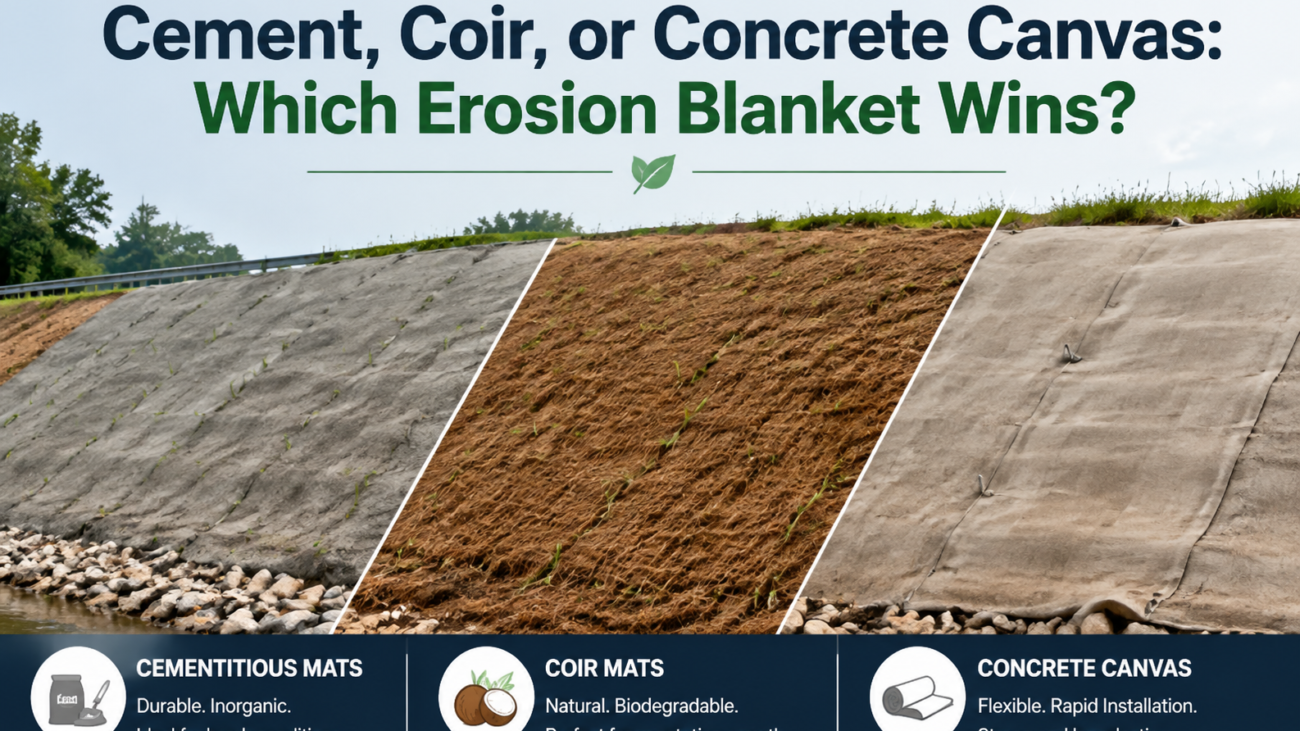
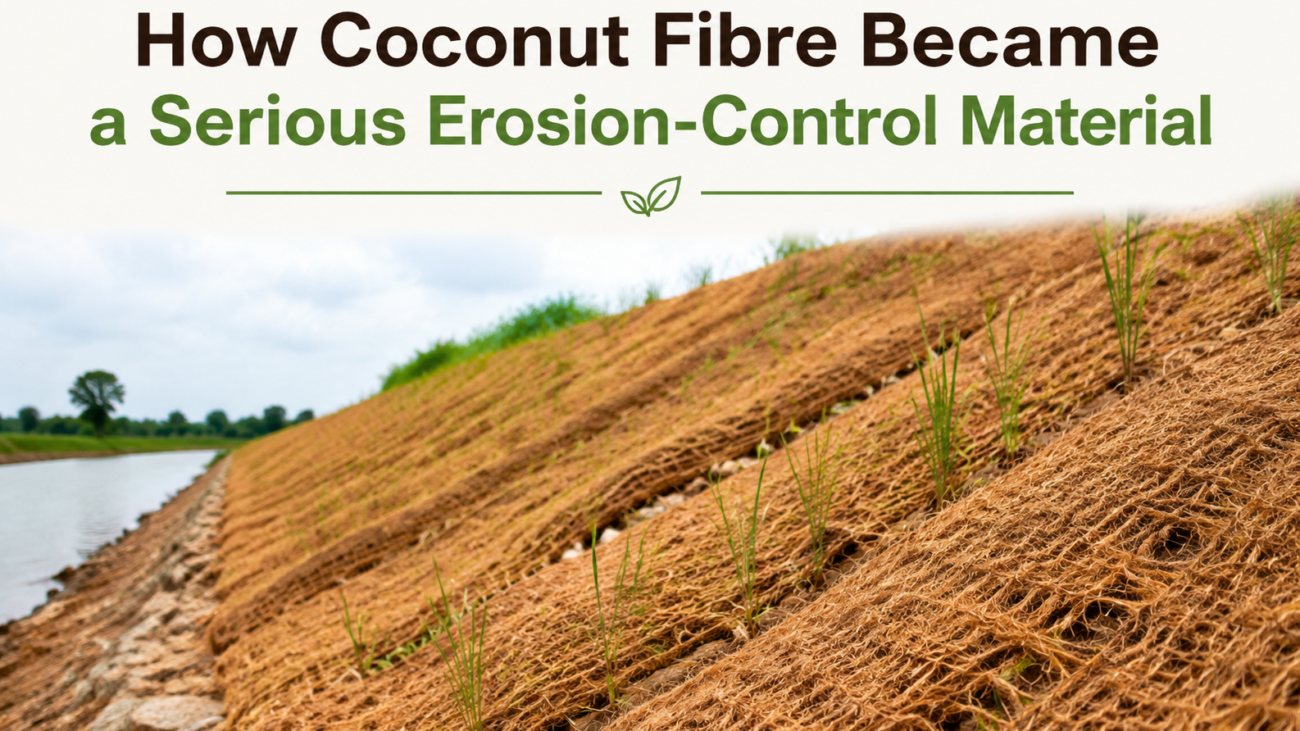
Water Containment vs Surface Protection When to Use a Liner, GCL, or GCCM

Water Containment vs Surface Protection: When to Use a Liner, GCL, or GCCM

Managing water effectively is one of the most critical challenges in modern civil engineering. Whether the goal is to store precious drinking water, prevent toxic leachate from entering the soil, or protect a steep embankment from severe storm erosion, choosing the right material is essential. The engineering world provides numerous advanced solutions for these complex problems. However, project managers often face a difficult decision when selecting the perfect geosynthetic material. Understanding the distinct differences between water containment and surface protection is the very first step toward project success. 

This detailed guide will explore exactly when to use a standard water storage liner, a Geosynthetic Clay Liner, or a Geosynthetic Cementitious Composite Mat. In the second half of this article, we will also take a close look at the premium engineering solutions provided by Ennkae. Their advanced product lineup is designed specifically to meet the rigorous demands of modern infrastructure projects.

Understanding Water Containment versus Surface Protection

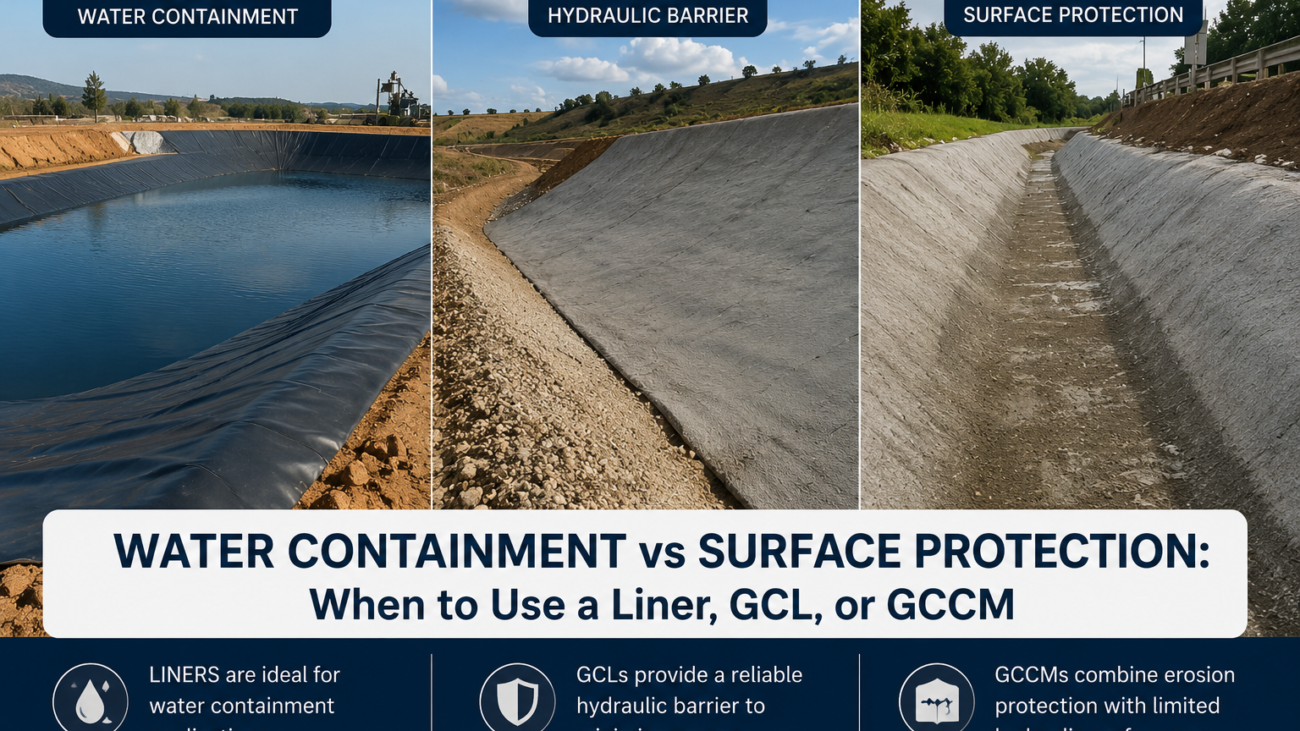
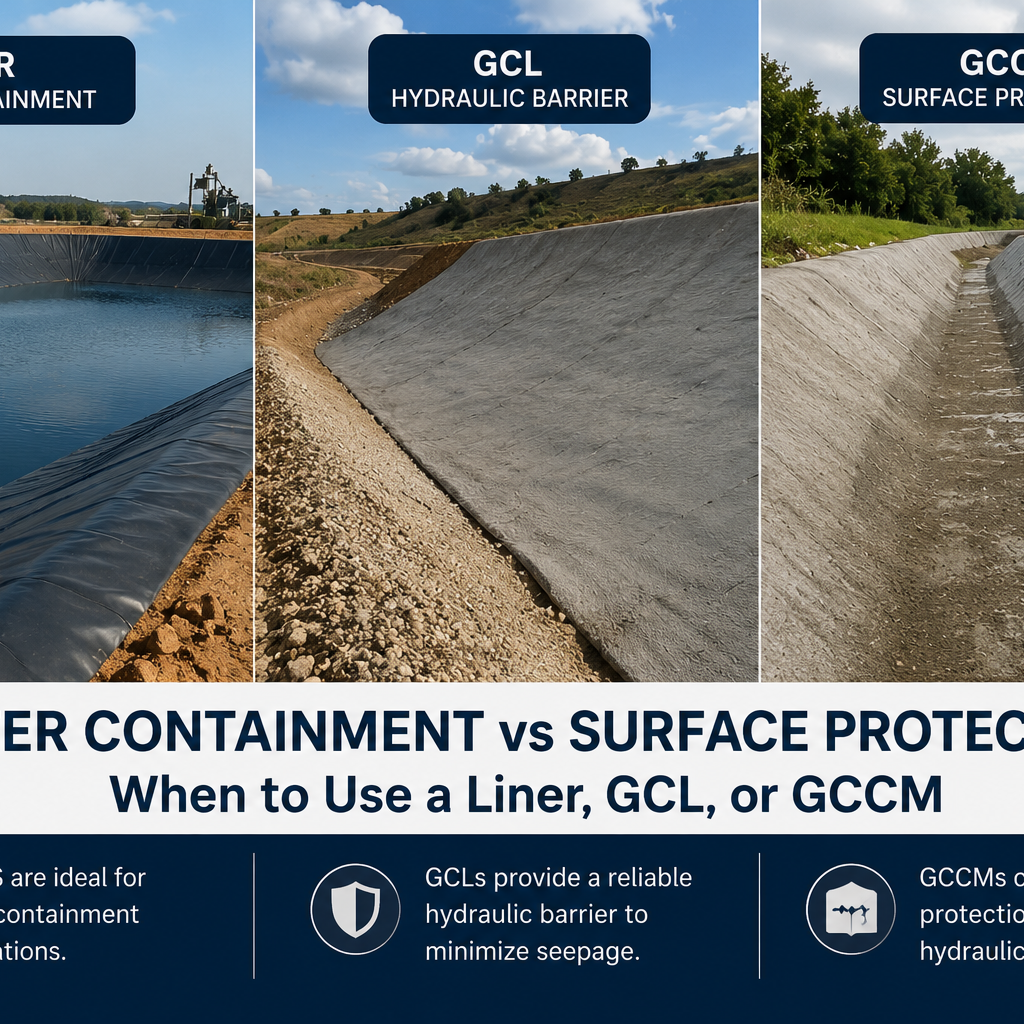
Before selecting a specific material, engineers must clearly define the primary objective of their project. Water containment and surface protection are two very different engineering concepts. Water containment is strictly about preventing liquids from migrating through the soil. The primary goal here is perfect waterproofing. Examples include lining a municipal landfill to trap hazardous chemicals or building a large water storage reservoir for agricultural use. In these scenarios, the chosen material must have extremely low permeability. It must act as a flawless barrier against liquid transfer.

Surface protection serves an entirely different purpose. The main objective here is to prevent soil erosion and structural degradation caused by flowing water, harsh weather, or physical impact. Examples of surface protection include lining a drainage channel, securing a steep highway embankment, or armoring a bridge abutment. While these protective layers might slow down water infiltration, their primary job is to provide a hard, durable shield over the vulnerable earth. Mixing up these two objectives can lead to catastrophic project failures and massive financial losses.

Water Containment vs Surface Protection: When to Use a Liner, GCL, or GCCM

The Role of a Standard Water Storage Liner

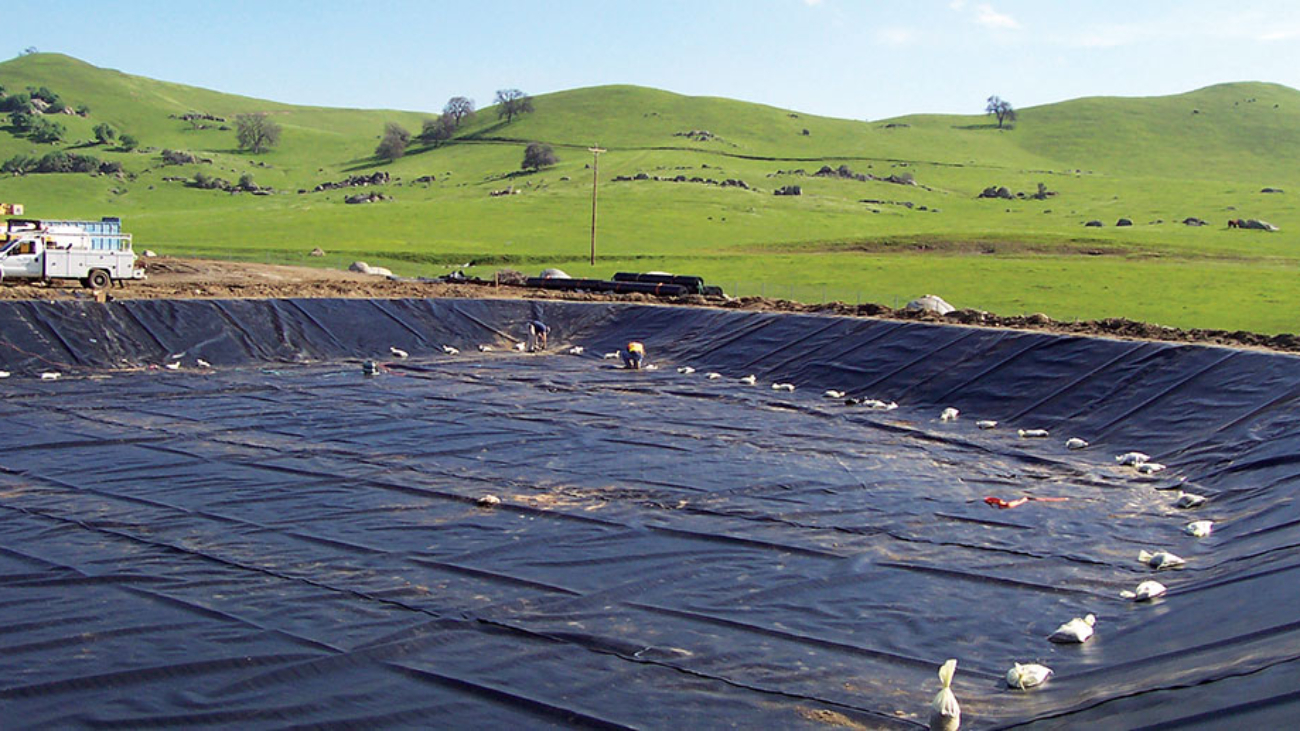
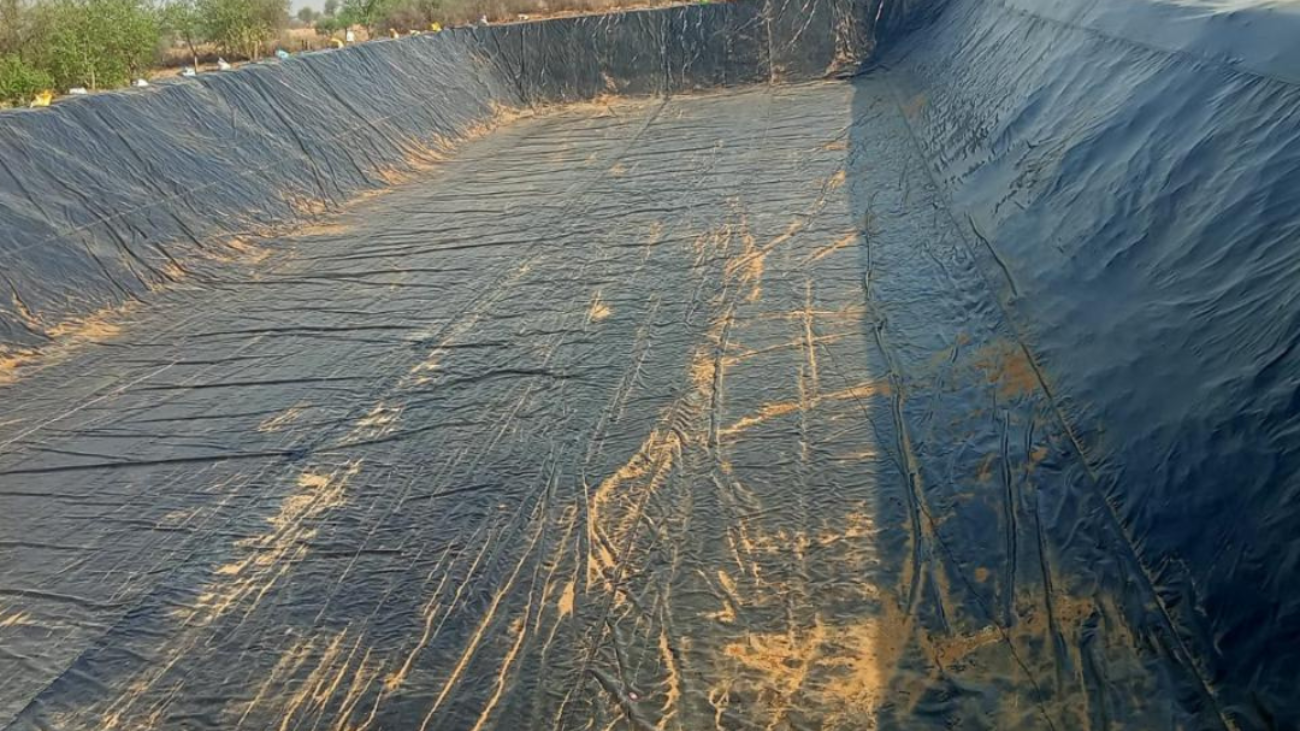
For decades, engineers have relied on standard polymeric geomembranes for basic water containment. These are typically made from High-Density Polyethylene or Linear Low-Density Polyethylene. These plastic liners are excellent for creating a highly impermeable barrier. When a project requires a straightforward water storage liner for a pond or a decorative lake, these materials perform very well. They are flexible, relatively easy to weld on site, and highly resistant to a variety of harsh chemicals.

However, standard plastic liners have significant limitations. They are incredibly vulnerable to physical damage. Sharp rocks in the subgrade, heavy machinery tracks, or even dropping a hand tool can easily puncture a plastic water storage liner. Once a tear occurs, the waterproofing integrity is completely compromised. Locating and patching a small leak under millions of gallons of water is an absolute nightmare for maintenance teams. Because they lack physical durability, standard liners almost always require a protective layer of soil or concrete placed over them. This requirement adds significant time, labor, and cost to the overall installation process.

The Bentonite-Based Liner Intent and Geosynthetic Clay Liners

When projects demand fail-proof waterproofing and supreme reliability, engineers turn to the Geosynthetic Clay Liner, widely known as a GCL. To understand why a GCL is so effective, we must look at the specific bentonite-based liner intent. A high-quality GCL is manufactured by sandwiching a uniform layer of natural sodium bentonite clay between two incredibly strong synthetic fabrics. These outer fabric layers are mechanically needle-punched together to lock the active clay securely in place.

The true magic of a GCL lies entirely in its unique core material. Sodium bentonite clay is a highly expansive natural mineral. When it comes into contact with moisture, it swells rapidly to many times its original dry volume. Because the swelling clay is trapped tightly between the robust outer fabrics, it forms an ultra-dense, impenetrable waterproofing seal. This dynamic swelling action is the core of the bentonite-based liner’s intent. It creates a barrier that is often far more effective than several feet of highly compacted natural clay.

The greatest advantage of a GCL over a standard plastic liner is its remarkable self-healing capability. If the liner suffers a minor puncture or a small tear during the installation process, the project is not doomed. As soon as water reaches the damaged area, the bentonite clay simply swells up and automatically seals the breach. This makes GCLs the ultimate choice for high-stakes containment projects. They are heavily utilized in solid waste landfills, industrial containment basins, and critical groundwater protection systems.

When to Specify a GCCM for Ultimate Surface Protection

While a GCL is the undisputed king of waterproofing, it is not designed to handle direct physical wear and tear. If you need to line a fast-flowing water channel or stabilize a steep mountain slope, you need structural armor. This is exactly where the Geosynthetic Cementitious Composite Mat comes into play. A GCCM is fundamentally different from a containment liner. It is best described as highly flexible concrete on a roll. It consists of a dry, specially formulated cement powder securely trapped inside a three-dimensional fabric matrix.

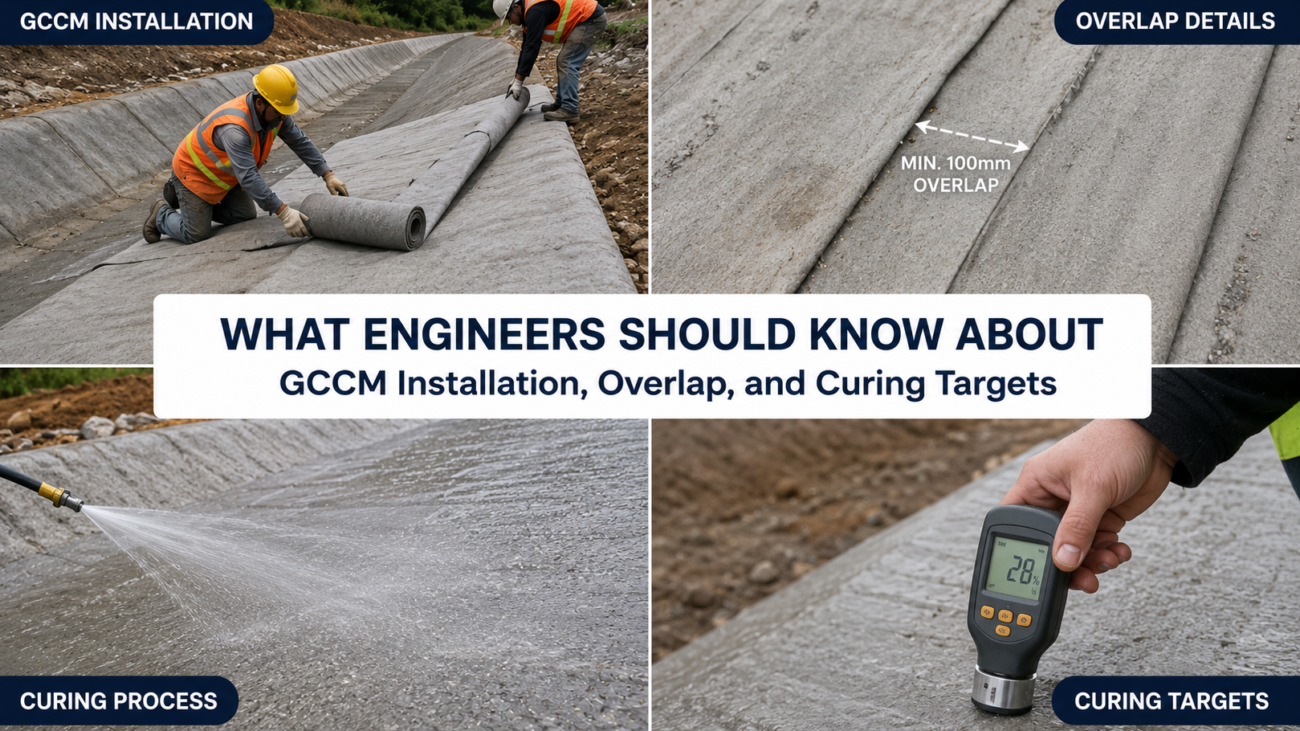
The installation process is incredibly efficient. Workers simply unroll the flexible mat over the prepared soil, secure the overlapping seams, and spray it thoroughly with water. Within twenty-four hours, the flexible fabric hardens into a rigid, highly durable concrete shell. A GCCM provides exceptional surface protection against high velocity water flow, heavy debris impact, and severe environmental weathering. It completely eliminates the need for expensive concrete mixer trucks, complex wooden formwork, and steel rebar grids.

It is important to note that while a GCCM significantly reduces water seepage, it is generally not classified as a strict water containment liner on its own. It is an armoring solution. However, modern engineering frequently combines these advanced materials for ultimate performance. By placing a tough GCCM directly over a self-healing GCL, engineers create a composite system. The bottom clay layer provides flawless waterproofing while the top concrete layer delivers indestructible surface protection.

Ennkae: Pioneering Advanced Geotechnical Solutions

Understanding the technical nuances of these materials is only half the battle. Securing high-quality products from a reliable manufacturing partner is equally critical. Ennkae stands at the forefront of the geotechnical engineering industry. Originally established over a decade ago as NK Constructions, the company has grown into a highly specialized provider of slope stabilization and erosion control systems. They provide innovative, sustainable, and rapid deployment solutions for massive infrastructure projects.

Ennkae does not just sell materials in bulk. They offer deep technical expertise and comprehensive project support. Their engineering teams work closely with site contractors to design customized strategies for highways, railway networks, coastal defense projects, and agricultural irrigation systems. 

By focusing on modern composite materials, Ennkae helps construction companies reduce their carbon footprint, slash installation times, and significantly lower overall project costs. Their diverse product portfolio is carefully designed to address both complex water containment and rigorous surface protection challenges.

Mastering Containment with nKlay GCL

When a project demands the absolute highest standard of waterproofing, Ennkae provides the nKlay system. This premium Geosynthetic Clay Liner perfectly embodies the bentonite-based liner intent discussed earlier. nKlay features high-purity sodium bentonite clay that offers unmatched swelling capacity and chemical resistance. It is the ideal water storage liner for highly sensitive environmental applications.

Engineers frequently specify nKlay for lining municipal waste facilities, large-scale decorative lakes, and hazardous industrial runoff ponds. The needle-punched construction of nKlay ensures that the active clay remains perfectly distributed across the entire roll, even when installed on extremely steep embankments. Its exceptional self-healing properties give project managers total peace of mind. With nKlay, the risk of hidden leaks compromising the surrounding groundwater is practically eliminated.

Armoring Infrastructure with the nKrete GCCM

For projects requiring rapid and robust surface protection, the flagship product is undoubtedly the nKrete GCCM. This advanced concrete-on-a-roll technology is transforming how engineers approach slope and channel protection. nKrete utilizes a highly specialized four-dimensional fibre matrix that ensures the dry cement mix stays uniformly distributed before, during, and after the hydration phase.

The versatility of nKrete is truly outstanding. It is used extensively to line agricultural irrigation canals, protect heavy railway embankments from monsoon erosion, and reinforce culvert outfalls. Because it conforms perfectly to the natural terrain before setting, nKrete creates a seamless concrete armor over highly irregular ground. The material is highly fire-resistant, chemically stable, and boasts a design life exceeding fifty years. For contractors facing tight project deadlines and difficult site access, nKrete provides a massive strategic advantage over traditional poured concrete methods.

Comprehensive Soil Stabilization with Ennkae Cell

Surface protection often requires stabilizing the underlying soil structure first. For these situations, Ennkae manufactures the highly effective Ennkae Cell, a premium GeoCell system. This three-dimensional cellular confinement system is engineered from strong High-Density Polyethylene strips. When expanded on site, it forms a robust honeycomb structure that completely traps and confines the loose soil or gravel inside its cells.

The Ennkae Cell is incredibly effective for stabilizing weak subgrades under heavy access roads. It prevents the lateral movement of soil particles, thereby distributing heavy vertical loads over a much wider surface area. It is also highly popular for green slope protection. The empty cells can be filled with nutrient-rich topsoil and seeded with local grass. The rigid plastic walls prevent the soil from washing away during heavy rain, allowing the vegetation to take deep root and provide natural, long-lasting erosion control.

Heavy Duty Defense and Subsurface Drainage

Some hydraulic projects face extreme forces that require even heavier protection. For intense coastal shoreline defense and fast-flowing riverbanks, Ennkae offers the nKrete R system. This custom-engineered concrete mattress system utilizes high-strength fabric forms that are pumped full of concrete on site. It creates a massive, permanent revetment that can withstand severe tidal impacts and continuous hydraulic scour.

Beyond surface solutions, Ennkae also excels in managing trapped groundwater. Their comprehensive range of Non-Woven Geotextiles provides vital soil separation and fine filtration for highway and retaining wall construction. These premium fabrics prevent vital drainage aggregates from becoming clogged with fine silt over time. 

Additionally, the Ennkae DrainTube offers a highly innovative geo-composite solution for managing subsurface water. By efficiently channeling trapped water away from critical foundations, these drainage solutions ensure the long-term stability of the entire infrastructure project.

Finally, Ennkae remains deeply committed to ecological sustainability through products like nKoir. This natural coir mattress system protects vulnerable topsoil while actively promoting rapid vegetative growth. By offering a complete spectrum of advanced solutions, Ennkae ensures that modern engineers have the exact tools they need. Whether a project requires flawless water containment with a bentonite-based GCL or impenetrable surface protection with a rugged GCCM, Ennkae delivers unparalleled quality and lasting performance.

What Engineers Should Know About GCCM Installation, Overlap, and Curing Targets

What Engineers Should Know About GCCM Installation, Overlap, and Curing Targets

Geosynthetic Cementitious Composite Mats have completely revolutionized the way civil engineers approach slope protection, erosion control, and structural containment. Often referred to as concrete on a roll, this advanced material offers a unique blend of extreme flexibility and ultimate structural strength. When large-scale infrastructure projects demand rapid execution and high durability, engineers increasingly turn to this innovative solution. 

However, the long-term success of any such project relies heavily on a deep understanding of the correct installation techniques. This includes mastering the overlap procedures and hitting the precise curing targets. If you are a site engineer, a contractor, or a project manager, knowing the technical specifications and the installation intent of Geosynthetic Cementitious Composite Mats is absolutely vital. 

This comprehensive guide will explore everything you need to know about installing these advanced mats safely and effectively. In the second half of this article, we will also dive deeply into the complete range of modern products and services offered by Ennkae, a leading innovator in slope stabilization and engineering solutions.

Understanding the Core Concept and Installation Intent

Before stepping onto a construction site, engineers must understand the core concept of a Geosynthetic Cementitious Composite Mat, commonly known as GCCM. At its foundation, a GCCM is a specialized, factory-assembled roll that contains a dry cementitious mix. This proprietary dry mix is securely sandwiched between high-strength geotextile layers. Premium products, such as the nKrete GCCM manufactured by Ennkae, also feature a high-density polyethylene backing. This specific layered construction provides exceptional durability, impact resistance, and extremely low permeability.

The primary installation intent behind using GCCM is to effectively replace traditional, time-consuming poured concrete methods. Traditional concrete applications require heavy machinery, massive water resources, extensive formwork, and significant manual labor. In sharp contrast, a GCCM is designed for rapid and highly efficient deployment. Engineers specify this material for critical projects where speed, safety, and minimal environmental impact are the top priorities. The installation intent is simple: unroll the material, position it correctly, and hydrate it.

Another major installation intent is pure adaptability. In its unhydrated state, the material is highly flexible and conformable. It conforms effortlessly to the exact shape of the natural terrain. This makes it the perfect engineering solution for irregular ground surfaces, extremely steep slopes, and complex drainage channels. Engineers and site workers can easily cut and tailor the unhydrated mat using basic hand tools. This adaptability ensures that the material fits perfectly around existing infrastructure, pipes, or natural obstacles without compromising structural integrity.

Reviewing Technical Specifications and Site Preparation

Technical specifications guide every critical engineering decision on a project site. When working with concrete in roll form, knowing the exact material properties is crucial for a successful application. Products like Ennkae nKrete come in various thickness options ranging from 6 millimeters up to 13 millimeters. The standard roll size is usually 2.4 meters wide by 21 meters long. These dimensions allow for substantial surface coverage while remaining manageable for logistics and site handling. The material composition involves a cement-impregnated geotextile that boasts excellent fire resistance and UV stability. This ensures the installed layer will not degrade rapidly under harsh sunlight or extreme weather conditions, offering a design life of over fifty years.

Proper site preparation sets the stage for a flawless installation. The very first step involves preparing the earth subgrade. Construction workers must carefully remove sharp rocks, large roots, and heavy debris from the target area. While the composite mat is robust, creating a relatively smooth surface ensures the mat conforms neatly to the ground. This careful preparation prevents dangerous void spaces from forming beneath the concrete shell after curing. Following the clearing process, basic soil compaction is necessary. The earth should be stable enough to support the intended load and prevent any future ground settling.

The Critical Rules of Overlap and Joining Techniques

One of the most important technical aspects of any GCCM installation is the overlap. If overlaps are not executed correctly, the entire protective system can fail under hydraulic pressure. The overlap is the exact seam where two separate rolls of material meet. This seam must be tight, secure, and properly aligned to prevent water ingress, soil erosion, and structural weakness. Engineers must review the technical specifications to determine the exact overlap width based on the anticipated water flow velocity and the slope gradient.

When installing the material in a water channel or on a steep slope, the upstream roll must always overlap the downstream roll. This strategic placement creates a shingle effect. Water will flow smoothly over the seam rather than catching the exposed edge and seeping underneath the mat. Securing these edges and overlaps is a non-negotiable step. Site workers use heavy-duty ground anchors, steel pegs, or specialized stainless steel screws to bind the overlapping layers together firmly.

Trenching methods are also widely used and highly recommended by structural engineers. The leading edges of the GCCM are placed deep into an anchor trench at the top crest of the slope. This trench is then backfilled with compacted soil or gravel. This anchoring method prevents the heavy mat from slipping down the incline before and after the hydration phase. A properly secured overlap ensures that the final hardened structure acts as a single, unified, and impenetrable concrete shell.

Hydration Processes and Hitting Curing Targets

The physical transformation of the mat from a flexible fabric into a rigid concrete structure happens exclusively through hydration. Hitting the correct curing targets is essential for achieving the maximum flexural and compressive strength. The hydration process involves applying water evenly and consistently across the entire surface of the unrolled mat. This can be accomplished using a standard hose, a specialized spray nozzle, or a commercial water truck for larger infrastructure projects.

Engineers must ensure that the water application is sufficient to activate the dry cementitious core completely. Unlike traditional concrete mixing, where excess water can ruin the batch, you cannot easily overwater a high-quality GCCM. The intelligent fabric design is engineered to absorb only the precise amount of water it needs to set. However, applying too little water is a major risk. Insufficient hydration will result in incomplete curing and a significantly weaker final structure. The water must penetrate fully through the top geotextile layer.

Once properly hydrated, the curing target is remarkably rapid. The material typically sets and hardens within 24 to 36 hours. During this critical period, the concrete achieves its initial structural strength. The unique internal fibre reinforcement inside the matrix prevents shrinkage and cracking during the curing phase. Site engineers must also monitor the local weather conditions during this phase. In extremely hot, windy, or dry climates, a second pass of water might be necessary a few hours later to prevent premature surface drying.

Ennkae: Leaders in Slope Stabilization and Modern Engineering

Now that we have covered the intricate installation details, it is time to look at the innovator providing these advanced solutions. Ennkae is a premier manufacturer and provider of next-generation slope stabilization and erosion control systems. Originally founded in 2011 as NK Constructions, the company has evolved into a dedicated specialist in advanced engineering solutions and subsurface drainage systems. Today, Ennkae stands as a trusted expert for massive infrastructure projects across the most challenging terrains in the country.

The core strength of Ennkae lies in combining deep engineering expertise with modern, sustainable materials. They cater to a wide range of critical sectors, including national highways, railway networks, coastal defense lines, industrial containment, and agricultural irrigation. Whether a project involves stabilizing a steep mountainous highway or protecting a vital canal network, Ennkae delivers highly specific site strategies. They are not just material suppliers. They are comprehensive solution providers who design, manufacture, and implement long-lasting protective systems to ensure ultimate infrastructure safety.

The Power and Versatility of nKrete GCCM

The absolute flagship product in the extensive Ennkae portfolio is the nKrete GCCM. As discussed in the technical sections above, this concrete in roll form provides unmatched speed, flexibility, and durability. The nKrete system features a unique four-dimensional fibre matrix. This advanced internal structure gives the material exceptional impact resistance and a highly stable failure mode. It is heavily chemical resistant, deeply fire resistant, and offers excellent weathering performance over decades of use.

Engineers frequently choose nKrete for critical slope and embankment protection, rapid drainage channel lining, and reinforcing culvert outfalls. It is also an ideal choice for secondary containment berms in chemical and industrial applications. Because it requires minimal heavy equipment and drastically reduces overall installation time, nKrete offers a massive return on investment for contractors. It truly is the definitive solution for reinforcing slopes in a smarter and faster way.

nKlay GCL for Ultimate Waterproofing and Containment

While the GCCM is perfect for hard surface protection, Ennkae also offers the highly advanced nKlay GCL for premium waterproofing needs. GCL stands for Geosynthetic Clay Liner. This specific product consists of a high-purity sodium bentonite clay core that is needle-punched securely between two robust geotextile layers. When water interacts with the bentonite clay, it swells up to fifteen times its dry volume to create an ultra-low permeability barrier.

nKlay is the absolute gold standard for containment projects like municipal landfills, large water reservoirs, and industrial wastewater ponds. It possesses outstanding self-healing properties that engineers love. If the liner is accidentally punctured during or after installation, the rapidly swelling clay automatically seals the breach completely. For massive projects, Ennkae often recommends a highly efficient hybrid approach. By using nKlay GCL as the base waterproofing layer and nKrete GCCM as the top surface protective layer, engineers achieve the ultimate combination of zero water seepage and high surface erosion resistance.

GeoCell for Three-Dimensional Soil Stabilization

Another highly effective geotechnical solution from Ennkae is the GeoCell, marketed as the Ennkae Cell. This is a high-performance three-dimensional soil stabilization system manufactured from premium High-Density Polyethylene. The strong polymer strips are ultrasonically welded at specific junctions to form a durable cellular confinement system.

GeoCell is incredibly versatile across multiple applications. It is widely used to stabilize loose slopes, protect expensive liners in hazardous waste facilities, and distribute heavy loads over weak subgrades for access roads. It can also act as the structural facing for mechanically stabilized earth retaining walls. By physically confining the soil within its expandable cells, the GeoCell prevents lateral movement and severe soil erosion. This mechanism enhances the overall ground performance significantly, making it a vital tool for geotechnical engineers working in demanding soil conditions.

Concrete Revetments and Advanced Drainage Geotextiles

For heavy-duty hydraulic projects requiring massive protection, Ennkae offers the nKrete R system. This is a pre-engineered, factory-custom grouted mattress system. It is specifically designed for permanent slope and fast-flowing riverbank protection. The high-strength fabric forms are precisely tailored at the factory and delivered directly to the construction site. Once properly placed, they are pumped full of high-strength concrete. This specialized system is perfect for coastal shoreline defense, bridge abutments, and large spillways facing continuous, aggressive water flow.

Ennkae also manufactures and provides high-quality Non-Woven Geotextile fabrics. These specialized materials are engineered from premium polypropylene or polyester fibers. They are highly permeable and absolutely ideal for soil separation, fine filtration, and drainage applications in highway road construction and retaining walls. Available in a wide GSM range from 90 to 500, these fabrics prevent critical drainage systems from clogging over time. Additionally, the Ennkae DrainTube offers an innovative geo-composite solution for subsurface drainage, ensuring trapped groundwater does not compromise expensive structural foundations.

Finally, for environmentally sensitive areas, Ennkae produces the nKoir system. This is a natural green coir geotextile mattress combined securely with strong netting. It protects the topsoil from severe erosion while actively promoting natural vegetation growth. It perfectly blends rigorous engineering requirements with ecological sustainability, proving that modern infrastructure can work in harmony with nature. By choosing the advanced products and services from Ennkae, modern engineers and project managers can confidently build a safer, stronger, and far more sustainable future.

Erosion Control Solutions Compared: GCCM, Revetments, Geocells, and Coir Systems

Erosion Control Solutions Compared: GCCM, Revetments, Geocells, and Coir Systems

Soil erosion is one of the most destructive forces challenging modern infrastructure projects. Whether dealing with heavy monsoon rains, continuous river currents, or steep mountain embankments, unchecked erosion can lead to catastrophic landslides and structural failures. Civil engineers and project managers are constantly searching for reliable, cost-effective, and sustainable erosion control solutions. The days of relying solely on traditional, time-consuming poured concrete are long gone. Today, the geotechnical industry offers a wide array of advanced materials designed to stabilize soil and protect valuable land. Choosing the right engineering solution requires a deep understanding of the specific site conditions and the primary challenges at hand.

 This comprehensive comparison guide will break down the fundamental differences between Geosynthetic Cementitious Composite Mats, concrete revetments, 3D geocells, and natural coir systems. In the second half of this detailed article, we will thoroughly explore how Ennkae is leading the industry by manufacturing and providing these cutting-edge slope stabilization systems.

The Power of Geosynthetic Cementitious Composite Mats

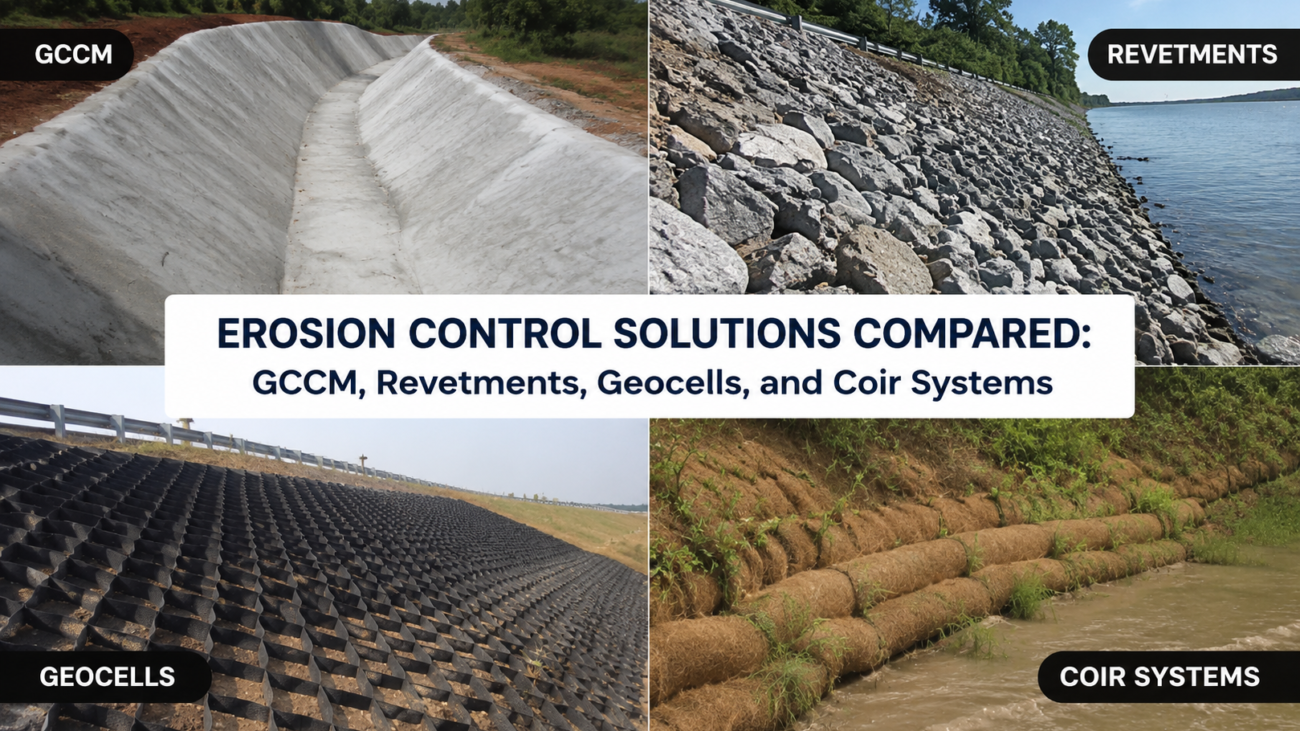
When engineers need rapid surface protection combined with extreme structural durability, they turn to the Geosynthetic Cementitious Composite Mat, widely known as GCCM. This highly innovative material is essentially concrete in a flexible roll. It consists of a specially formulated dry cement mix securely embedded between two layers of high-strength geotextile fabric. The primary advantage of a GCCM is its incredible speed of installation. Instead of coordinating heavy concrete mixer trucks and building complex wooden formwork, site workers simply unroll the mat, secure it to the ground, and spray it with water.

Within just 24 to 36 hours of hydration, the flexible fabric hardens into a tough, impermeable concrete shell. A GCCM perfectly follows the natural undulations and contours of the ground before it sets. This makes it an ideal engineering solution for lining drainage channels, protecting culvert outfalls, and reinforcing steep highway embankments. Furthermore, GCCM technology is highly eco-friendly. It utilizes up to 95 percent less material than conventional poured concrete for similar applications, drastically reducing the overall carbon footprint of the project.

Heavy Duty Defense with Concrete Revetments

While a GCCM is perfect for general surface protection, some extreme hydraulic environments require much heavier armor. This is where concrete revetments come into play. A revetment system is specifically designed for permanent, heavy-duty slope protection against aggressive water flow and severe tidal scour. These systems typically involve pre-engineered fabric forms or custom mattresses that are laid empty across the target area. Once properly positioned, they are pumped full of high-strength concrete or grout on site.

Concrete revetments provide massive structural weight and absolute rigid stability. They are the preferred engineering choice for coastal shoreline defense, large dam spillways, and bridge abutments subjected to continuous, fast-flowing river currents. Because the fabric forms are custom-manufactured at the factory to match specific project dimensions, the final installed product is highly consistent. The heavy concrete mass ensures that the underlying soil is completely protected from the relentless pulling force of deep water currents.

Three-Dimensional Stabilization with Geocells

Sometimes the best way to prevent erosion is to physically trap and confine the soil itself. A Geocell is a highly effective three-dimensional soil stabilization system. Manufactured from high-density polyethylene, these systems arrive on site as flat, collapsed panels. When expanded, they form a strong, honeycomb-like cellular structure. The expanded cells are then placed over the prepared subgrade and filled with soil, gravel, or local aggregates.

Geocells are incredibly versatile. By physically confining the fill material within the welded plastic walls, they prevent lateral movement and distribute heavy vertical loads over a much wider area. This makes them perfect for stabilizing weak ground under heavy access roads. For slope stabilization, Geocells hold the topsoil firmly in place on steep inclines, preventing it from washing away during heavy rainstorms. They are also widely used to construct mechanically stabilized earth retaining walls. For environmental projects, the top layer of a Geocell can be seeded with grass, creating a reinforced green slope that blends perfectly with the natural landscape.

Eco-Friendly Protection using Coir Systems

Not every erosion control project requires heavy concrete or rigid plastics. For environmentally sensitive areas and natural landscaping projects, coir systems offer a highly effective and fully organic solution. Coir is a tough, natural fiber extracted from the outer husk of coconuts. Manufacturers weave these natural fibers into thick mats or heavy-duty netting.

The primary goal of a coir system is to protect the vulnerable topsoil just long enough for natural vegetation to take deep root. When placed over a freshly seeded slope, the coir mat acts as a protective blanket. It slows down surface water runoff, traps essential moisture, and shields young plant shoots from harsh sunlight and heavy rain. Over time, usually within three to five years, the natural coir fibers slowly biodegrade into the soil, adding valuable organic matter. By the time the mat disappears, the newly grown plant roots have permanently stabilized the earth. Coir systems represent the perfect harmony between effective engineering solutions and ecological sustainability.

Ennkae: Pioneers in Next Generation Slope Stabilization

Understanding the distinct advantages of these advanced materials is crucial, but sourcing them from a trusted manufacturing partner guarantees project success. Ennkae is a premier provider of next-generation slope stabilization and erosion control systems. Based in Bangalore, the company is highly respected for delivering intelligent engineering solutions designed to conquer the toughest terrains in the country. Their specialized products are widely accepted and trusted by major sectors, including national railways, the power sector, defense infrastructure, and municipal water resources departments.

Ennkae does not merely supply raw materials. They combine smart engineering expertise with modern, innovative technologies to protect vital infrastructure while significantly reducing environmental impact. Their comprehensive product portfolio covers everything from hard armoring to natural green solutions. By leveraging the latest materials, Ennkae ensures that contractors and project managers can execute their builds faster, safer, and far more efficiently than ever before.

The Advanced Capabilities of nKrete GCCM

The true flagship of the Ennkae product line is the nKrete GCCM. This advanced geosynthetic cementitious composite mat is completely revolutionizing how engineers handle channel lining and weed control. nKrete features a unique four-dimensional fibre matrix that securely holds the customized cement and sand mixture. This matrix is locked in place using advanced needle punch technology between two layers of tough polypropylene geotextile. Additionally, nKrete includes a high-density polyethylene geomembrane backing that acts as a vital secondary waterproof barrier.

The resulting material is exceptionally strong. The internal fibre reinforcement totally prevents structural cracking, absorbs heavy impact energy, and provides a highly stable failure mode. Engineers heavily favor nKrete because it is exceptionally durable, chemically resistant, deeply fire resistant, and offers outstanding weathering performance. Because unset nKrete can be easily tailored using basic hand tools, it rapidly negotiates tight bends and complex site geometries. It is the definitive solution for achieving a hard, resilient concrete layer in just 24 hours.

Unbreakable Strength with nKrete R Concrete Revetments

When a project demands extreme scour protection, Ennkae provides the nKrete R system. This is a pre-engineered geosynthetic factory custom grouted mattress system. It is designed specifically for permanent slope protection works facing severe hydraulic stress. The customized fabric mattresses are placed over vulnerable riverbanks or coastal slopes and pumped full of structural grout.

nKrete R delivers a massive, unified protective shield that completely absorbs the destructive energy of heavy waves and rapid river flows. It is the ultimate heavy-duty choice for safeguarding vital public infrastructure from total washouts. By pre-engineering the fabric forms at their factory, Ennkae ensures that the on-site installation process remains as streamlined and predictable as possible.

Versatile Confinement with ennkae Cell

For projects requiring deep soil confinement and load distribution, the ENNKAE Cell is the perfect geotechnical tool. This premium GeoCell system is manufactured using high-quality high-density polyethylene. The durable polymer strips are ultrasonically welded at specific junctions to create a highly robust cellular confinement grid. The strips feature rhomboidal indentations and calculated perforations to ensure excellent friction and optimal water drainage.

The Ennkae Cell excels in multiple heavy-duty applications. It stabilizes high embankments for new highways, acts as a protective cushion over expensive liners in hazardous waste facilities, and forms the structural facing for towering gravity retaining walls. By effectively locking the soil in place, the Ennkae Cell dramatically enhances the load-bearing capacity of extremely weak subgrades, ensuring that heavy construction equipment can operate safely.

Green Solutions with nKoir and Comprehensive Drainage

Ennkae remains deeply committed to sustainable engineering practices. Their nKoir product line perfectly addresses the need for natural erosion control. nKoir is a premium green coir geotextile mattress combined securely with strong polypropylene netting. It provides immediate, highly effective erosion protection for soft landscaping projects while actively prompting rapid vegetation growth. It is the ideal eco-friendly choice for municipal parks, residential developments, and sensitive river habitats.

Beyond surface protection, managing trapped subsurface water is critical for long-term structural stability. Ennkae manufactures high-performance Non Woven Geotextile fabrics engineered from quality polypropylene or polyester fibers. Available in weights ranging from 90 GSM up to 500 GSM, these highly permeable fabrics provide essential soil separation and fine filtration. They prevent vital drainage trenches from clogging over time.

Furthermore, Ennkae offers the highly innovative DrainTube system. This geo composite drainage tube features a perforated high-density polyethylene pipe fully encased in a durable filter fabric. It quickly collects and redirects harmful subsurface water away from retaining walls, pavements, and deep building foundations. It eliminates hydrostatic pressure buildup, ensuring the soil remains perfectly stable. By offering this complete spectrum of advanced solutions, Ennkae empowers modern engineers to build a stronger, safer, and highly resilient future

2 (1)

How Thin Concrete Linings Are Changing Drain and Slope Protection

The Problem with Conventional Concrete Has Always Been the Process

The Problem with Conventional Concrete Has Always Been the Process

Let’s be honest, traditional concrete has never been a quick fix.

You bring in the equipment, set up formwork, mix the batch, pour, wait, cure, inspect, and then hope the finish holds up under rain, UV exposure, and shifting soil. For slope protection and drain lining projects, this drawn-out process has cost the construction industry enormous amounts of time, money, and manpower for decades.

But something changed. A new generation of thin concrete linings stepped onto the scene, and the way engineers, contractors, and municipalities think about erosion control and channel protection has not been the same since.

These materials go by several names: concrete canvas, concrete mat, cement blanket, and flexible concrete mat. In the geosynthetics world, they fall under the technical category of Geosynthetic Cementitious Composite Mat (GCCM). Whatever name you use, the outcome is the same: a thin, durable, waterproof concrete lining that sets in 24 hours with nothing more than water.

This article walks you through what these materials are, why they work, where they are being used, and why they represent the future of drain and slope protection.

What Exactly Is a Flexible Concrete Mat?

A flexible concrete mat, also called a concrete canvas or cement blanket, is essentially concrete embedded within a geotextile fabric structure. The dry cementitious mix is sandwiched between two layers of polypropylene geotextile and backed by an HDPE geomembrane that serves as an additional waterproofing barrier.

In its unhydrated state, the material behaves much like a roll of carpet. You can cut it, fold it, bend it around curves, and drape it across uneven terrain. Once water is applied, the cement activates, and within 24 hours, a rigid, load-bearing concrete shell forms directly on the surface following every contour of the ground beneath it.

This is the core distinction that makes flexible concrete mats revolutionary: concrete that conforms before it hardens.

Traditional concrete is rigid from the moment it is poured. It requires a flat, prepared, formworked surface. Flexible concrete mat, on the other hand, conforms to complex terrain, curved channels, angled embankments, and irregular rock faces and then locks into that shape permanently.

Products like nKrete by Ennkae take this technology to its highest form, combining a 4-dimensional fibre matrix of cement, sand, and admixtures with needle-punch polypropylene geotextile layers and an integrated HDPE membrane. The result is a GCCM that is simultaneously flexible, fire-resistant, UV-stable, chemically resistant, and capable of lasting 50+ years in field conditions.

The Language Problem: Concrete Canvas, Concrete Mat, GCCM Are These the Same?

Yes, mostly though with some nuance.

Concrete canvas is often used as a general descriptive term (and is also a brand name for a UK-based product). Concrete mat and cement blanket are informal terms used widely in the field and in procurement conversations. Flexible concrete mat is the engineering-friendly descriptor. GCCM Geosynthetic Cementitious Composite Mat is the formal industry classification used in technical documents, specifications, and standards.

All of these refer to the same category of material: a fabric-cement composite that remains flexible until hydrated, at which point it cures into a hard, durable concrete layer.

When evaluating or specifying these products, always look at the technical data sheet. Key properties to compare include thickness range (typically 6mm to 13mm), compressive strength, roll dimensions, curing time, design life, and compliance with relevant geosynthetics testing standards.

Why Drain Lining Is Where This Technology Truly Shines

Open drainage channels and stormwater drains are among the most challenging infrastructure elements to maintain. They face constant hydraulic stress, scouring forces from high-velocity flows, UV degradation, biological growth, and in some climates, freeze-thaw cycling. Traditional solutions, such as cast-in-place concrete, stone pitching, and brick masonry, are either expensive to install, slow to complete, or prone to cracking and joint failure over time.

Flexible concrete mat solves the drain lining problem in a way no previous material has.

Speed of installation is perhaps the most dramatic advantage. A crew can unroll, position, and hydrate a GCCM lining at speeds up to 10 times faster than conventional concrete placement. For irrigation channels, culverts, stormwater drains, and roadside ditches, this translates directly into reduced project timelines and labour costs.

Seamlessness is another critical advantage. GCCM linings, when properly overlapped and anchored, produce a near-seamless surface that eliminates the joint failures that plague brick and block linings. Water cannot infiltrate beneath the lining through joints, which means the subgrade remains stable, and the lining does not heave or crack over time.

Hydraulic performance is also improved. A smooth, cured GCCM surface has a higher Manning’s coefficient than rough stone or brick, meaning water flows more efficiently through the channel with reduced friction losses.

For India’s water resources sector, canals, irrigation networks, and flood management channels, the combination of speed, durability, and hydraulic efficiency makes GCCM drain lining a genuinely transformative option.

Slope Protection: Where Flexibility Is Not Optional

Slope protection is the application that has driven the most rapid adoption of concrete canvas and flexible concrete mat globally.

Natural and engineered slopes are inherently irregular. They have undulations, surface cracks, rock outcrops, tree root formations, and gradient changes. Applying traditional concrete to a slope requires extensive surface preparation, heavy formwork, and often sprayed or shotcrete application, all of which are expensive, slow, and difficult to quality-control.

GCCM changes the game entirely. Because the material is flexible in its dry state, it can be unrolled down a slope and pressed into direct contact with the existing surface following every bump, groove, and transition in the terrain. When hydrated, it cures in place as a perfectly contoured concrete skin over the slope.

This conformability means that GCCM protects the actual ground surface, not a suspended concrete sheet above it. There are no voids beneath the lining where water can pool, undermine the subgrade, or create hydrostatic pressure. The lining is in full contact with the ground at all times.

For railway embankments, highway cut slopes, dam faces, and waterway banks, this level of precision protection was simply not achievable with any previous material at comparable cost and installation speed.

Ennkae’s nKrete GCCM has been deployed in exactly these contexts across railway projects, water resources department works, power sector installations, and defence infrastructure, where reliable slope protection under demanding conditions is non-negotiable.

Performance Characteristics That Matter in the Field

Understanding the performance profile of a flexible concrete mat helps engineers and specifiers make confident decisions. Here are the properties that matter most in real-world drain and slope protection applications.

Compressive strength after hydration places GCCM within the range of conventional structural concrete, enabling it to withstand significant mechanical loads, foot traffic, and equipment traffic during and after installation.

Chemical resistance is critical for industrial containment applications, wastewater channels, and sites with aggressive soils. GCCM’s cement-geotextile composite resists a wide range of acids, alkalis, and hydrocarbons, making it suitable for secondary containment bunds, mine-site drainage, and industrial-yard protection.

Fire resistance is an underappreciated property that becomes critically important in the power sector, rail, and oil and gas applications. The inorganic cement matrix in GCCM does not combust, melt, or propagate flame, providing passive fire protection for sensitive infrastructure.

UV stability ensures that GCCM linings do not degrade when exposed to sunlight over their design life. Unlike many polymer-based erosion control products, the cured concrete surface is intrinsically UV-resistant.

Low carbon footprint compared to conventional concrete is increasingly relevant as infrastructure projects face sustainability requirements. GCCM uses up to 95% less raw material by volume than poured concrete for the same surface protection, significantly reducing transport loads, on-site waste, and embodied carbon.

Installation: Three Steps Is All It Takes

One of the most compelling selling points of thin concrete linings is the radical simplicity of installation.

Step 1: Prepare the surface. Basic clearing of vegetation and loose material is sufficient. There is no requirement for heavy compaction, formwork, or surface levelling. The material will conform to what is there.

Step 2: Unroll and position. The GCCM roll is unrolled down the slope or along the channel. It can be cut to length using standard utility tools; no specialised cutting equipment required. Edges are secured using ground anchors, pegs, or by burying the leading edge in a trench.

Step 3: Hydrate. Water is applied evenly across the surface using a hose, sprinkler, or by natural rainfall. The cement activates immediately, and curing begins. In 24 to 36 hours, the material has reached structural strength.

That’s the entire installation sequence. No mixing. No batching plant. No pumping equipment. No curing membrane sprays. No formwork stripping. The installation crew needs basic hand tools and a water source, and that is all.

For remote locations, hilly terrain, and areas with difficult access, this simplicity is not just convenient; it is transformative.

Applications Across Sectors: Where GCCM Is Making an Impact

The versatility of flexible concrete mat means it is finding applications across a remarkably diverse range of sectors.

In railways, GCCM is being used to protect embankment slopes from rainfall erosion, to line drainage ditches alongside tracks, and to stabilise cutting faces. The speed of installation minimises track possession time, a critical consideration where every hour of track closure has operational consequences.

In highways and road infrastructure, highway cut and fill slopes are lined with GCCM to prevent surface erosion from monsoon rainfall, while roadside drains are lined to handle high-velocity stormwater runoff without scouring.

In water resources, irrigation canal linings, reservoir outlet channels, spillway aprons, and stormwater detention basins are all applications where GCCM’s combination of hydraulic performance and installation speed delivers measurable project value.

In power and energy, GCCM is used for cable trench lining, transformer bund containment, transmission line tower foundation protection, and slope stabilisation around substations and solar farms.

In oil and gas, secondary containment applications at storage yards, pipeline stream crossings, and refinery drainage channels take advantage of GCCM’s chemical resistance and rapid deployment capability.

Choosing the Right GCCM Partner

Not all flexible concrete mat products are equal. When selecting a GCCM product and supplier, the following questions should guide your evaluation.

Does the product come with third-party tested performance data? Are the compressive strength, thickness, and permeability values independently verified? What design life is warranted, and under what conditions? Does the supplier provide on-site installation support or training? Are roll dimensions and weight compatible with the site’s access constraints?

Ennkae, through its nKrete GCCM product line, brings together engineering expertise, field installation experience across India, and a product specification designed to meet the rigorous demands of infrastructure projects in railways, water resources, defence, and civil construction. With over 15 years of working experience in slope stabilisation and erosion control systems, Ennkae offers not just a product, but a complete engineered solution.

Conclusion

The evolution from heavy, slow, rigid concrete to thin, fast, flexible concrete lining systems is one of the most significant material innovations in civil construction of the past two decades.

Concrete canvas, cement blankets, flexible concrete mats, call them what you will, these GCCM materials are reshaping how engineers approach drain lining, slope protection, erosion control, and containment. They reduce project timelines, lower labour costs, shrink the carbon footprint, and deliver performance that in many applications surpasses what conventional concrete achieves.

For infrastructure professionals managing slopes, channels, embankments, or containment structures in India or anywhere in the world, the question is no longer whether GCCM belongs in your specification toolkit; it already does. The question now is simply which product and which partner will give you the best results on the ground.

Explore Ennkae’s nKrete GCCM and the full range of slope protection and erosion control solutions at ennkae.com.

A new recently built highway in Brcko district, Bosnia and Herzegovina. The road was built by Spanish company Rubau and is important for the region

Flexible Concrete Systems for Canals, Ponds, and Water-Exposed Infrastructure

Water is the most powerful force in nature. Managing it effectively requires infrastructure that is durable, reliable, and highly resilient. Civil engineers have historically relied on poured concrete to line canals, build ponds, and protect infrastructure from water damage. Conventional concrete certainly has its merits. However, it also brings significant logistical burdens. Pumping concrete requires heavy machinery. It demands perfect weather conditions. It also involves a massive carbon footprint. Today, the civil engineering landscape is shifting toward a much smarter alternative. Flexible concrete systems are completely changing how we build and protect water-exposed infrastructure.

These innovative materials are officially known as Geosynthetic Cementitious Composite Mats. You will often hear them called by various names, such as concrete canvas, cement blanket, or flexible concrete mat. They provide the robust protection of traditional concrete but install with the ease of a simple fabric rollout. This technology is solving some of the most complex challenges in water management today.

In this comprehensive guide, we will explore the immense benefits of a flexible concrete mat. We will specifically examine the applications of GCCM for canals and GCCM for ponds. Furthermore, we will detail how these advanced materials outperform legacy methods. Finally, we will introduce the industry-leading products and engineering services offered by Ennkae. Our goal is to show you exactly how to future-proof your next water infrastructure project.

Understanding Flexible Concrete Systems

To appreciate the value of a flexible concrete mat, you must understand how it works. A Geosynthetic Cementitious Composite Mat is essentially a layer of dry concrete mix sandwiched between two layers of specialized fabric. The bottom layer typically features a waterproof liner. The top layer is a porous fabric that allows water to enter and activate the cement.

Before it is exposed to water, the material remains entirely flexible. You can roll it up, transport it easily, and cut it with basic hand tools. Installers simply unroll the mat over a prepared surface. Once positioned, the mat is sprayed with water. The hydration process begins immediately. Within 24 to 36 hours, the flexible mat hardens into a tough, waterproof, and heavily reinforced concrete shell.

This simple “unroll and hydrate” process eliminates the need for concrete mixer trucks. It removes the need for complex formwork. It also heavily reduces the labor required on-site. The resulting cement blanket is incredibly strong. It is reinforced by internal fibers that absorb impact and prevent the cracks that frequently plague poured concrete.

The Critical Role of GCCM for Canals

Canal networks are the vital arteries of agriculture and municipal water supplies. A poorly lined canal suffers from massive water loss through seepage. It also experiences severe erosion from high-velocity water flow. Traditional canal lining is a slow and expensive process. It often requires diverting water for weeks or months. This is where GCCM for canals offers a revolutionary advantage.

Preventing Water Loss and Seepage

Water conservation is a top priority in the modern world. Unlined canals or heavily cracked concrete channels lose thousands of gallons of water into the surrounding soil every single day. A high-quality flexible concrete mat features an impermeable backing. Once installed and hydrated, it creates a watertight seal. This stops seepage entirely. It ensures that water reaches its intended destination without wasteful loss.

Enhancing Flow Dynamics

Water must flow smoothly to prevent the buildup of silt and debris. Traditional riprap creates friction that slows water down. A hardened cement blanket provides a smooth and continuous surface. This improves the overall hydrology of the canal. The smooth surface also prevents aggressive weed growth. Vegetation often chokes traditional drainage systems and requires constant, costly maintenance.

Rapid Deployment in Remote Areas

Many irrigation canals run through remote agricultural lands or rugged terrains. Bringing heavy concrete trucks to these locations is often impossible. GCCM for canals solves this access problem entirely. The rolls are easily transported on standard pallets. A small crew can unroll the material along the canal bed and pin it in place. Because it cures so quickly, the canal can be operational again in a fraction of the time required by traditional methods.

The Growing Need for GCCM for Ponds

Ponds serve countless purposes across various industries. Agricultural farms need irrigation ponds. Industrial facilities require wastewater containment ponds. Mining operations build massive reservoirs to manage hazardous runoff. In all these cases, a reliable pond liner is essential. GCCM for ponds is rapidly becoming the standard for safe and permanent water containment.

Creating an Impermeable Barrier

When storing industrial wastewater or chemical runoff, you cannot risk groundwater contamination. A flexible concrete mat provides an exceptional barrier against leakage. The combination of hardened fiber-reinforced concrete and a waterproof backing ensures that harmful liquids stay securely inside the pond. This level of security helps facilities comply with strict environmental regulations.

Erosion Protection Against Wave Action

Large ponds and reservoirs are subject to wave action. Wind blows across the surface of the water, creating small waves that constantly batter the pond banks. Over time, this causes severe soil erosion. A standard plastic liner can easily tear or degrade under this constant mechanical stress. A cement blanket offers rigid structural protection. It armors the banks against wave erosion, heavy rainfall, and even physical damage from local wildlife.

Simple Installation on Uneven Terrain

Excavating a pond rarely results in perfectly smooth banks. Traditional concrete requires extensive grading to create a viable surface. A flexible concrete mat possesses excellent wrap characteristics. It drapes naturally over uneven ground. It closely follows the exact profile of the pond banks. If there is a dip or a rocky protrusion, the mat simply molds over it. This drastically reduces the time spent preparing the subgrade.

Why Flexible Systems Outperform Traditional Concrete

The transition from conventional concrete to geosynthetic solutions is accelerating globally. Project managers and civil engineers are recognizing the clear, measurable advantages of a flexible concrete mat.

First, the installation speed is truly unmatched. You can install thousands of square meters in a single day with a very small crew. This drastically cuts labor costs and shortens project timelines.

Second, the environmental impact is significantly lower. Cement production generates a massive amount of carbon emissions. A flexible concrete mat uses up to 95 percent less material than a standard concrete pour. Transporting these lightweight rolls requires far fewer trucks on the road. This makes GCCM an eco-friendly choice for sustainable infrastructure development.

Finally, the durability is phenomenal. Conventional concrete is rigid and prone to cracking under thermal stress or ground settlement. The fiber reinforcement inside a cement blanket prevents crack propagation. It accommodates minor ground movements without catastrophic failure. This translates to decades of maintenance-free performance.

Discover Ennkae: The Industry Standard for Water Infrastructure

Finding the right material is only half the battle. You also need a manufacturing partner with deep engineering expertise. Ennkae is a premier provider of Next-Generation Slope Stabilization and Erosion Control Systems. We specialize in delivering innovative solutions for water-exposed infrastructure. Our products are rigorously tested and trusted by engineers across the globe.

At Ennkae, we understand that every infrastructure project is unique. A canal lining in a remote village has different requirements than a chemical containment pond at a mining facility. That is why we offer a comprehensive suite of advanced geosynthetic products. The second half of this guide is dedicated to exploring the specific solutions Ennkae provides to protect your vital water infrastructure.

nKrete GCCM: The Ultimate Flexible Concrete Mat

The flagship product in our lineup is the nKrete GCCM. This Geosynthetic Cementitious Composite Mat is affectionately known as concrete in a roll. It is specifically engineered to handle the toughest erosion control and slope protection challenges.

nKrete GCCM features a unique four-dimensional fiber matrix. It securely binds a high-performance cement blend between two layers of premium polypropylene geotextile. The bottom layer is a high-density polyethylene geomembrane that acts as a perfect waterproof barrier.

Key Features of nKrete GCCM

  • Rapid Installation: A standard crew can unroll and set the material at an astonishing pace. You do not need specialized training to handle the rolls.
  • High Strength: Once hydrated, nKrete GCCM achieves high compressive and flexural strength. The internal fibers absorb impact energy effectively.
  • Chemical and Fire Resistance: This product resists aggressive chemicals and harsh weathering. It provides an incredibly long design life of over 50 years.
  • Versatility: You can cut unset nKrete to any shape using basic hand tools. It easily fits around existing pipes, culverts, and bridge abutments.

When you need an effective GCCM for canals or a resilient GCCM for ponds, nKrete is the proven choice. It prevents undercutting, eliminates scour, and saves significant money on total installation costs.

nKlay GCL: Advanced Geosynthetic Clay Liners

While GCCM is perfect for surface protection and high water velocity, some projects demand ultra-low permeability above all else. For these scenarios, Ennkae offers nKlay GCL. This is our advanced Geosynthetic Sodium Bentonite Clay Liner.

nKlay combines the natural sealing power of sodium bentonite clay with highly durable geotextiles. When the bentonite clay comes into contact with water, it naturally swells. This swelling action creates an impermeable barrier. It is an ideal alternative to traditional compacted clay liners.

Applications for nKlay GCL

nKlay is widely used for environmental containment. It is the perfect base liner for decorative water features, irrigation reservoirs, and massive landfill caps. The defining feature of nKlay is its self-sealing capability. If the liner suffers a minor puncture or tear, the bentonite automatically swells to seal the breach.

The Hybrid Solution: Combining nKrete and nKlay

Modern infrastructure often requires a combination of technologies. For massive canal networks or critical containment ponds, Ennkae highly recommends a hybrid approach.

Engineers can deploy nKlay GCL as the base layer to guarantee zero seepage into the groundwater. They can then install nKrete GCCM over the top to provide hard surface protection against high-velocity water flow and physical abrasion. This integrated solution delivers the absolute best value and performance for large-scale projects.

nKrete R: Concrete Revetments for Extreme Scour

Some water infrastructure faces extreme hydraulic forces. Spillways, bridge abutments, and major riverbeds experience violent water flow that can wash away standard materials. For these heavy-duty applications, Ennkae offers nKrete R.

nKrete R is a pre-engineered concrete revetment system. It utilizes factory-customized fabric forms that are pumped with a high-strength concrete mix directly on site. These fabric mattresses are tailored precisely to the project requirements. They form a permanent, incredibly heavy barrier against scour and flood damage. This system can even be installed underwater. It is highly effective for protecting embankments that are completely submerged.

nKoir: Green Coir Geotextiles for Natural Slopes

At Ennkae, we believe in providing solutions that align with nature. Not every slope or pond bank requires a hard concrete shell. Sometimes, the goal is to promote natural vegetation while preventing immediate soil loss.

For soft landscaping and natural erosion control, we offer nKoir. This is a natural coco fiber geotextile mattress reinforced with polypropylene netting. It provides immediate structural stability to topsoil on steep slopes. Over time, nKoir encourages seed germination and robust plant growth. As the natural roots take hold and stabilize the soil, the coir fibers eventually biodegrade. It is a brilliant, eco-friendly solution for residential developments, highway embankments, and aesthetic pond borders.

Comprehensive Engineering and Support Services

Purchasing high-quality geosynthetics is only the first step. Proper design and installation are critical to project success. Ennkae is not just a material supplier. We are your dedicated infrastructure partners.

We bring 15 years of deep working experience in civil engineering and soil mechanics. Our team provides comprehensive design support from the very beginning of your project. We offer site-specific recommendations to help you choose between GCCM, GCL, or a hybrid system. We provide detailed cost comparison reports to ensure your budget is optimized.

Furthermore, we offer complete installation training. We ensure that your local contractors know exactly how to handle, place, and hydrate the materials. Our after-sales service guarantees that your infrastructure performs exactly as designed for decades to come.

Build the Future with Flexible Solutions

The era of relying solely on poured concrete is fading. The demands of modern infrastructure require solutions that are faster, greener, and far more adaptable. Flexible concrete systems represent a massive leap forward in geotechnical engineering.

Whether you are lining a critical agricultural waterway with GCCM for canals or securing a chemical reservoir with GCCM for ponds, these materials deliver unmatched performance. They simplify logistics, slash installation times, and provide incredible return on investment.

Ennkae stands ready to help you implement these revolutionary systems. We combine smart engineering with the most advanced materials on the market. We protect your infrastructure, your budget, and the environment.

Are you ready to transform your approach to water-exposed infrastructure? We invite you to explore our full range of products. Contact our engineering team today for a free technical consultation and site-specific recommendations.

Visit us today at Ennkae.com and discover how our next-generation slope stabilization and water containment solutions can guarantee the success of your next major project.

A group of steel rod tight by chain and lift up at construction site

Choosing the Right Cementitious Mat for Rail, Drain, and Embankment Works

Infrastructure projects are rarely straightforward. A railway embankment in the Western Ghats faces different stresses than a stormwater drain in an urban industrial zone or a highway cut slope in a semi-arid region. The rainfall intensity differs. The soil type differs. The hydraulic loading differs. The access conditions differ.

Yet across all of these scenarios, one category of material keeps appearing in project specifications: the cementitious mat.

Known variously as a Geosynthetic Cementitious Composite Mat (GCCM), flexible concrete mat, concrete canvas, or cement blanket, this technology has become a go-to solution for engineers working across rail, drainage, and embankment applications. But choosing the right cementitious mat for your specific project is not as simple as picking the first product on a catalogue page.

The grade, thickness, backing configuration, roll dimensions, and anchorage method all vary. The site conditions, loading requirements, and regulatory context shape which product performs and which one fails early.

This article is a practical guide to making that selection well. It covers what to look for, how different applications drive different requirements, and what questions you should be asking before any GCCM goes into a specification.

What a Cementitious Mat Actually Does?

Before comparing products, it helps to be precise about the role a cementitious mat plays in infrastructure protection.

A GCCM is a fabric-cement composite. Dry cementitious material, typically a blend of cement, sand, and proprietary admixtures, is impregnated into a geotextile carrier fabric. A waterproof HDPE geomembrane is laminated to one face. When the dry mat is hydrated with water on site, the cement activates and cures within 24 to 36 hours into a rigid, waterproof concrete shell.

The fabric reinforcement within the mat prevents the kind of brittle cracking that plagues unreinforced concrete in dynamic environments. The HDPE backing prevents moisture migration from the protected structure into the surrounding soil and vice versa.

The result is a thin but tough protective layer, typically between 6mm and 13mm thick, that combines the durability of concrete with the handling flexibility of a geosynthetic roll product.

For rail, drain, and embankment works, these properties translate into specific performance outcomes that no previous single material could deliver at comparable cost and speed.

GCCM for Railway Applications: What the Rail Sector Demands

Railway infrastructure operates under some of the most demanding conditions of any civil engineering sector. Embankment slopes alongside active tracks are subject to repeated vibration loading, intense monsoon rainfall, and the requirement that any maintenance or repair work must be completed within tight track possession windows.

For railway slope protection and lining works, a GCCM needs to meet several specific criteria.

Vibration resistance is non-negotiable. The cyclic loading transmitted through a railway track foundation into adjacent embankment slopes means the protective lining must be able to absorb dynamic stress without cracking or delaminating. GCCM’s fibre-reinforced matrix handles this far better than unreinforced concrete panels or stone pitching, which tend to crack and dislodge under vibration over time.

Installation speed is equally critical. Every hour of track possession for maintenance or construction represents lost operational capacity and high cost. A GCCM that can be unrolled, positioned, anchored, and hydrated by a small crew within a single possession window is enormously valuable to railway infrastructure managers.

Profile conformance matters too. Railway embankment slopes are rarely geometrically perfect. They have settlement-induced undulations, surface irregularities from previous repairs, and transitions between soil and masonry or concrete structures. A flexible concrete mat that conforms to these irregularities ensures full contact between the lining and the subgrade, eliminating the voids that allow water infiltration and progressive failure.

Chemical and biological resistance is relevant near marshalling yards, fuelling points, and areas where oil or chemical spillage may occur. A GCCM with strong chemical resistance ensures the lining does not degrade in contaminated environments.

When specifying GCCM for railway applications, look for products with a minimum thickness of 8mm to 10mm, fibre reinforcement verified by independent tensile testing, and a design life of at least 50 years under the relevant load and environmental conditions.

Ennkae’s nKrete GCCM has been deployed across railway projects in India where these exact requirements have driven product selection, delivering reliable, low-maintenance slope protection on embankments and drainage channels alongside active rail corridors.

GCCM for Drain Lining: Matching the Product to the Flow Conditions

Drain lining is perhaps the most common application for cementitious mats globally, and it is also the application where product selection errors are most visible and most costly.

A poorly specified drain lining fails in predictable ways: it scours at high-velocity zones, lifts at the edges where anchoring is inadequate, cracks at joints where the subgrade has not been properly prepared, or degrades chemically where the drainage carries aggressive effluent.

Choosing the right GCCM for drain lining starts with understanding the hydraulic conditions the lining will face.

Flow velocity is the primary design parameter. For low-velocity agricultural drainage channels carrying clear water, a thinner GCCM of 6mm to 8mm with standard anchoring is typically sufficient. For high-velocity stormwater channels in urban catchments, hydraulic outfall structures, or spillway aprons where flow velocities regularly exceed 3 to 4 metres per second, a thicker GCCM of 10mm to 13mm with robust anchorage and careful overlap detailing is essential.

Channel geometry shapes installation complexity. Trapezoidal channels with consistent cross-sections are the simplest case. Irregular natural channels, channels with frequent bends, and culvert linings require a material that can be cut and shaped on site with minimal waste. GCCM’s ability to be cut with basic hand tools and tailored to complex geometry is a significant advantage over precast concrete liners or cast-in-place options.

Subgrade condition affects anchoring strategy. For drain lining on cohesive soils, standard peg anchoring at the top of the channel banks is usually adequate. On granular or loose subgrades, deeper trench anchoring or the use of ground anchor systems ensures the lining stays in place under flood conditions.

Water chemistry matters where the drainage carries industrial effluent, acid mine drainage, or other chemically aggressive flows. In these cases, verify the GCCM’s chemical resistance data against the specific contaminants present. Not all cementitious mat products carry equivalent chemical resistance ratings.

For irrigation canal lining, a key additional consideration is seepage reduction. An HDPE-backed GCCM effectively eliminates seepage losses through the channel floor and banks, improving conveyance efficiency and reducing waterlogging of adjacent agricultural land.

GCCM for Embankment Protection: Thinking Beyond Surface Erosion

Embankment slope protection is often framed purely as an erosion control problem. Rainfall hits the slope surface, dislodges particles, and carries them downslope. A hard surface lining stops this process.

But embankment protection is actually a more complex challenge than simple surface erosion control. The most damaging failure modes in embankment slopes involve subsurface water, not surface water.

Interflow, the lateral movement of water within the embankment body, and seepage, the upward movement of groundwater through the embankment toe, both exert hydrostatic pressure on slope surfaces. If a rigid, impermeable concrete lining is applied without considering drainage, hydrostatic pressure can build up behind the lining and cause it to buckle, crack, or be pushed off the slope entirely.

Choosing the right GCCM for embankment protection, therefore, involves considering not just the surface protection role but also the drainage design behind the lining.

For embankments with known seepage issues, the GCCM lining should be specified alongside a drainage geocomposite or perforated drainage layer between the lining and the embankment face. This allows hydrostatic pressure to dissipate without compromising the structural integrity of the lining.

For embankments without significant seepage, a standard HDPE-backed GCCM provides effective surface protection and waterproofing, preventing rainwater infiltration into the embankment body that could trigger internal erosion or slope failure.

Slope angle is another critical specification parameter for embankment applications. On slopes steeper than 1 vertical to 1.5 horizontal, additional mechanical anchoring is required to prevent the GCCM lining from sliding before the cement has fully cured. Temporary pegging during the 24-hour curing period is standard practice on steep embankments.

Vegetation management at the edges of the lining also deserves attention at the specification stage. A GCCM lining terminating at the toe of an embankment without a proper cutoff trench or anchor detail will be progressively undermined by vegetation root growth and edge erosion. Specifying proper edge details at the design stage prevents this failure mode entirely.

Key Specification Criteria: A Practical Checklist

When writing a specification or evaluating a GCCM product for rail, drain, or embankment applications, work through the following questions systematically.

What is the design life requirement? GCCM products vary in their stated design life from 20 years to 50 years or more. Match the product to the asset’s service life expectation.

What thickness is required? This should be determined by the mechanical loading, flow velocity, and slope angle, not by cost alone. Specifying a thinner product than the application demands is a false economy.

Is independent test data available? Compressive strength, tensile strength, permeability, and chemical resistance should all be verified by accredited third-party testing, not just manufacturer claims.

What are the roll dimensions and weight? For remote or restricted-access sites, roll weight and size determine what equipment is needed for installation. A product that arrives in rolls too heavy for manual handling on a steep railway embankment creates installation problems regardless of its technical performance.

What anchorage system is specified? The GCCM product and the anchorage design should be specified together. A technically excellent GCCM installed with inadequate anchoring will still fail.

Does the supplier provide technical support? Site conditions rarely match the idealised scenarios in product brochures. A supplier who provides installation guidance, responds to technical queries, and can adapt recommendations to site-specific conditions is worth more than a marginally cheaper product with no support.

Why nKrete GCCM Stands Out Across All Three Applications

Ennkae’s nKrete is a GCCM designed from the ground up to perform across the full range of Indian infrastructure conditions, from monsoon-intensive railway embankments in the Western Ghats to arid-zone irrigation canals in Rajasthan and coastal slope protection works on the Konkan coast.

The product combines a 4-dimensional fibre matrix with cement, sand, and admixtures embedded between needle-punched polypropylene geotextile layers, backed by an HDPE geomembrane. Available in thicknesses from 6mm to 13mm and in standard roll sizes of 2.4 metres by 21 metres, nKrete balances field versatility with engineering rigour.

With a curing time of 24 hours, a design life exceeding 50 years, and a specification portfolio covering railway, water resources, power sector, and defence applications, nKrete offers the verification, field experience, and technical support that infrastructure specifiers need to make confident decisions.

Conclusion: Right Product, Right Application, Right Result

The flexibility, speed, and durability of cementitious mats have made GCCM one of the most versatile materials in the infrastructure protection toolkit. But versatility does not mean that one product fits every situation equally well.

Railway slope protection, drain channel lining, and embankment protection each place distinct demands on a GCCM system. Thickness, anchorage, drainage design, chemical resistance, and installation logistics all vary by application. Getting these decisions right at the specification stage determines whether a GCCM lining delivers 50 years of reliable performance or requires costly remediation within a few seasons.

Take the time to specify correctly, choose a product with verified performance data, and partner with a supplier who understands the difference between one application and the next.

For more information on nKrete GCCM and Ennkae’s full range of slope stabilisation and erosion control solutions, visit ennkae.com.

2 (1)

Building Resilient Earthworks: Integrating Advanced Containment and Retaining Systems

The Challenge of Modern Civil Engineering

The foundation of any successful civil engineering project rests entirely on the absolute stability of the earth beneath it. Land developers and municipal planners face immense pressure to construct massive infrastructure that can perfectly withstand decades of severe environmental abuse. Unpredictable weather patterns and increasingly powerful seasonal storms constantly threaten to destroy newly built roads and massive commercial building foundations. Securing these vital earthworks requires an intelligent approach that moves far beyond traditional construction methods.

Building resilient infrastructure means properly planning for the worst environmental scenarios right from the very beginning. When massive amounts of heavy rainwater soak deeply into unprotected soil, the ground quickly loses its structural integrity and dangerously shifts. Preventing this catastrophic physical movement demands a comprehensive strategy utilizing the best synthetic materials currently available on the global market.

Why Earthworks Fail Without Proper Support

Native soil is naturally unpredictable and highly vulnerable to rapid physical erosion. Without proper structural reinforcement, steep dirt embankments will eventually collapse under the immense pressure of saturated mud. When a massive retaining wall or a critical highway slope fails, the resulting physical damage costs local municipalities millions of dollars in emergency repair bills. You simply cannot trust weak native dirt to safely hold back massive bodies of water or to support towering concrete structures over time.

A New Era of Integrated Site Solutions

The most successful site development projects today utilize a holistic approach to structural soil management. Engineers realize that solving complex environmental problems usually requires multiple different products working flawlessly together in perfect structural tandem. By intelligently combining advanced waterproofing materials with incredibly strong structural grids, project managers create an impenetrable physical barrier against raw nature.

This integrated philosophy is entirely revolutionizing how we safely manage toxic industrial waste and protect local community drinking water. Instead of relying on a single weak physical barrier, engineers now build redundant structural systems that offer unparalleled long-term safety. This multilayered approach ensures that if one specific component experiences minor physical stress, the surrounding materials will immediately take over the protective workload.

Combining Multiple Synthetic Technologies

Designing a massive environmental protection system is very much like building a highly secure structural fortress. You need heavy armor to block dangerous chemical liquids and rigid physical support to safely hold everything perfectly in place. When you physically layer these specialized materials directly on top of one another, you achieve absolute environmental dominance over the entire project site.

The Core of Waterproofing and Containment

At the exact center of any successful environmental protection project lies the strict requirement for total liquid containment. Whether you are actively building a massive municipal landfill or a beautiful community retention pond, completely trapping the water is essential. If dangerous, contaminated liquids slowly seep directly into the deep local underground water supply, the resulting environmental disaster can devastate an entire region.

To perfectly accomplish this demanding engineering goal, professionals heavily rely on proven synthetic barrier technologies. These specialized materials are strictly designed to remain completely impermeable even under massive amounts of physical water pressure. Selecting the exact right waterproof layer guarantees your entire structural system will function exactly as intended.

Utilizing Geosynthetic Clay Liners

One of the most brilliant engineering solutions available today involves the highly strategic use of geosynthetic clay liners. These advanced materials perfectly blend the natural sealing power of raw bentonite clay with the extreme physical tensile strength of woven synthetic textiles. When the buried dry clay layer eventually comes into physical contact with underground moisture, it forcefully expands to form a completely tight structural seal.

This incredible expansion process allows the entire material to beautifully and safely adapt to uneven ground highly effectively. Engineers love specifying these specific liners because they drastically reduce the total amount of heavy manual welding required during the daily physical installation phase.

Protecting Groundwater and Local Ecosystems

The primary operational goal of any massive commercial waste facility is to keep toxic chemicals away from pristine natural habitats. When heavy industrial rain washes directly through a massive mountain of raw garbage, it actively creates a deeply dangerous liquid known as toxic leachate. This aggressive chemical fluid absolutely must be safely captured and strictly isolated from the surrounding beautiful natural green environment.

By securely installing these advanced clay-based layers deep beneath the massive waste pile, contractors actively build a perfectly impenetrable natural shield. The beautiful local community can safely rest easy knowing their vital natural drinking water remains totally pure and safe from toxic, unseen chemical pollution.

Self-Healing Properties of Natural Clay

The single most truly amazing physical feature of these specific clay-based systems is their highly unique ability to actually self-heal. If a sharp buried rock accidentally punctures a small, tiny hole right through the woven outer fabric, the active clay inside immediately expands completely into the empty void. This brilliant swelling action permanently seals the dangerous microscopic leak entirely automatically without requiring expensive manual human intervention.

Achieving Absolute Impermeability

While naturally expanding clay works incredibly well for demanding situations, many massive commercial projects require rigid structural synthetic certainty. When you are actively storing highly corrosive industrial chemicals or massive volumes of raw wastewater, you absolutely need a solid synthetic wall. You simply cannot afford even a single tiny drop of dangerous fluid to escape the carefully engineered containment zone.

This strict zero-tolerance safety standard is exactly where highly rigid, solid plastic polymer barriers shine brightly. These incredibly tough black plastic sheets completely reject all moisture and effectively block dangerous invisible soil gases from dangerously rising upward toward the open surface.

The Power of the HDPE Geomembrane

The true reigning undisputed global champion of absolute liquid containment is proudly the advanced HDPE geomembrane. High-density polyethylene provides an unparalleled level of strict chemical resistance that other soft materials simply cannot match. This extremely dense physical structure acts as a flawless shield against hundreds of incredibly aggressive industrial acids and toxic mining chemicals.

Project managers universally trust this material because its deeply proven track record clearly spans across multiple decades of extreme, severe industrial use. When guaranteed environmental safety is the only acceptable operational outcome, this specific rigid plastic barrier is the only logical structural choice.

Surviving Extreme Environmental Conditions

Massive commercial containment facilities are almost always built directly outdoors and exposed to the brutal surrounding elements. The chosen synthetic materials must easily survive blistering summer heat and freezing, bitter winter nights without cracking or physically failing. Total extreme weather resilience is a mandatory requirement for ensuring long-term project survival.

The highly dense molecular structure of these premium thick plastic liners naturally provides incredible physical strength against severe environmental temperature swings. They easily maintain their flexible strength even when the surrounding local native ground violently freezes solid during the worst winter storms.

Chemical Resistance and Longevity

Beyond completely surviving the wild weather, these massive plastic barriers must physically resist severe chemical degradation over many long decades. Cheap, inferior plastics will quickly rot and physically fall entirely apart when exposed to raw industrial wastewater. True premium high-density barriers are strictly engineered to resist aggressive molecular breakdown, guaranteeing your massive facility operates perfectly safely for well over fifty years.

Stabilizing the Surrounding Soil

A perfectly waterproof liner is completely useless if the massive, heavy dirt surrounding it violently collapses. When you successfully install a slick plastic barrier on a steep commercial hillside, the thick, heavy dirt wants to slide straight down the massive slope. You absolutely must firmly secure the heavy outer cover soil into place to successfully protect the hidden waterproof layer directly beneath it.

This exact critical structural junction is exactly where intelligent multi-product structural integration truly shines. By intelligently adding a rigid outer three-dimensional plastic stabilization grid, you permanently lock the incredibly heavy outer dirt strictly into place.

The Role of Cellular Confinement

Cellular confinement systems effectively address the dangerous issue of sliding dirt. These robust and flexible honeycomb structures are securely anchored over the slippery black plastic liner. The installation crew fills the large open pockets of the plastic honeycomb with heavy crushed rocks or rich topsoil.

Since the heavy soil is contained within the strong plastic walls, it cannot slide down the steep artificial hillside. This ensures that the massive earth remains securely in place, providing essential protection for the hidden waterproof barrier from harmful sunlight and potential physical damage.

Partnering with the Right Professionals

Executing this flawless, highly integrated structural strategy absolutely requires sourcing premium physical materials. You strictly need to partner closely with a highly trustworthy geocell supplier who perfectly understands the exact science of complex earth stabilization. A truly experienced vendor will gladly guide your professional engineering team through the exact physical material selection process.

Evaluating Manufacturing Quality

When actively interviewing potential commercial material partners, always demand complete official laboratory testing documents. The absolute best manufacturers consistently utilize only premium virgin plastic polymers to guarantee total project success. You can confidently explore premium integrated containment solutions to guarantee you secure the absolute best strong materials for your highly demanding critical project.

Designing the Ultimate Retention Pond

To properly understand how perfectly these different amazing materials work together, let us examine a massive commercial water retention pond project. The primary goal is to safely capture heavy stormwater runoff from a brand new, massive suburban residential community. The deep pond must perfectly hold thousands of heavy wet liquid gallons without allowing any dirty seepage whatsoever.

First, the dedicated professional construction crew smoothly grades the massive empty dirt basin perfectly. Next, they securely unroll massive layers of premium thick heavy black plastic liners evenly across the entire wide bottom surface.

Layering Liners for Maximum Security

For maximum environmental security, the extremely careful engineers usually demand a strictly fully double-lined massive barrier system. They safely place a highly thick natural clay-based fabric directly underneath the solid, rigid black plastic primary cover. This brilliant, highly redundant, double-layered approach provides an absolutely failsafe structural backup protection plan.

Securing Steep Slopes and Embankments

Once the heavy waterproof layers are successfully welded tightly together, the dedicated crew moves straight towards securing the highly steep outer water basin walls. They gently unroll completely rigid honeycomb structures directly over the incredibly slippery black plastic liners.

Preventing Erosion Around Water Basins

The empty plastic pockets are filled with nutrient-rich natural topsoil. This innovative structural approach promotes the growth of healthy, strong native grass roots that grow deeply and securely. The vibrant, lush grass effectively protects the hidden black plastic beneath it from the damaging effects of the harsh summer sun. The Financial Benefits of Integrated Systems

While buying multiple different premium synthetic construction materials might initially appear quite expensive, the long-term financial savings are massively substantial. You are actively investing in the permanent safety and reliability of your commercial property.

  • Dramatically lowers future daily maintenance budgets significantly over time.
  • Completely prevents massively expensive total system structural failure and emergency repairs.
  • Strictly protects local public property values completely and thoroughly.

Lowering Total Project Maintenance Costs

When you build correctly from the very first day, you permanently stop paying for constant emergency repairs. The integrated system works quietly and efficiently, far out of plain sight, protecting your bottom line successfully.

Navigating Complex Regulatory Standards

Modern environmental engineering is heavily regulated globally. Local government environmental agencies strictly demand absolute zero negative impact on nearby natural habitats. Combining multiple layers of protection shows these strict authorities that you take environmental safety totally seriously.

Meeting Strict Environmental Guidelines

When you submit your project plans using these highly advanced materials, you typically move much faster through strict permit approvals. For specific compliance strategies, you can highly explore professional environmental engineering resources to guarantee your complete success.

Essential Installation Best Practices

Even the absolute best materials will completely fail if installed entirely incorrectly. Highly exact site preparation is the most critical step in any large project. Your team must focus deeply on providing a flawless canvas for these engineered fabrics.

Preparing the Native Subgrade Properly

The dirt surface must be entirely smoothed and completely cleared of all sharp rocks or dangerous roots. Any sharp object left behind will eventually puncture the synthetic liners. By ensuring seamless material integration and flawless welding, your earthworks will remain resilient and entirely secure for future generations.

Sustainable Erosion Management: Balancing Natural Fibers and Structural Armoring

Sustainable Erosion Management: Balancing Natural Fibers and Structural Armoring

The Growing Need for Smart Erosion Control

Erosion is a completely natural process, but rapid soil loss can destroy valuable landscapes. Land developers and environmental contractors face constant challenges when protecting shorelines and steep slopes. Finding the exact right balance between natural aesthetics and structural strength is the key to modern site management. You need solutions that work in harmony with the environment while getting the job done safely.

Wind and water possess immense power to carve away the earth over time. Unprotected soil easily washes into local waterways, causing pollution and a massive loss of usable land. Implementing a well-planned erosion strategy preserves the surrounding environment and protects your financial investment in the property.

Understanding the Basics of Soil Retention

The core goal of any erosion strategy is to keep dirt exactly where it belongs. Water runoff needs a safe path to flow without taking the top layers of soil along with it. Project managers must evaluate water velocity and local soil type before selecting their preferred protection methods.

The Great Debate of Soft Armor Versus Hard Armor

The landscape industry generally divides erosion protection into two main categories, known as soft armor and hard armor. Soft armor utilizes natural vegetation and biodegradable materials to stabilize the earth gently. Hard armor relies on heavy structural materials like rock or manufactured blocks to resist powerful water currents.

Choosing between these two distinct methods requires a careful analysis of the project site. Calm environments often thrive on soft, natural solutions that blend seamlessly into the surrounding greenery. High-energy environments with crashing waves or fast-moving rivers typically demand the rigid strength of structural armoring.

Protecting Vulnerable Shorelines

Coastal areas and riverbanks represent some of the most challenging environments for modern contractors. The constant movement of water aggressively eats away at the land edge every single day. Creating a resilient barrier in these zones is crucial for protecting nearby structures and maintaining healthy aquatic habitats.

Exploring the Power of Geotextile Coir Products

For projects requiring a gentle touch, many professionals immediately turn to geotextile coir products. These highly effective biodegradable materials originate from the tough fibrous husks of natural coconuts. The thick fibers are woven into durable mats and logs that provide immediate soil stabilization upon installation.

The open weave of these coconut fiber mats allows seeds and young plants to easily take root. As the natural fibers slowly decompose over several years, they enrich the surrounding soil with valuable organic matter. This beautiful natural cycle perfectly supports the establishment of permanent stabilizing vegetation.

How Natural Fibers Work with Nature

Unlike synthetic plastics, natural fibers behave like a true extension of the ecosystem. They absorb water incredibly efficiently, which helps keep delicate seeds moist during dry weather spells. This superior moisture retention significantly increases the survival rate of newly planted grasses and native vegetation.

The Benefits of a Green Coir Geotextile

Using a green coir geotextile offers an incredibly eco-friendly approach to landscape management. These specific mats are carefully designed to offer maximum protection while minimizing any negative environmental footprint. They perfectly suit projects located in highly sensitive ecological zones where synthetic materials are strictly prohibited.

The visual appeal of natural coconut fiber cannot be overstated by landscape architects. From the very moment of installation, these mats blend beautifully with the natural brown and green hues of the landscape. Property owners appreciate how quickly the site transforms from a messy construction zone back into a vibrant natural habitat.

Promoting Vegetation Growth and Soil Health

The ultimate goal of any biodegradable mat is to completely make itself obsolete. The woven structure acts as a temporary protective shield against heavy rain and surface runoff. Once the native root systems grow deep and strong, the plants themselves completely take over the job of holding the earth in place.

Structural Solutions with Concrete Revetments

When natural fibers simply cannot withstand the raw power of nature, engineers specify the use of concrete revetments. These interlocking systems create a massive and unyielding heavy shield over the vulnerable soil. They are meticulously designed to dissipate the destructive energy of crashing waves and fast-flowing water channels.

A major advantage of this hard armor approach is its incredible and reliable longevity. Once installed, these heavy blocks provide decades of reliable protection with very minimal maintenance required. They are the ultimate defense mechanism for critical civil infrastructure like highway embankments and municipal drainage canals.

Tackling High Velocity Water Flows

Fast-moving water exerts extreme shear stress on the ground directly below it. Loose dirt and gravel stand absolutely no chance against the scouring action of a flooded river. Structural blocks are heavy enough to stay firmly planted under intense water pressure, ensuring the underlying soil remains completely undisturbed.

When to Choose Heavy-Duty Structural Blocks

Environmental contractors often reserve hard armoring for the absolute most severe site conditions. If a sudden slope failure threatens a nearby building or public road, structural certainty becomes the top priority. The sheer weight and interlocking nature of these systems provide peace of mind that soft armoring simply cannot match in extreme scenarios.

Engineers calculate the exact size and weight of the blocks needed based on projected stormwater volumes. This precise mathematical approach guarantees the barrier will hold up during the worst possible weather events. You can explore advanced sustainable erosion management solutions to find the exact structural elements required for your specific site.

Long-Term Stability in Harsh Environments

Harsh outdoor environments constantly test the physical limits of erosion control materials. Freeze and thaw cycles can easily crack inferior products, while intense sun exposure degrades cheap plastics. High-quality structural barriers are cast to withstand these extreme temperature shifts without losing their protective integrity over the coming decades.

Key Factors to Evaluate Before Starting

Before purchasing any materials, you must properly assess the specific conditions of your site. This initial site evaluation prevents costly mistakes and ensures you select the correct armoring method.

  • The maximum expected speed of water flow during severe storm events
  • The exact composition and density of the native soil on the site
  • The total angle and length of the slope needing immediate protection

Creating Hybrid Systems for Optimal Results

The most innovative landscapes often creatively combine both soft and hard armoring techniques. A hybrid approach utilizes heavy blocks at the water line where current energy is the highest. Above the normal water level, contractors transition to biodegradable mats to encourage natural plant growth and soften the visual impact.

This intelligent combination provides the absolute best of both engineering worlds. The property gains unbreakable structural security exactly where it is needed the most. Meanwhile, the upper slopes quickly transform into lush green habitats that support local wildlife and improve the overall aesthetic value of the property.

Integrating Natural and Structural Elements

Designing a highly successful hybrid system requires deep knowledge of hydrology and botany. The transition zones between the concrete and the natural fibers must be carefully planned to prevent undercutting. When executed properly the rigid blocks eventually become beautifully hidden beneath trailing vines and native riverbank foliage.

Environmental Impact and Project Aesthetics

Modern property development places a massive emphasis on visual aesthetics and environmental stewardship. Community stakeholders frequently push back against stark gray retaining walls and barren rocky shorelines. Soft armoring techniques directly address these local concerns by prioritizing natural beauty alongside functional earth retention.

A beautifully vegetated slope looks significantly better than a massive expanse of raw gray stone. Green infrastructure projects increase local property values and create welcoming spaces for community recreation. Balancing rigid structural needs with beautiful green finishes is the true hallmark of top-tier landscape architecture.

Keeping Landscapes Looking Natural

Maintaining a genuinely natural look requires selecting plant species native to the specific region. Native plants possess deep root systems perfectly adapted to local rainfall and soil conditions. Integrating these specific plants into your protective mats ensures a vibrant and self-sustaining ecosystem thrives long after the contractors leave.

Installation Techniques for Soft Armoring

Deploying biodegradable mats is generally a straightforward process that requires minimal heavy machinery. Workers manually unroll the natural fabric over smooth, prepared soil and secure it firmly with wooden stakes or metal staples. Proper overlapping of the fabric edges is crucial to prevent water from slipping underneath and causing hidden damage.

The overall simplicity of this manual installation drastically reduces the noise and disruption in the surrounding neighborhood. It is an absolutely excellent option for delicate residential areas or protected parklands. However, the physical manual labor required to properly anchor thousands of square feet of matting should never be underestimated in your project planning.

Proper Anchoring and Soil Preparation

The ultimate success of any soft armor heavily depends on the quality of the soil preparation beneath it. The earth must be perfectly graded and completely free of large rocks or debris. Good direct soil to mat contact is essential for the fabric to hold moisture and properly support new seed germination.

Installing Structural Hard Armor Systems

In stark contrast, laying down massive structural blocks is a heavy industrial operation. Large excavators and cranes are highly necessary to move the heavy materials into precise positions. The subgrade must be meticulously compacted and often lined with a synthetic filter fabric to prevent fine soil particles from washing out between the block joints.

Safety is completely paramount during these heavy-duty industrial installations. Moving tons of heavy material on slippery or steep slopes requires highly trained machine operators and strict site protocols. For complex installations, you should always consult with expert structural armoring services to ensure the job is done safely and correctly.

Heavy Machinery and Site Requirements

Getting extremely large machinery to remote riverbanks or steep mountain passes presents a massive logistical challenge. You must carefully construct temporary access roads and stable staging areas just to begin the physical work. These necessary mobilization costs can represent a highly significant portion of your overall project budget.

Budgeting for Erosion Management Projects

Proper financial planning for earth retention requires looking at both immediate costs and long-term liabilities. Soft armoring generally requires a much lower initial financial investment from the property owner. The materials are relatively inexpensive, and the light installation equipment costs much less to mobilize and operate daily.

Alternatively, hard armoring demands a highly substantial upfront financial investment. Manufactured blocks, heavy transport logistics, and massive excavators drive the initial price tag quite high. However, project managers must intelligently weigh this high initial cost against the near-zero maintenance expenses over the following fifty years.

Comparing Initial Costs Versus Maintenance

A cheap soft armor installation might completely fail during a hundred-year storm event, requiring a complete and costly rebuild. A much more expensive structural system will easily survive that same storm without a single scratch. Calculating the true return on investment requires factoring in the mathematical probability of severe weather events in your specific region.

Regulatory Compliance and Environmental Permits

Working anywhere near waterways automatically triggers strict government oversight and regulatory scrutiny. Environmental agencies heavily regulate any construction activity that might alter water flow or impact aquatic habitats. Securing all the necessary permits is very often the longest and most frustrating phase of any shoreline protection job.

Regulators strongly favor green, eco-friendly solutions whenever they are practically feasible for the site. Proposing a completely natural coconut fiber system usually results in a much faster and smoother permit approval process. If you absolutely must use heavy structural blocks, you will likely need to scientifically prove to the authorities that softer methods would definitely fail.

Meeting Strict Conservation Standards

Conservation standards exist to protect sensitive fish spawning grounds and preserve local drinking water quality. Your chosen materials must absolutely not leach any harmful chemicals into the delicate ecosystem. Biodegradable products naturally pass these strict tests, while hard armor materials must be certified clean and environmentally inert.

Long-Term Maintenance and Project Lifecycle

Absolutely no construction project is entirely maintenance-free, regardless of the tough materials used. Soft armor systems require highly active monitoring during the first few years to ensure the vegetation establishes correctly. You might realistically need to reseed patchy areas or adjust wooden stakes that come loose during heavy spring rains.

Hard armor systems are mostly hands-off, but still require detailed annual visual inspections. Natural vegetation occasionally grows between the structural blocks, which can obscure the surface and sometimes compromise the interlocking joints. Keeping the structural surface clear of aggressive woody weeds is a standard and necessary maintenance task.

Replacing Biodegradable Elements over Time

You must always remember that natural fiber products are specifically designed to disappear over time. After roughly three to five years, the original fabric will completely decompose back into the soil. If the native plants fail to take over the structural duties during this vital window, you will need to start the entire process over again.

Making the Right Choice for Your Landscape

Finding the perfect balance between wild nature and rigid engineering dictates the success of your erosion strategy. You have to consider water velocity, soil type, budget constraints, and aesthetic goals all at the exact same time. This complex, multifaceted decision-making process is what makes professional landscape architecture so challenging and deeply rewarding.

Take the proper time to fully evaluate all your options before rushing blindly into construction. Look closely at historical weather data and actively consult with local conservation authorities about their preferred methods. Building a truly comprehensive plan ensures your soil stays perfectly in place, protecting both your property and the surrounding natural world.

Partnering with Erosion Control Professionals

The absolute best way to guarantee a highly successful outcome is to work alongside seasoned professionals. Experienced environmental contractors have seen what works perfectly and what fails completely in real-world scenarios. By relying on their deep expertise for comprehensive site protection you secure a beautiful landscape that remains safe and structurally sound for many generations to come.

The Ultimate Guide to Modern Containment Solutions: Material Selection and Budgeting

The Ultimate Guide to Modern Containment Solutions: Material Selection and Budgeting

The Foundation of Modern Containment Systems

Every successful environmental protection project begins with a solid plan. Whether you are managing a municipal landfill or a commercial mining operation, securing the right barrier is critical. Modern containment solutions protect our groundwater and soil from harmful contaminants. These systems require careful thought regarding the materials you choose and the budget you allocate.

Navigating the Material Selection Process

Choosing the perfect barrier material can feel overwhelming for project managers. The market offers numerous options tailored to specific environmental conditions and project demands. You must evaluate the chemical composition of the contained liquids and the physical demands of the site. A thorough understanding of these factors ensures long-term success and environmental safety.

Exploring Geosynthetic Clay Liners

One of the most effective options available today involves the use of geosynthetic clay liners. These innovative barriers combine the natural sealing properties of bentonite clay with the structural support of woven textiles. When the clay layer comes into contact with moisture, it expands to form an incredibly dense and reliable seal. This expansion capability allows the material to self-heal minor punctures over time.

Advantages for Specific Terrain

Engineers often prefer geosynthetic clay liners for projects built on uneven or shifting terrain. The flexible nature of the fabric layers allows the liner to conform closely to the ground below. This flexibility reduces the stress placed on the barrier during earth movements. Furthermore, the installation process is generally straightforward and requires less specialized welding equipment compared to other synthetic options.

Understanding the Geosynthetic Clay Liner Price

Budgeting for your project requires a deep dive into material costs. The geosynthetic clay liner price can fluctuate based on several important market factors. The quality of the bentonite clay and the thickness of the textile layers play a massive role in the final cost. Transportation expenses also impact your budget because these rolls of material are incredibly heavy and require specialized shipping logistics.

Long Term Value and Investment

While analyzing the initial geosynthetic clay liner price, you should also consider the lifetime value of the material. A cheaper liner might save you money upfront, but could lead to expensive repairs if it fails prematurely. Investing in premium materials often translates to lower maintenance costs and greater peace of mind. You are not just buying a physical product; you are purchasing long-term environmental security.

The Power of the HDPE Geomembrane

Another powerhouse in the world of containment is the hdpe geomembrane. High-density polyethylene offers unmatched chemical resistance and incredible physical durability. This material acts as a highly impermeable barrier against a wide variety of aggressive liquids and gases. It is the industry standard for projects requiring absolute containment certainty over decades of use.

Extreme Durability and UV Resistance

The structural integrity of an hdpe geomembrane makes it ideal for exposed applications. These liners are engineered to withstand extreme temperature variations and prolonged exposure to ultraviolet radiation from the sun. The dense molecular structure prevents the material from degrading or becoming brittle over time. This remarkable durability ensures the barrier remains effective even in the harshest global climates.

Choosing HDPE Geomembrane Manufacturers

The quality of your liner relies heavily on the expertise of the people who make it. Evaluating different hdpe geomembrane manufacturers requires careful attention to their production processes and quality control standards. The best companies use pure virgin resins and avoid cutting corners with inferior recycled plastics. You should always request detailed specification sheets and independent testing reports before making a purchase decision.

Quality Assurance and Testing Protocols

Top tier hdpe geomembrane manufacturers follow rigorous testing protocols to guarantee their products meet global environmental standards. They test for tensile strength, tear resistance, and puncture vulnerability in specialized laboratories. Partnering with a reputable manufacturer ensures your containment system will perform exactly as expected under pressure. Your project deserves materials crafted by experts who prioritize environmental safety above all else.

Integrating Systems for Maximum Safety

Sometimes a single material is not enough to meet strict environmental regulations. Many complex projects utilize composite liner systems for added security. By combining different barrier types, engineers create redundant systems that offer unparalleled protection against leaks. For comprehensive guidance on building these integrated barriers, you can explore premium containment solutions tailored to your specific industry needs.

The Role of Drainage Layers

A successful containment strategy also requires proper liquid management above the primary liner. Installing effective drainage layers prevents dangerous pressure buildup from liquids or trapped gases. Geocomposite drainage nets work alongside the main barriers to safely channel fluids away from vulnerable areas. This holistic approach to system design drastically reduces the risk of structural failure over the lifespan of the project.

Analyzing Installation and Labor Costs

Material prices are only one part of your overall project budget. The cost of professional installation can significantly impact your financial planning. Synthetic barriers require specialized welding techniques and rigorous seam testing to ensure absolute zero leakage. Hiring experienced technicians might increase your initial expenses but guarantees a flawless installation that prevents future environmental disasters.

Site Preparation Requirements

Before any liner touches the ground, your team must prepare the site meticulously. Earthwork and grading operations require heavy machinery and skilled operators. The subgrade must be entirely free of sharp rocks, roots, or debris that could puncture the liner from below. Allocating a sufficient budget for thorough site preparation is a mandatory step for any successful containment project.

Containment Solutions for Waste Management

The municipal solid waste industry relies heavily on advanced liner systems. Modern landfills are massive engineering marvels designed to protect local ecosystems from toxic leachate. These facilities often employ complex double liner systems featuring both synthetic polymers and compacted natural clay. Strict regulatory oversight demands that waste management companies utilize the highest quality materials available on the market.

Managing Hazardous Industrial Byproducts

Industrial facilities face unique challenges when storing hazardous chemical waste. The aggressive nature of these chemicals requires barriers with exceptional resistance to degradation. Project engineers must carefully match the chemical properties of the waste with the specific resistance profile of the chosen liner. A mismatch in this phase can lead to catastrophic environmental damage and massive legal liabilities.

Mining Operations and Leach Pads

The global mining industry utilizes massive containment systems for their mineral extraction processes. Heap leach pads require incredibly tough liners to withstand the immense weight of crushed ore and the corrosive nature of extraction chemicals. These projects span hundreds of acres and demand materials that offer extreme tensile strength and puncture resistance.

Tailings Storage Facilities

Mining operations also produce large volumes of liquid waste known as tailings. Storing this toxic byproduct safely is a primary concern for mining companies worldwide. The liners used in tailings dams must endure constant fluid pressure and resist structural settling over many decades. Careful material selection in this sector is absolutely vital to prevent tragic ecological disasters.

Water Conservation and Reservoir Liners

Beyond waste management, containment solutions play a crucial role in global water conservation. Agricultural irrigation ponds and municipal drinking water reservoirs require sanitary liners to prevent valuable water from seeping into the ground. These applications demand materials that are certified safe for contact with potable water and will not leach harmful chemicals into the supply.

Aquaculture and Decorative Ponds

The aquaculture industry uses specialized liners to create controlled environments for fish farming. These barriers help maintain proper water chemistry and prevent the spread of aquatic diseases. Similarly, landscape architects use durable liners for large decorative water features in commercial developments. In both cases, the barrier must be tough enough to handle maintenance activities while remaining completely watertight.

Optimizing Your Project Budget

Effective financial planning ensures your containment project moves forward without costly delays. You should always build a contingency fund into your budget to handle unexpected site conditions or weather related setbacks. Requesting comprehensive quotes from multiple vendors helps you understand the current market rates for both materials and labor. Transparent communication with your suppliers is the key to maintaining strict budget control.

Evaluating Total Cost of Ownership

Smart project managers look far beyond the initial purchase order when evaluating costs. The total cost of ownership includes routine maintenance, environmental monitoring, and eventual site closure expenses. Choosing a highly durable material might cost more today but will dramatically lower your maintenance expenses over the next twenty years. You should always prioritize long term reliability over short term savings.

Partnering with Industry Experts

Navigating the complexities of material selection and budgeting is much easier with the right partner. Working with experienced professionals ensures your project complies with all local and federal environmental regulations. For personalized advice and top tier project support, you can rely on professional geomembrane installation services to guide you through every phase. Expert guidance translates directly to project success and absolute peace of mind.

The Importance of Routine Maintenance

Even the most advanced containment systems require regular inspections to function properly. Establishing a routine maintenance schedule helps identify minor issues before they escalate into major problems. Technicians look for signs of stress, material degradation, or damage caused by heavy machinery. Proactive maintenance protects your initial investment and extends the operational lifespan of the entire facility.

Advanced Leak Detection Technologies

Modern engineering has introduced incredible tools to monitor the integrity of containment systems. Leak detection technologies provide a crucial layer of security for environmentally sensitive projects. Electrical leak location surveys can pinpoint microscopic holes in a liner before a facility even begins operation. These advanced methods ensure your installation is absolutely perfect before you introduce any liquids or waste materials.

Continuous Environmental Monitoring

Beyond initial testing, many facilities now employ continuous monitoring systems beneath their primary barriers. These systems use specialized sensors to detect moisture changes in the subgrade in real time. If a breach occurs, facility operators receive immediate alerts allowing them to take rapid corrective action. Investing in these monitoring technologies protects your surrounding environment and helps avoid devastating regulatory fines.

Navigating Weather Challenges During Installation

The environment itself often presents the biggest hurdle during a containment project. Weather conditions heavily dictate the pace and success of liner deployment. High winds can turn massive panels of material into dangerous sails, putting workers at serious risk. Project managers must monitor weather forecasts obsessively and schedule critical deployment phases during calm atmospheric conditions.

Temperature and Welding Quality

Extreme temperatures also affect the quality of synthetic material welding. Cold weather can make polymers stiff and difficult to manipulate, while extreme heat can cause materials to expand unpredictably. Skilled technicians adjust their welding equipment settings dynamically to compensate for changing ambient temperatures. Proper temperature management ensures the seams remain the strongest part of the entire containment system.

Future Innovations in Containment

The environmental protection industry continues to evolve at a rapid pace. Researchers are constantly developing new polymer blends that offer enhanced chemical resistance and flexibility. Smart liners equipped with integrated leak detection sensors are becoming more common in highly sensitive applications. These technological advancements provide project managers with greater control and real time monitoring capabilities.

Sustainable Manufacturing Practices

Environmental consciousness is reshaping how liners are produced and installed. Leading manufacturers are adopting sustainable practices to reduce the carbon footprint of their operations. This includes utilizing renewable energy in their factories and developing recycling programs for waste materials. Choosing eco friendly partners helps align your construction project with modern global sustainability goals.

Making Your Final Decision

Securing the right barrier for your project is a monumental responsibility. You must balance the physical demands of your site with your available financial resources. Whether you opt for a flexible clay based system or a rigid polymer barrier, thorough research is your best tool. Taking the time to understand your options guarantees a safer and more efficient operational facility.

Taking the Next Steps

As you move forward with your planning phase, remember that you do not have to do this alone. Reach out to trusted manufacturers and environmental engineers to discuss your specific needs. Ask detailed questions about warranties, testing procedures, and expected lifespan. By prioritizing quality and partnering with experts in environmental containment engineering, you will successfully build a containment system that stands the test of time.

Mastering Subsurface Drainage: The Essential Role of Permeable Synthetic Fabrics

Mastering Subsurface Drainage: The Essential Role of Permeable Synthetic Fabrics

The Hidden Threat of Underground Moisture

Managing water effectively is the single most important aspect of any modern construction project. Surface water is generally easy to see and direct away from vulnerable structures using proper grading techniques. However, underground moisture presents a highly complex and entirely invisible threat to expensive property developments. When excess water becomes trapped beneath the soil surface, it severely weakens the structural foundation of roads, buildings, and retaining walls.

Uncontrolled subsurface water easily creates massive hydrostatic pressure against deep basement walls, leading to devastating structural cracks. In extreme cases, saturated ground literally turns into liquid mud and completely loses its ability to support heavy weight. Solving this hidden moisture problem requires deeply intelligent engineering and the application of highly specialized synthetic materials.

The Engineering Solution for Wet Ground

Civil engineers have spent many decades perfecting highly reliable methods for removing excess water from saturated soil. The absolute most effective strategy involves creating dedicated underground pathways that allow trapped water to easily escape. These hidden drainage systems protect our vital public infrastructure and keep commercial properties totally safe from completely devastating water damage.

Understanding Permeable Synthetic Materials

At the very heart of these modern drainage systems lies the highly versatile non-woven geotextile fabric. This incredible material looks and feels very much like thick, heavy felt, but it possesses completely extraordinary physical properties. The fabric acts as an absolute master filter buried deep beneath the earth, protecting the entire drainage system from catastrophic failure.

Engineers specifically choose this unique material because it perfectly balances two entirely opposing physical requirements. The material must absolutely allow massive volumes of water to pass straight through it without any restriction. Simultaneously, it must completely prevent microscopic dirt particles from washing away and eventually clogging the vital drainage pipes.

The Complex Manufacturing Process

Creating a high-quality non-woven geotextile requires incredibly advanced manufacturing technology and premium raw polymers. The factory process begins by taking millions of continuous synthetic plastic threads and randomly entangling them together. Massive fields of highly specialized barbed needles rapidly punch through the thick web of plastic fibers, interlocking them permanently.

This entirely random fiber orientation perfectly mimics the completely natural filtration properties of natural sandy soil. The resulting synthetic fabric contains billions of microscopic winding pathways that expertly trap dirt while totally ignoring the flow of clean water. It is a brilliant feat of modern material science that completely revolutionizes how we handle difficult saturated earth.

The Science of Underground Soil Filtration

Proper soil filtration is deeply critical to the long-term survival of any buried drainage trench. When groundwater flows naturally toward a drainage pipe, it carries thousands of tiny suspended dirt particles along with it. If these loose particles directly enter the clean gravel trench, they will quickly settle and completely block the intended water flow.

The non-woven geotextile fabric completely wraps around the entire clean gravel trench like a highly protective envelope. As the muddy groundwater pushes against the outside of this fabric envelope, the tiny dirt particles become trapped in the chaotic plastic fibers. Only completely clean and perfectly filtered water safely enters the inner gravel core of the drainage system.

Mastering Flow Rates and Permittivity

When comparing different fabric options, project managers must pay incredibly close attention to the specific water flow rate. This metric indicates exactly how many gallons of clean water can physically pass through one square foot of the material every single minute. Areas experiencing highly heavy seasonal rain absolutely require materials featuring exceptionally high flow rates to prevent sudden, dangerous water backups.

Permittivity is another highly critical engineering term that describes how easily water moves through the fabric under extreme physical pressure. You absolutely want a fabric that remains highly permeable even when totally crushed beneath thousands of pounds of heavy wet soil. Maintaining this excellent permittivity guarantees your expensive drainage system functions perfectly for many decades into the future.

Building the Perfect French Drain System

The classic French drain remains the absolute gold standard for removing unwanted groundwater from residential yards and commercial properties. This highly reliable system consists of a deep sloping trench filled with clean washed gravel and a perforated plastic pipe. Water naturally seeks the path of least physical resistance and readily flows into the highly porous gravel trench.

Without proper synthetic filtration, a newly installed French drain will completely fail within just a few short years. Surrounding native mud will simply wash directly into the clean gravel, turning the entire expensive trench into a solid block of useless wet dirt. The protective fabric envelope is the only thing keeping the vital gravel clean and highly functional.

Protecting Your Trench for Decades

Properly installing the fabric requires carefully lining the empty dirt trench before adding a single piece of gravel. The fabric must be perfectly smooth against the raw dirt walls without any large, loose wrinkles or dangerous open gaps. Once the pipe and gravel are carefully placed inside, workers fold the excess top fabric over the gravel to completely seal the entire system.

This entirely enclosed burrito wrap method completely guarantees that no loose soil can ever touch the clean interior drainage rocks. Homeowners and professional contractors alike universally rely on this specific installation method to completely and permanently solve highly stubborn backyard flooding issues.

Road Foundation and Aggregate Separation

Beyond simple water drainage, these specific materials are essential for building strong unpaved roads and massive highway foundations. When heavy diesel trucks drive over a newly built gravel road, they exert incredible downward physical force. This heavy pressure actively forces the expensive clean gravel straight down into the soft, muddy native soil below.

Over several months, the clean gravel and the soft mud completely mix together and entirely lose their structural strength. Deep, highly dangerous ruts quickly form on the road surface, requiring highly expensive, constant daily grading and maintenance. The fabric solves this massive problem by acting as a permanently unbreakable physical barrier between the mud and the rock.

Preventing Structural Settling and Failure

By keeping the good, clean rock completely separate from the bad, weak mud, the road base maintains its absolute maximum structural density. The heavy traffic is evenly distributed across the entire protected gravel layer instead of simply punching dangerous holes into the soft earth. This brilliant separation technique actively saves local municipalities massive amounts of money in future road repair budgets.

Selecting the Correct Fabric Weight

Not all synthetic materials are created entirely equal, and selecting the completely wrong fabric thickness can totally ruin your massive project. The physical thickness of these materials is generally measured in total ounces per square yard. Understanding your exact site requirements strictly dictates whether you need a highly thin landscape fabric or a massively thick structural blanket.

For highly basic residential backyard French drains, a relatively lightweight fabric usually provides perfectly adequate long-term filtration. These lighter materials are highly inexpensive, very easy to cut with a simple utility knife, and readily shape to the tight corners of a small, narrow trench.

Light, Medium, and Heavy Applications

Medium-weight fabrics step up the physical durability for highly demanding commercial building applications and small access roads. They easily resist tearing when heavy, sharp gravel is forcefully dropped directly onto them by massive heavy machinery. If you are dealing with very sharp crushed concrete or highly angular rocks, a medium-weight option is completely mandatory.

Heavy-weight structural materials are strictly reserved for the most extreme civil engineering environments imaginable. Massive municipal landfills, heavy rail yards, and towering retaining walls require incredibly thick materials to survive the brutal installation process. These extremely thick fabrics offer unparalleled grab tensile strength and can absolutely survive incredibly harsh physical abuse without puncturing.

Installation Best Practices and Techniques

Achieving completely flawless drainage results heavily relies on following highly strict daily installation procedures. The very first mandatory rule is to never expose these specific materials to direct hot sunlight for extended periods. Harsh ultraviolet radiation quickly degrades the chemical structure of the plastic fibers, making them highly brittle and completely useless.

Always leave the heavy rolls completely tightly wrapped in their protective black factory plastic until the exact moment you are totally ready to deploy them. Once unrolled into the dirt trench, you must cover the material completely with your clean aggregate as quickly as possible.

Managing Fabric Overlaps and Seams

When your massive project requires connecting multiple different roles together, proper overlapping is totally critical for absolute success. You must absolutely never simply butt the cut edges perfectly together because shifting dirt will instantly open a huge, massive gap. Industry standard guidelines clearly dictate an absolute minimum overlap of twelve to eighteen full inches at every single connecting seam.

On highly critical massive commercial projects, engineers often require contractors to permanently sew the overlapping seams heavily together using specialized industrial thread. This highly permanent sewing method completely guarantees the protective envelope will never pull apart, even if the deeply buried earth severely shifts during a heavy storm.

Securing Professional Quality Materials

Buying highly cheap unbranded materials from a local consumer hardware store is a massive mistake for serious large-scale infrastructure projects. Those highly thin inferior products tear incredibly easily and rarely possess the official laboratory testing required for true civil engineering work. You absolutely must source your vital materials from highly reputable commercial suppliers who deeply understand the complex mechanics of soil filtration.

By actively partnering with deeply experienced experts who provide advanced drainage and site solutions, you gain totally guaranteed access to thoroughly tested premium materials. A truly dedicated supplier will gladly provide highly detailed specification sheets to prove their exact product meets your strict engineering requirements.

Long-Term Value and Financial Investment

Smart project managers clearly understand that spending slightly more money on a totally premium fabric today prevents utterly catastrophic financial disasters tomorrow. Digging up a completely failed and utterly clogged French drain costs nearly five times as much as simply doing the job absolutely perfectly the first time. The true value of a deeply premium Non-woven Geotextile lies entirely in its utterly flawless invisible performance over the next fifty years.

Common Mistakes to Avoid Entirely

The single most highly destructive mistake amateur contractors consistently make is wrapping the perforated drainage pipe completely tightly in the fabric. While this might logically seem like a brilliant idea, it completely drastically reduces the total surface area available for proper water intake. The microscopic dirt particles will immediately coat the small, narrow pipe cover and completely seal the entire system shut, very permanently.

You absolutely must always place the protective fabric completely against the wide dirt walls of the outer trench instead. This totally correct method provides a massively larger outer surface area for the dirty water to perfectly filter through before ever reaching the inner pipe.

Proper Trench Preparation Strategies

Before entirely unrolling your highly expensive new fabric, the dirt trench must be completely clear of all dangerous, sharp objects. Protruding tree roots, huge jagged rocks, and hidden rusty metal debris will instantly puncture the fabric envelope the moment heavy gravel is forcefully added. Taking the extra careful time to perfectly smooth the native dirt walls absolutely ensures your synthetic envelope remains totally permanently intact.

Here are the absolutely vital steps for proper site preparation

  • Completely remove any incredibly sharp jagged rocks from the trench floor
  • Use a heavy hand tamper to perfectly smooth the soft native dirt
  • Ensure the trench features a totally continuous downward physical slope
  • Carefully unroll the fabric completely, smoothly, without any large loose wrinkles

Environmental Impact and Global Sustainability

Modern land development requires a deep ongoing commitment to highly responsible environmental stewardship. By intelligently managing hidden underground surface water, we can actively and completely prevent highly dangerous muddy soil erosion from totally destroying our beautiful natural landscapes. These synthetic filtration systems efficiently capture deeply harmful loose sediment before it can ever wash directly into our vital local drinking reservoirs.

Preserving Natural Waterways and Ecosystems

Keeping heavy sediment completely out of pristine natural rivers protects delicate fish spawning grounds and maintains highly crystal clear aquatic environments. While the highly protective fabric itself is fully made from synthetic plastic its exact specific application heavily serves a totally deeply green environmental purpose. It is a highly vital engineering tool strictly utilized to keep our surrounding natural world completely healthy and physically deeply intact.

Consulting with Serious Drainage Experts

Attempting to deeply and blindly guess the exact specific water volume of a completely saturated massive property is incredibly dangerous. Highly complex topography and utterly hidden underground water springs require the deeply experienced eye of a true professional drainage consultant. These highly seasoned experts properly utilize deeply complex mathematical models to exactly calculate the true required size and flow capacity of your entire planned system.

When you are completely, finally, and entirely ready to conquer your absolute worst subsurface moisture problems, actively reach out to highly dedicated professional geotextile supply experts. They will successfully and totally guide you toward the exact right specific fabric weight and ensure your entire massive construction project succeeds utterly flawlessly.

Building Safely for the Distant Future

Every completely successful massive building foundation perfectly begins with completely absolutely dry stable earth. By deeply understanding the highly critical role of permeable synthetic fabrics, you absolutely massively elevate the true total quality of your entire construction work. Implementing these completely flawless, highly proven drainage strategies utterly deeply guarantees your incredibly expensive, hard work will absolutely stand the true, difficult test of time.