
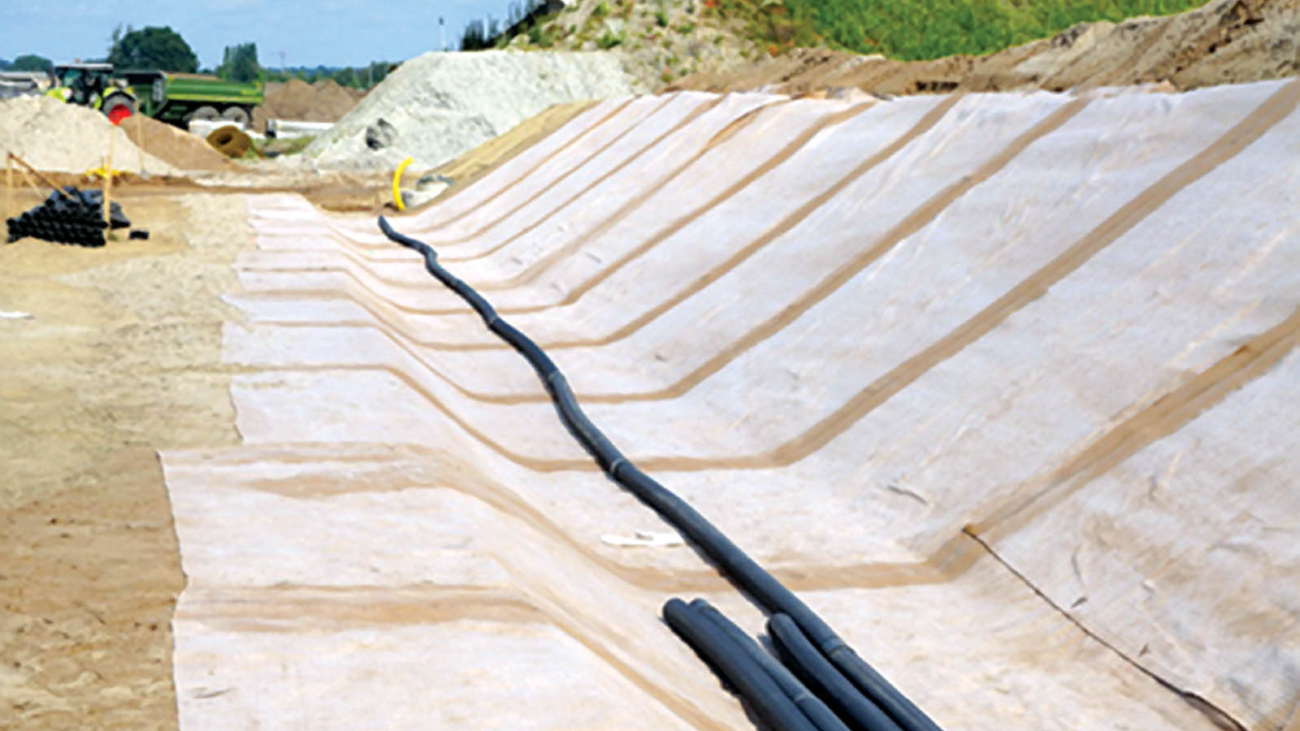
In an era of stricter environmental regulations, rapid infrastructure growth, and increasing focus on water conservation, Geosynthetic Clay Liners (GCLs) have emerged as one of the most reliable and sustainable solutions for containment and waterproofing. Often called bentonite geosynthetic liners, these advanced materials combine the natural sealing power of sodium bentonite clay with durable geosynthetic fabrics to create a low-permeability barrier that outperforms traditional compacted clay in many ways.
Whether you’re planning a landfill, lining a canal, or protecting groundwater in industrial projects, GCLs deliver exceptional performance with speed and cost savings. In 2026, with India’s massive push toward sustainable development and global market projections showing steady growth, these liners are no longer optional—they are essential.
At EnnKae, a trusted name in geosynthetics, nKlay GCL represents the next generation of this technology. Engineered specifically for Indian conditions, it offers engineers and contractors a proven way to meet environmental standards while accelerating project timelines. This complete guide explains everything you need to know about geosynthetic clay liners, their working mechanism, real-world applications, and why they are more important than ever in 2026.
What Are Geosynthetic Clay Liners (GCLs)?
Geosynthetic Clay Liners, or GCLs, are factory-manufactured composite materials consisting of a core layer of high-quality sodium bentonite clay sandwiched between two geosynthetic layers typically a woven geotextile on one side and a non-woven geotextile on the other. Some variants also include an integrated geomembrane for extra waterproofing.
Unlike thick layers of compacted natural clay that require massive excavation and heavy equipment, GCLs come in lightweight rolls that are easy to transport and install. When hydrated, the bentonite swells dramatically up to 15 times its dry volume, forming a self-sealing, impermeable barrier with permeability as low as 10⁻⁹ to 10⁻¹¹ cm/s.
This “smart” material was developed to solve the limitations of traditional liners: inconsistency in field-compacted clay, vulnerability to cracking during dry seasons, and high installation costs. Today, international standards such as ASTM D5887 and D5890 ensure consistent quality, making GCLs a globally accepted solution for environmental protection.
In simple terms, a GCL is like a high-tech blanket that turns into a watertight shield the moment it touches moisture—perfect for India’s diverse climates and challenging terrains.
How Geosynthetic Clay Liner Technology Works
The magic of GCLs lies in the unique properties of sodium bentonite clay. Here’s the step-by-step process:
- Dry State Delivery: The liner arrives in rolls with dry bentonite uniformly distributed and needle-punched or bonded between geotextile layers for stability.
- Placement and Overlap: Unrolled on prepared subgrade, panels overlap by 150–300 mm depending on project design.
- Hydration: Contact with water (from soil moisture, rainfall, or intentional sprinkling) triggers swelling. The bentonite expands and fills any gaps, creating a continuous seal—even around penetrations or irregularities.
- Self-Healing: Minor punctures or cracks automatically seal as the clay swells, providing long-term reliability that rigid liners cannot match.
- Long-Term Performance: Once hydrated and confined under cover soil, the liner maintains ultra-low permeability for decades, resisting chemical attack and freeze-thaw cycles.
This hydration-activated mechanism makes GCLs far more forgiving during installation than geomembranes alone and more consistent than natural clay.

Introducing nKlay GCL by EnnKae
nKlay GCL is EnnKae’s premium Geosynthetic Bentonite Clay Liner, designed and manufactured in India to meet the exacting demands of modern infrastructure. Built with high-purity sodium bentonite and premium geotextiles, it delivers superior swell index, low permeability, and excellent durability.
As part of EnnKae’s comprehensive slope protection and containment portfolio, nKlay integrates seamlessly with products like nKrete GCCM for hybrid waterproofing solutions. Its lightweight design reduces transportation costs, while the robust construction withstands India’s monsoons, seismic zones, and extreme temperatures.
Backed by rigorous quality testing and over 15 years of geosynthetics expertise, nKlay GCL helps projects comply with Central Pollution Control Board (CPCB) and Ministry of Environment guidelines effortlessly.
Key Features and Benefits of Geosynthetic Clay Liners
nKlay GCL and modern GCLs in general offer compelling advantages:
- Exceptional Impermeability: Swelling bentonite creates a hydraulic barrier far superior to compacted clay, preventing leachate migration and groundwater contamination.
- Self-Sealing and Self-Healing: Automatically repairs small damages, reducing long-term maintenance.
- Lightweight and Easy Handling: Rolls weigh significantly less than equivalent clay volumes, cutting logistics and labor costs by up to 80%.
- Rapid Installation: No heavy machinery needed; installable in any weather, saving weeks on project schedules.
- Cost-Effective: Lower material volume, reduced excavation, and faster deployment translate to substantial savings.
- Chemical Resistance: Performs well against a wide range of contaminants in landfills and industrial sites.
- Environmental Sustainability: Uses natural bentonite, minimizes carbon footprint compared to imported clay, and supports green construction practices.
- Versatility: Works on slopes, flat areas, and underwater applications when properly designed.
These features make GCLs ideal for projects where reliability and speed are non-negotiable.
Applications of Geosynthetic Clay Liners in Modern Projects
GCLs serve a wide range of critical applications in 2026:
- Landfills and Waste Containment: Primary and secondary liners prevent leachate leakage—now mandatory under updated Indian regulations.
- Water Conservation Structures: Canal and reservoir lining reduces seepage losses in irrigation projects.
- Ponds and Reservoirs: Impermeable lining for rainwater harvesting, aquaculture, and industrial water storage.
- Mining and Industrial Containment: Secondary liners for tailings dams and chemical storage areas.
- Roadways and Civil Construction: Base liners in highways and embankments for drainage control and soil stabilization.
- Wastewater Treatment: Lagoons and treatment ponds to protect soil and groundwater.
- Slope Protection and Embankments: Combined with erosion control systems (such as EnnKae’s nKrete) for waterproofing in high-rainfall zones.
In India, GCLs are increasingly used in national highway projects, smart city initiatives, and river rejuvenation programs where environmental compliance is key.
Step-by-Step Installation Guide for GCLs
Proper installation ensures decades of performance:
- Subgrade Preparation: Smooth and compact the surface; remove sharp objects.
- Unrolling: Place rolls with proper overlap; anchor edges securely.
- Hydration (if needed): Lightly spray in dry conditions to initiate swelling.
- Covering: Apply 300–600 mm of cover soil or protective geotextile promptly to confine the bentonite.
- Seaming: Overlaps are simply overlapped, no welding required, unlike geomembranes.
- Quality Assurance: Conduct field density tests and permeability verification as per design.
EnnKae provides detailed technical support and on-site guidance for every nKlay project.
Geosynthetic Clay Liners vs. Traditional Compacted Clay Liners
Traditional compacted clay liners require thick (often 1–2 meter) layers, extensive borrow pits, and weather-dependent compaction. They are prone to desiccation cracking and need constant quality control.
GCLs win on every front:
- Thickness: Just 5–10 mm vs. meters of clay.
- Consistency: Factory-controlled quality vs. variable field compaction.
- Speed: Days vs. months.
- Performance: Self-healing and lower permeability.
- Cost and Carbon Footprint: Dramatically lower material transport and excavation emissions.
While both have roles, GCLs are the clear choice for most modern containment projects in 2026.
Why Geosynthetic Clay Liners Matter in 2026
The year 2026 marks a turning point. India’s geosynthetics market is expanding rapidly due to stricter waste management rules, groundwater protection mandates, and massive infrastructure spending. The global GCL market is projected to grow steadily, with landfills and civil construction driving demand.
New regulations require engineered barriers in landfills, industrial sites, and water bodies to prevent contamination. Climate change has increased the need for reliable water conservation—GCLs reduce seepage losses in canals by up to 90%. Sustainable construction policies now favor low-carbon materials like nKlay GCL over traditional methods.
For contractors and government departments, GCLs mean faster project completion, lower risk of regulatory penalties, and alignment with India’s net-zero goals. In short, they are the smart, future-ready solution.
Why Choose EnnKae’s nKlay GCL?
EnnKae stands out as one of India’s leading geosynthetic clay liner manufacturers because of its commitment to quality, innovation, and local relevance. nKlay GCL is manufactured under strict controls, tested for Indian conditions, and supported by expert engineering teams.
Whether you need standalone liners or integrated systems with nKrete GCCM or drainage solutions, EnnKae delivers complete, reliable packages. Their focus on sustainability and customer support makes them the preferred partner for public and private projects alike.
The Future of Containment: GCLs Leading the Way
As we move deeper into 2026 and beyond, geosynthetic clay liners will play an even bigger role in resilient infrastructure. From smart landfills to climate-adaptive water projects, GCL technology offers the perfect blend of performance, economy, and environmental responsibility.