
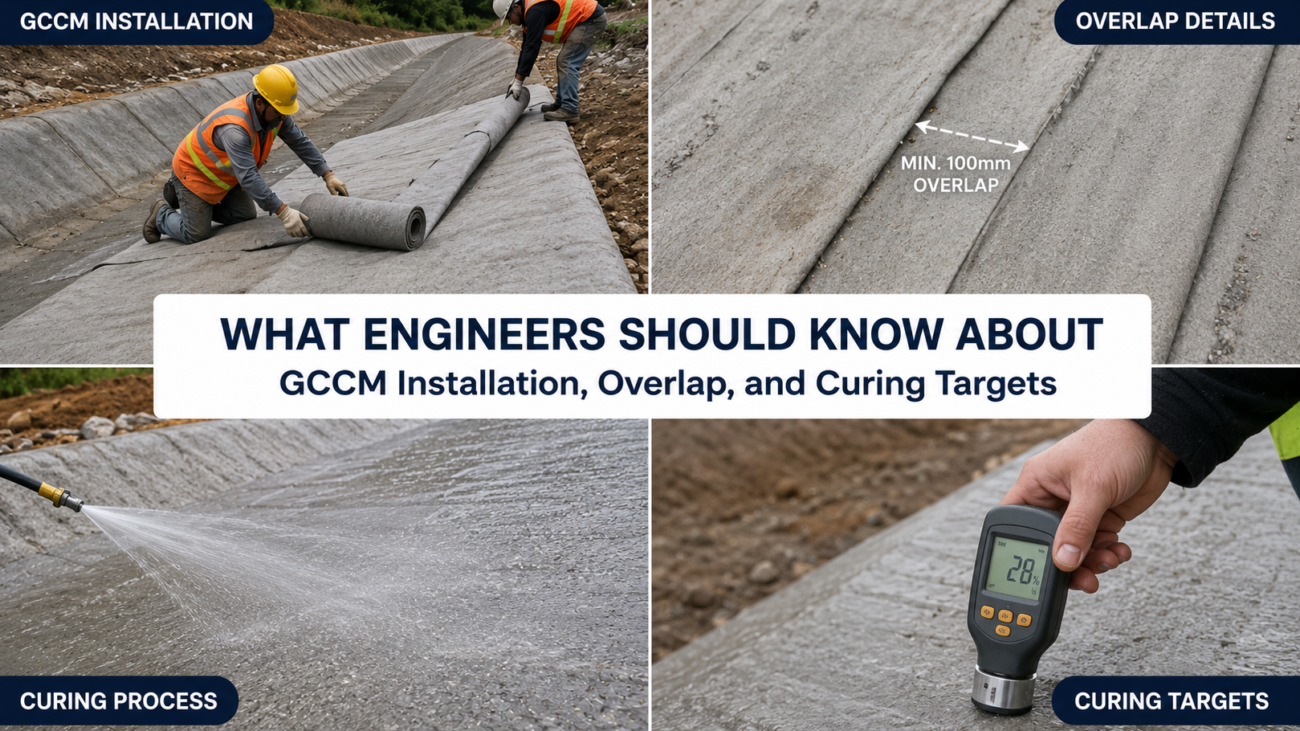
Geosynthetic Cementitious Composite Mats have completely revolutionized the way civil engineers approach slope protection, erosion control, and structural containment. Often referred to as concrete on a roll, this advanced material offers a unique blend of extreme flexibility and ultimate structural strength. When large-scale infrastructure projects demand rapid execution and high durability, engineers increasingly turn to this innovative solution.
However, the long-term success of any such project relies heavily on a deep understanding of the correct installation techniques. This includes mastering the overlap procedures and hitting the precise curing targets. If you are a site engineer, a contractor, or a project manager, knowing the technical specifications and the installation intent of Geosynthetic Cementitious Composite Mats is absolutely vital.
This comprehensive guide will explore everything you need to know about installing these advanced mats safely and effectively. In the second half of this article, we will also dive deeply into the complete range of modern products and services offered by Ennkae, a leading innovator in slope stabilization and engineering solutions.
Understanding the Core Concept and Installation Intent
Before stepping onto a construction site, engineers must understand the core concept of a Geosynthetic Cementitious Composite Mat, commonly known as GCCM. At its foundation, a GCCM is a specialized, factory-assembled roll that contains a dry cementitious mix. This proprietary dry mix is securely sandwiched between high-strength geotextile layers. Premium products, such as the nKrete GCCM manufactured by Ennkae, also feature a high-density polyethylene backing. This specific layered construction provides exceptional durability, impact resistance, and extremely low permeability.
The primary installation intent behind using GCCM is to effectively replace traditional, time-consuming poured concrete methods. Traditional concrete applications require heavy machinery, massive water resources, extensive formwork, and significant manual labor. In sharp contrast, a GCCM is designed for rapid and highly efficient deployment. Engineers specify this material for critical projects where speed, safety, and minimal environmental impact are the top priorities. The installation intent is simple: unroll the material, position it correctly, and hydrate it.
Another major installation intent is pure adaptability. In its unhydrated state, the material is highly flexible and conformable. It conforms effortlessly to the exact shape of the natural terrain. This makes it the perfect engineering solution for irregular ground surfaces, extremely steep slopes, and complex drainage channels. Engineers and site workers can easily cut and tailor the unhydrated mat using basic hand tools. This adaptability ensures that the material fits perfectly around existing infrastructure, pipes, or natural obstacles without compromising structural integrity.
Reviewing Technical Specifications and Site Preparation
Technical specifications guide every critical engineering decision on a project site. When working with concrete in roll form, knowing the exact material properties is crucial for a successful application. Products like Ennkae nKrete come in various thickness options ranging from 6 millimeters up to 13 millimeters. The standard roll size is usually 2.4 meters wide by 21 meters long. These dimensions allow for substantial surface coverage while remaining manageable for logistics and site handling. The material composition involves a cement-impregnated geotextile that boasts excellent fire resistance and UV stability. This ensures the installed layer will not degrade rapidly under harsh sunlight or extreme weather conditions, offering a design life of over fifty years.
Proper site preparation sets the stage for a flawless installation. The very first step involves preparing the earth subgrade. Construction workers must carefully remove sharp rocks, large roots, and heavy debris from the target area. While the composite mat is robust, creating a relatively smooth surface ensures the mat conforms neatly to the ground. This careful preparation prevents dangerous void spaces from forming beneath the concrete shell after curing. Following the clearing process, basic soil compaction is necessary. The earth should be stable enough to support the intended load and prevent any future ground settling.
The Critical Rules of Overlap and Joining Techniques
One of the most important technical aspects of any GCCM installation is the overlap. If overlaps are not executed correctly, the entire protective system can fail under hydraulic pressure. The overlap is the exact seam where two separate rolls of material meet. This seam must be tight, secure, and properly aligned to prevent water ingress, soil erosion, and structural weakness. Engineers must review the technical specifications to determine the exact overlap width based on the anticipated water flow velocity and the slope gradient.
When installing the material in a water channel or on a steep slope, the upstream roll must always overlap the downstream roll. This strategic placement creates a shingle effect. Water will flow smoothly over the seam rather than catching the exposed edge and seeping underneath the mat. Securing these edges and overlaps is a non-negotiable step. Site workers use heavy-duty ground anchors, steel pegs, or specialized stainless steel screws to bind the overlapping layers together firmly.
Trenching methods are also widely used and highly recommended by structural engineers. The leading edges of the GCCM are placed deep into an anchor trench at the top crest of the slope. This trench is then backfilled with compacted soil or gravel. This anchoring method prevents the heavy mat from slipping down the incline before and after the hydration phase. A properly secured overlap ensures that the final hardened structure acts as a single, unified, and impenetrable concrete shell.
Hydration Processes and Hitting Curing Targets
The physical transformation of the mat from a flexible fabric into a rigid concrete structure happens exclusively through hydration. Hitting the correct curing targets is essential for achieving the maximum flexural and compressive strength. The hydration process involves applying water evenly and consistently across the entire surface of the unrolled mat. This can be accomplished using a standard hose, a specialized spray nozzle, or a commercial water truck for larger infrastructure projects.
Engineers must ensure that the water application is sufficient to activate the dry cementitious core completely. Unlike traditional concrete mixing, where excess water can ruin the batch, you cannot easily overwater a high-quality GCCM. The intelligent fabric design is engineered to absorb only the precise amount of water it needs to set. However, applying too little water is a major risk. Insufficient hydration will result in incomplete curing and a significantly weaker final structure. The water must penetrate fully through the top geotextile layer.
Once properly hydrated, the curing target is remarkably rapid. The material typically sets and hardens within 24 to 36 hours. During this critical period, the concrete achieves its initial structural strength. The unique internal fibre reinforcement inside the matrix prevents shrinkage and cracking during the curing phase. Site engineers must also monitor the local weather conditions during this phase. In extremely hot, windy, or dry climates, a second pass of water might be necessary a few hours later to prevent premature surface drying.
Ennkae: Leaders in Slope Stabilization and Modern Engineering
Now that we have covered the intricate installation details, it is time to look at the innovator providing these advanced solutions. Ennkae is a premier manufacturer and provider of next-generation slope stabilization and erosion control systems. Originally founded in 2011 as NK Constructions, the company has evolved into a dedicated specialist in advanced engineering solutions and subsurface drainage systems. Today, Ennkae stands as a trusted expert for massive infrastructure projects across the most challenging terrains in the country.
The core strength of Ennkae lies in combining deep engineering expertise with modern, sustainable materials. They cater to a wide range of critical sectors, including national highways, railway networks, coastal defense lines, industrial containment, and agricultural irrigation. Whether a project involves stabilizing a steep mountainous highway or protecting a vital canal network, Ennkae delivers highly specific site strategies. They are not just material suppliers. They are comprehensive solution providers who design, manufacture, and implement long-lasting protective systems to ensure ultimate infrastructure safety.
The Power and Versatility of nKrete GCCM
The absolute flagship product in the extensive Ennkae portfolio is the nKrete GCCM. As discussed in the technical sections above, this concrete in roll form provides unmatched speed, flexibility, and durability. The nKrete system features a unique four-dimensional fibre matrix. This advanced internal structure gives the material exceptional impact resistance and a highly stable failure mode. It is heavily chemical resistant, deeply fire resistant, and offers excellent weathering performance over decades of use.
Engineers frequently choose nKrete for critical slope and embankment protection, rapid drainage channel lining, and reinforcing culvert outfalls. It is also an ideal choice for secondary containment berms in chemical and industrial applications. Because it requires minimal heavy equipment and drastically reduces overall installation time, nKrete offers a massive return on investment for contractors. It truly is the definitive solution for reinforcing slopes in a smarter and faster way.
nKlay GCL for Ultimate Waterproofing and Containment
While the GCCM is perfect for hard surface protection, Ennkae also offers the highly advanced nKlay GCL for premium waterproofing needs. GCL stands for Geosynthetic Clay Liner. This specific product consists of a high-purity sodium bentonite clay core that is needle-punched securely between two robust geotextile layers. When water interacts with the bentonite clay, it swells up to fifteen times its dry volume to create an ultra-low permeability barrier.
nKlay is the absolute gold standard for containment projects like municipal landfills, large water reservoirs, and industrial wastewater ponds. It possesses outstanding self-healing properties that engineers love. If the liner is accidentally punctured during or after installation, the rapidly swelling clay automatically seals the breach completely. For massive projects, Ennkae often recommends a highly efficient hybrid approach. By using nKlay GCL as the base waterproofing layer and nKrete GCCM as the top surface protective layer, engineers achieve the ultimate combination of zero water seepage and high surface erosion resistance.
GeoCell for Three-Dimensional Soil Stabilization
Another highly effective geotechnical solution from Ennkae is the GeoCell, marketed as the Ennkae Cell. This is a high-performance three-dimensional soil stabilization system manufactured from premium High-Density Polyethylene. The strong polymer strips are ultrasonically welded at specific junctions to form a durable cellular confinement system.
GeoCell is incredibly versatile across multiple applications. It is widely used to stabilize loose slopes, protect expensive liners in hazardous waste facilities, and distribute heavy loads over weak subgrades for access roads. It can also act as the structural facing for mechanically stabilized earth retaining walls. By physically confining the soil within its expandable cells, the GeoCell prevents lateral movement and severe soil erosion. This mechanism enhances the overall ground performance significantly, making it a vital tool for geotechnical engineers working in demanding soil conditions.
Concrete Revetments and Advanced Drainage Geotextiles
For heavy-duty hydraulic projects requiring massive protection, Ennkae offers the nKrete R system. This is a pre-engineered, factory-custom grouted mattress system. It is specifically designed for permanent slope and fast-flowing riverbank protection. The high-strength fabric forms are precisely tailored at the factory and delivered directly to the construction site. Once properly placed, they are pumped full of high-strength concrete. This specialized system is perfect for coastal shoreline defense, bridge abutments, and large spillways facing continuous, aggressive water flow.
Ennkae also manufactures and provides high-quality Non-Woven Geotextile fabrics. These specialized materials are engineered from premium polypropylene or polyester fibers. They are highly permeable and absolutely ideal for soil separation, fine filtration, and drainage applications in highway road construction and retaining walls. Available in a wide GSM range from 90 to 500, these fabrics prevent critical drainage systems from clogging over time. Additionally, the Ennkae DrainTube offers an innovative geo-composite solution for subsurface drainage, ensuring trapped groundwater does not compromise expensive structural foundations.
Finally, for environmentally sensitive areas, Ennkae produces the nKoir system. This is a natural green coir geotextile mattress combined securely with strong netting. It protects the topsoil from severe erosion while actively promoting natural vegetation growth. It perfectly blends rigorous engineering requirements with ecological sustainability, proving that modern infrastructure can work in harmony with nature. By choosing the advanced products and services from Ennkae, modern engineers and project managers can confidently build a safer, stronger, and far more sustainable future.