
Managing water effectively is one of the most critical challenges in modern civil engineering. Whether the goal is to store precious drinking water, prevent toxic leachate from entering the soil, or protect a steep embankment from severe storm erosion, choosing the right material is essential. The engineering world provides numerous advanced solutions for these complex problems. However, project managers often face a difficult decision when selecting the perfect geosynthetic material. Understanding the distinct differences between water containment and surface protection is the very first step toward project success.
This detailed guide will explore exactly when to use a standard water storage liner, a Geosynthetic Clay Liner, or a Geosynthetic Cementitious Composite Mat. In the second half of this article, we will also take a close look at the premium engineering solutions provided by Ennkae. Their advanced product lineup is designed specifically to meet the rigorous demands of modern infrastructure projects.
Understanding Water Containment versus Surface Protection
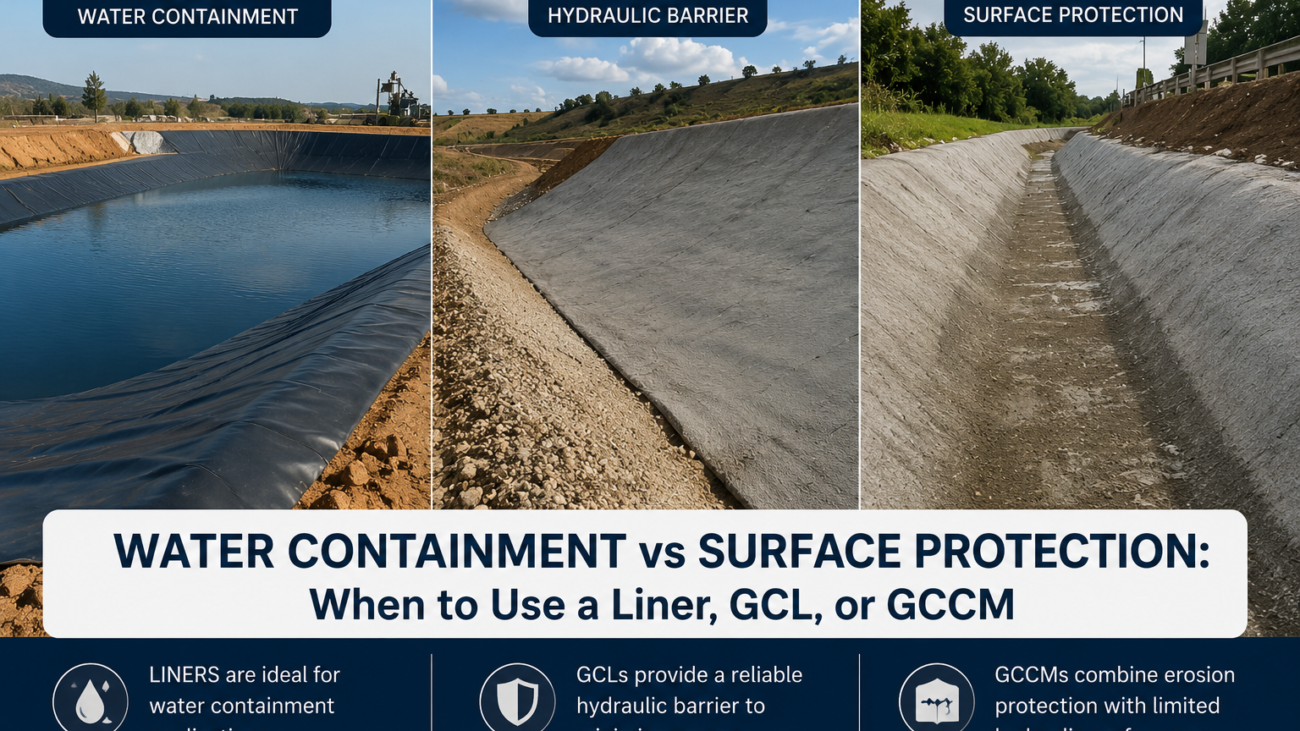
Before selecting a specific material, engineers must clearly define the primary objective of their project. Water containment and surface protection are two very different engineering concepts. Water containment is strictly about preventing liquids from migrating through the soil. The primary goal here is perfect waterproofing. Examples include lining a municipal landfill to trap hazardous chemicals or building a large water storage reservoir for agricultural use. In these scenarios, the chosen material must have extremely low permeability. It must act as a flawless barrier against liquid transfer.
Surface protection serves an entirely different purpose. The main objective here is to prevent soil erosion and structural degradation caused by flowing water, harsh weather, or physical impact. Examples of surface protection include lining a drainage channel, securing a steep highway embankment, or armoring a bridge abutment. While these protective layers might slow down water infiltration, their primary job is to provide a hard, durable shield over the vulnerable earth. Mixing up these two objectives can lead to catastrophic project failures and massive financial losses.
The Role of a Standard Water Storage Liner
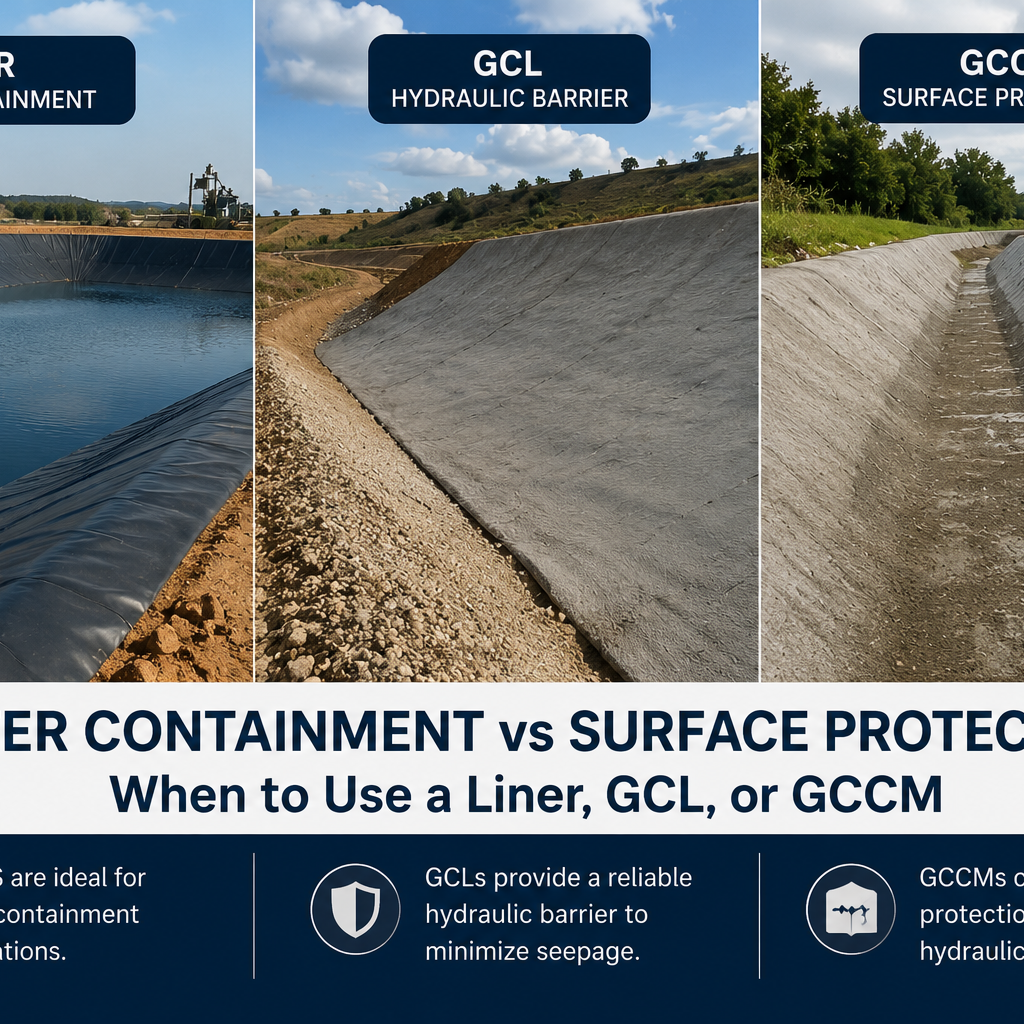
For decades, engineers have relied on standard polymeric geomembranes for basic water containment. These are typically made from High-Density Polyethylene or Linear Low-Density Polyethylene. These plastic liners are excellent for creating a highly impermeable barrier. When a project requires a straightforward water storage liner for a pond or a decorative lake, these materials perform very well. They are flexible, relatively easy to weld on site, and highly resistant to a variety of harsh chemicals.
However, standard plastic liners have significant limitations. They are incredibly vulnerable to physical damage. Sharp rocks in the subgrade, heavy machinery tracks, or even dropping a hand tool can easily puncture a plastic water storage liner. Once a tear occurs, the waterproofing integrity is completely compromised. Locating and patching a small leak under millions of gallons of water is an absolute nightmare for maintenance teams. Because they lack physical durability, standard liners almost always require a protective layer of soil or concrete placed over them. This requirement adds significant time, labor, and cost to the overall installation process.
The Bentonite-Based Liner Intent and Geosynthetic Clay Liners
When projects demand fail-proof waterproofing and supreme reliability, engineers turn to the Geosynthetic Clay Liner, widely known as a GCL. To understand why a GCL is so effective, we must look at the specific bentonite-based liner intent. A high-quality GCL is manufactured by sandwiching a uniform layer of natural sodium bentonite clay between two incredibly strong synthetic fabrics. These outer fabric layers are mechanically needle-punched together to lock the active clay securely in place.
The true magic of a GCL lies entirely in its unique core material. Sodium bentonite clay is a highly expansive natural mineral. When it comes into contact with moisture, it swells rapidly to many times its original dry volume. Because the swelling clay is trapped tightly between the robust outer fabrics, it forms an ultra-dense, impenetrable waterproofing seal. This dynamic swelling action is the core of the bentonite-based liner’s intent. It creates a barrier that is often far more effective than several feet of highly compacted natural clay.
The greatest advantage of a GCL over a standard plastic liner is its remarkable self-healing capability. If the liner suffers a minor puncture or a small tear during the installation process, the project is not doomed. As soon as water reaches the damaged area, the bentonite clay simply swells up and automatically seals the breach. This makes GCLs the ultimate choice for high-stakes containment projects. They are heavily utilized in solid waste landfills, industrial containment basins, and critical groundwater protection systems.
When to Specify a GCCM for Ultimate Surface Protection
While a GCL is the undisputed king of waterproofing, it is not designed to handle direct physical wear and tear. If you need to line a fast-flowing water channel or stabilize a steep mountain slope, you need structural armor. This is exactly where the Geosynthetic Cementitious Composite Mat comes into play. A GCCM is fundamentally different from a containment liner. It is best described as highly flexible concrete on a roll. It consists of a dry, specially formulated cement powder securely trapped inside a three-dimensional fabric matrix.
The installation process is incredibly efficient. Workers simply unroll the flexible mat over the prepared soil, secure the overlapping seams, and spray it thoroughly with water. Within twenty-four hours, the flexible fabric hardens into a rigid, highly durable concrete shell. A GCCM provides exceptional surface protection against high velocity water flow, heavy debris impact, and severe environmental weathering. It completely eliminates the need for expensive concrete mixer trucks, complex wooden formwork, and steel rebar grids.
It is important to note that while a GCCM significantly reduces water seepage, it is generally not classified as a strict water containment liner on its own. It is an armoring solution. However, modern engineering frequently combines these advanced materials for ultimate performance. By placing a tough GCCM directly over a self-healing GCL, engineers create a composite system. The bottom clay layer provides flawless waterproofing while the top concrete layer delivers indestructible surface protection.
Ennkae: Pioneering Advanced Geotechnical Solutions
Understanding the technical nuances of these materials is only half the battle. Securing high-quality products from a reliable manufacturing partner is equally critical. Ennkae stands at the forefront of the geotechnical engineering industry. Originally established over a decade ago as NK Constructions, the company has grown into a highly specialized provider of slope stabilization and erosion control systems. They provide innovative, sustainable, and rapid deployment solutions for massive infrastructure projects.
Ennkae does not just sell materials in bulk. They offer deep technical expertise and comprehensive project support. Their engineering teams work closely with site contractors to design customized strategies for highways, railway networks, coastal defense projects, and agricultural irrigation systems.
By focusing on modern composite materials, Ennkae helps construction companies reduce their carbon footprint, slash installation times, and significantly lower overall project costs. Their diverse product portfolio is carefully designed to address both complex water containment and rigorous surface protection challenges.
Mastering Containment with nKlay GCL
When a project demands the absolute highest standard of waterproofing, Ennkae provides the nKlay system. This premium Geosynthetic Clay Liner perfectly embodies the bentonite-based liner intent discussed earlier. nKlay features high-purity sodium bentonite clay that offers unmatched swelling capacity and chemical resistance. It is the ideal water storage liner for highly sensitive environmental applications.
Engineers frequently specify nKlay for lining municipal waste facilities, large-scale decorative lakes, and hazardous industrial runoff ponds. The needle-punched construction of nKlay ensures that the active clay remains perfectly distributed across the entire roll, even when installed on extremely steep embankments. Its exceptional self-healing properties give project managers total peace of mind. With nKlay, the risk of hidden leaks compromising the surrounding groundwater is practically eliminated.
Armoring Infrastructure with the nKrete GCCM
For projects requiring rapid and robust surface protection, the flagship product is undoubtedly the nKrete GCCM. This advanced concrete-on-a-roll technology is transforming how engineers approach slope and channel protection. nKrete utilizes a highly specialized four-dimensional fibre matrix that ensures the dry cement mix stays uniformly distributed before, during, and after the hydration phase.
The versatility of nKrete is truly outstanding. It is used extensively to line agricultural irrigation canals, protect heavy railway embankments from monsoon erosion, and reinforce culvert outfalls. Because it conforms perfectly to the natural terrain before setting, nKrete creates a seamless concrete armor over highly irregular ground. The material is highly fire-resistant, chemically stable, and boasts a design life exceeding fifty years. For contractors facing tight project deadlines and difficult site access, nKrete provides a massive strategic advantage over traditional poured concrete methods.
Comprehensive Soil Stabilization with Ennkae Cell
Surface protection often requires stabilizing the underlying soil structure first. For these situations, Ennkae manufactures the highly effective Ennkae Cell, a premium GeoCell system. This three-dimensional cellular confinement system is engineered from strong High-Density Polyethylene strips. When expanded on site, it forms a robust honeycomb structure that completely traps and confines the loose soil or gravel inside its cells.
The Ennkae Cell is incredibly effective for stabilizing weak subgrades under heavy access roads. It prevents the lateral movement of soil particles, thereby distributing heavy vertical loads over a much wider surface area. It is also highly popular for green slope protection. The empty cells can be filled with nutrient-rich topsoil and seeded with local grass. The rigid plastic walls prevent the soil from washing away during heavy rain, allowing the vegetation to take deep root and provide natural, long-lasting erosion control.
Heavy Duty Defense and Subsurface Drainage
Some hydraulic projects face extreme forces that require even heavier protection. For intense coastal shoreline defense and fast-flowing riverbanks, Ennkae offers the nKrete R system. This custom-engineered concrete mattress system utilizes high-strength fabric forms that are pumped full of concrete on site. It creates a massive, permanent revetment that can withstand severe tidal impacts and continuous hydraulic scour.
Beyond surface solutions, Ennkae also excels in managing trapped groundwater. Their comprehensive range of Non-Woven Geotextiles provides vital soil separation and fine filtration for highway and retaining wall construction. These premium fabrics prevent vital drainage aggregates from becoming clogged with fine silt over time.
Additionally, the Ennkae DrainTube offers a highly innovative geo-composite solution for managing subsurface water. By efficiently channeling trapped water away from critical foundations, these drainage solutions ensure the long-term stability of the entire infrastructure project.
Finally, Ennkae remains deeply committed to ecological sustainability through products like nKoir. This natural coir mattress system protects vulnerable topsoil while actively promoting rapid vegetative growth. By offering a complete spectrum of advanced solutions, Ennkae ensures that modern engineers have the exact tools they need. Whether a project requires flawless water containment with a bentonite-based GCL or impenetrable surface protection with a rugged GCCM, Ennkae delivers unparalleled quality and lasting performance.