
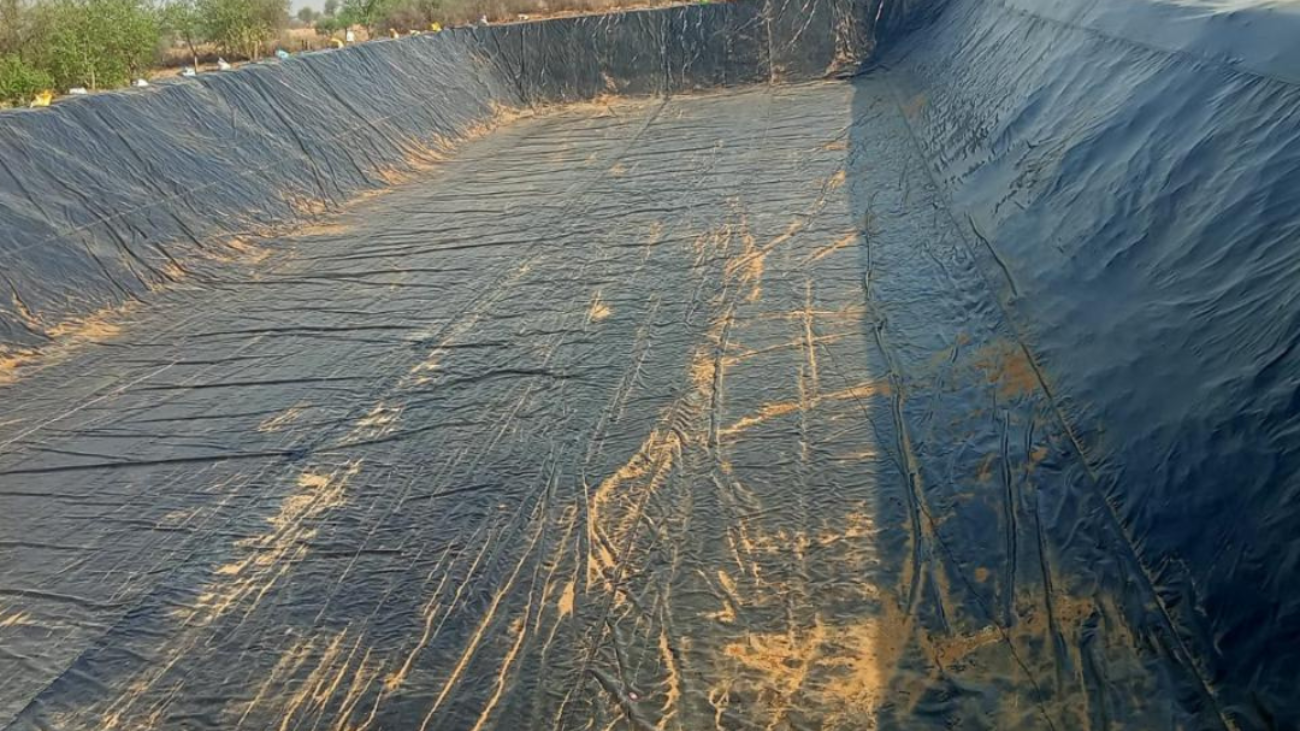
The Problem with Conventional Concrete Has Always Been the Process
The Problem with Conventional Concrete Has Always Been the Process
Let’s be honest, traditional concrete has never been a quick fix.
You bring in the equipment, set up formwork, mix the batch, pour, wait, cure, inspect, and then hope the finish holds up under rain, UV exposure, and shifting soil. For slope protection and drain lining projects, this drawn-out process has cost the construction industry enormous amounts of time, money, and manpower for decades.
But something changed. A new generation of thin concrete linings stepped onto the scene, and the way engineers, contractors, and municipalities think about erosion control and channel protection has not been the same since.
These materials go by several names: concrete canvas, concrete mat, cement blanket, and flexible concrete mat. In the geosynthetics world, they fall under the technical category of Geosynthetic Cementitious Composite Mat (GCCM). Whatever name you use, the outcome is the same: a thin, durable, waterproof concrete lining that sets in 24 hours with nothing more than water.
This article walks you through what these materials are, why they work, where they are being used, and why they represent the future of drain and slope protection.
What Exactly Is a Flexible Concrete Mat?
A flexible concrete mat, also called a concrete canvas or cement blanket, is essentially concrete embedded within a geotextile fabric structure. The dry cementitious mix is sandwiched between two layers of polypropylene geotextile and backed by an HDPE geomembrane that serves as an additional waterproofing barrier.
In its unhydrated state, the material behaves much like a roll of carpet. You can cut it, fold it, bend it around curves, and drape it across uneven terrain. Once water is applied, the cement activates, and within 24 hours, a rigid, load-bearing concrete shell forms directly on the surface following every contour of the ground beneath it.
This is the core distinction that makes flexible concrete mats revolutionary: concrete that conforms before it hardens.
Traditional concrete is rigid from the moment it is poured. It requires a flat, prepared, formworked surface. Flexible concrete mat, on the other hand, conforms to complex terrain, curved channels, angled embankments, and irregular rock faces and then locks into that shape permanently.
Products like nKrete by Ennkae take this technology to its highest form, combining a 4-dimensional fibre matrix of cement, sand, and admixtures with needle-punch polypropylene geotextile layers and an integrated HDPE membrane. The result is a GCCM that is simultaneously flexible, fire-resistant, UV-stable, chemically resistant, and capable of lasting 50+ years in field conditions.
The Language Problem: Concrete Canvas, Concrete Mat, GCCM Are These the Same?
Yes, mostly though with some nuance.
Concrete canvas is often used as a general descriptive term (and is also a brand name for a UK-based product). Concrete mat and cement blanket are informal terms used widely in the field and in procurement conversations. Flexible concrete mat is the engineering-friendly descriptor. GCCM Geosynthetic Cementitious Composite Mat is the formal industry classification used in technical documents, specifications, and standards.
All of these refer to the same category of material: a fabric-cement composite that remains flexible until hydrated, at which point it cures into a hard, durable concrete layer.
When evaluating or specifying these products, always look at the technical data sheet. Key properties to compare include thickness range (typically 6mm to 13mm), compressive strength, roll dimensions, curing time, design life, and compliance with relevant geosynthetics testing standards.
Why Drain Lining Is Where This Technology Truly Shines
Open drainage channels and stormwater drains are among the most challenging infrastructure elements to maintain. They face constant hydraulic stress, scouring forces from high-velocity flows, UV degradation, biological growth, and in some climates, freeze-thaw cycling. Traditional solutions, such as cast-in-place concrete, stone pitching, and brick masonry, are either expensive to install, slow to complete, or prone to cracking and joint failure over time.
Flexible concrete mat solves the drain lining problem in a way no previous material has.
Speed of installation is perhaps the most dramatic advantage. A crew can unroll, position, and hydrate a GCCM lining at speeds up to 10 times faster than conventional concrete placement. For irrigation channels, culverts, stormwater drains, and roadside ditches, this translates directly into reduced project timelines and labour costs.
Seamlessness is another critical advantage. GCCM linings, when properly overlapped and anchored, produce a near-seamless surface that eliminates the joint failures that plague brick and block linings. Water cannot infiltrate beneath the lining through joints, which means the subgrade remains stable, and the lining does not heave or crack over time.
Hydraulic performance is also improved. A smooth, cured GCCM surface has a higher Manning’s coefficient than rough stone or brick, meaning water flows more efficiently through the channel with reduced friction losses.
For India’s water resources sector, canals, irrigation networks, and flood management channels, the combination of speed, durability, and hydraulic efficiency makes GCCM drain lining a genuinely transformative option.
Slope Protection: Where Flexibility Is Not Optional
Slope protection is the application that has driven the most rapid adoption of concrete canvas and flexible concrete mat globally.
Natural and engineered slopes are inherently irregular. They have undulations, surface cracks, rock outcrops, tree root formations, and gradient changes. Applying traditional concrete to a slope requires extensive surface preparation, heavy formwork, and often sprayed or shotcrete application, all of which are expensive, slow, and difficult to quality-control.
GCCM changes the game entirely. Because the material is flexible in its dry state, it can be unrolled down a slope and pressed into direct contact with the existing surface following every bump, groove, and transition in the terrain. When hydrated, it cures in place as a perfectly contoured concrete skin over the slope.
This conformability means that GCCM protects the actual ground surface, not a suspended concrete sheet above it. There are no voids beneath the lining where water can pool, undermine the subgrade, or create hydrostatic pressure. The lining is in full contact with the ground at all times.
For railway embankments, highway cut slopes, dam faces, and waterway banks, this level of precision protection was simply not achievable with any previous material at comparable cost and installation speed.
Ennkae’s nKrete GCCM has been deployed in exactly these contexts across railway projects, water resources department works, power sector installations, and defence infrastructure, where reliable slope protection under demanding conditions is non-negotiable.
Performance Characteristics That Matter in the Field
Understanding the performance profile of a flexible concrete mat helps engineers and specifiers make confident decisions. Here are the properties that matter most in real-world drain and slope protection applications.
Compressive strength after hydration places GCCM within the range of conventional structural concrete, enabling it to withstand significant mechanical loads, foot traffic, and equipment traffic during and after installation.
Chemical resistance is critical for industrial containment applications, wastewater channels, and sites with aggressive soils. GCCM’s cement-geotextile composite resists a wide range of acids, alkalis, and hydrocarbons, making it suitable for secondary containment bunds, mine-site drainage, and industrial-yard protection.
Fire resistance is an underappreciated property that becomes critically important in the power sector, rail, and oil and gas applications. The inorganic cement matrix in GCCM does not combust, melt, or propagate flame, providing passive fire protection for sensitive infrastructure.
UV stability ensures that GCCM linings do not degrade when exposed to sunlight over their design life. Unlike many polymer-based erosion control products, the cured concrete surface is intrinsically UV-resistant.
Low carbon footprint compared to conventional concrete is increasingly relevant as infrastructure projects face sustainability requirements. GCCM uses up to 95% less raw material by volume than poured concrete for the same surface protection, significantly reducing transport loads, on-site waste, and embodied carbon.
Installation: Three Steps Is All It Takes
One of the most compelling selling points of thin concrete linings is the radical simplicity of installation.
Step 1: Prepare the surface. Basic clearing of vegetation and loose material is sufficient. There is no requirement for heavy compaction, formwork, or surface levelling. The material will conform to what is there.
Step 2: Unroll and position. The GCCM roll is unrolled down the slope or along the channel. It can be cut to length using standard utility tools; no specialised cutting equipment required. Edges are secured using ground anchors, pegs, or by burying the leading edge in a trench.
Step 3: Hydrate. Water is applied evenly across the surface using a hose, sprinkler, or by natural rainfall. The cement activates immediately, and curing begins. In 24 to 36 hours, the material has reached structural strength.
That’s the entire installation sequence. No mixing. No batching plant. No pumping equipment. No curing membrane sprays. No formwork stripping. The installation crew needs basic hand tools and a water source, and that is all.
For remote locations, hilly terrain, and areas with difficult access, this simplicity is not just convenient; it is transformative.
Applications Across Sectors: Where GCCM Is Making an Impact
The versatility of flexible concrete mat means it is finding applications across a remarkably diverse range of sectors.
In railways, GCCM is being used to protect embankment slopes from rainfall erosion, to line drainage ditches alongside tracks, and to stabilise cutting faces. The speed of installation minimises track possession time, a critical consideration where every hour of track closure has operational consequences.
In highways and road infrastructure, highway cut and fill slopes are lined with GCCM to prevent surface erosion from monsoon rainfall, while roadside drains are lined to handle high-velocity stormwater runoff without scouring.
In water resources, irrigation canal linings, reservoir outlet channels, spillway aprons, and stormwater detention basins are all applications where GCCM’s combination of hydraulic performance and installation speed delivers measurable project value.
In power and energy, GCCM is used for cable trench lining, transformer bund containment, transmission line tower foundation protection, and slope stabilisation around substations and solar farms.
In oil and gas, secondary containment applications at storage yards, pipeline stream crossings, and refinery drainage channels take advantage of GCCM’s chemical resistance and rapid deployment capability.
Choosing the Right GCCM Partner
Not all flexible concrete mat products are equal. When selecting a GCCM product and supplier, the following questions should guide your evaluation.
Does the product come with third-party tested performance data? Are the compressive strength, thickness, and permeability values independently verified? What design life is warranted, and under what conditions? Does the supplier provide on-site installation support or training? Are roll dimensions and weight compatible with the site’s access constraints?
Ennkae, through its nKrete GCCM product line, brings together engineering expertise, field installation experience across India, and a product specification designed to meet the rigorous demands of infrastructure projects in railways, water resources, defence, and civil construction. With over 15 years of working experience in slope stabilisation and erosion control systems, Ennkae offers not just a product, but a complete engineered solution.
Conclusion
The evolution from heavy, slow, rigid concrete to thin, fast, flexible concrete lining systems is one of the most significant material innovations in civil construction of the past two decades.
Concrete canvas, cement blankets, flexible concrete mats, call them what you will, these GCCM materials are reshaping how engineers approach drain lining, slope protection, erosion control, and containment. They reduce project timelines, lower labour costs, shrink the carbon footprint, and deliver performance that in many applications surpasses what conventional concrete achieves.
For infrastructure professionals managing slopes, channels, embankments, or containment structures in India or anywhere in the world, the question is no longer whether GCCM belongs in your specification toolkit; it already does. The question now is simply which product and which partner will give you the best results on the ground.
Explore Ennkae’s nKrete GCCM and the full range of slope protection and erosion control solutions at ennkae.com.